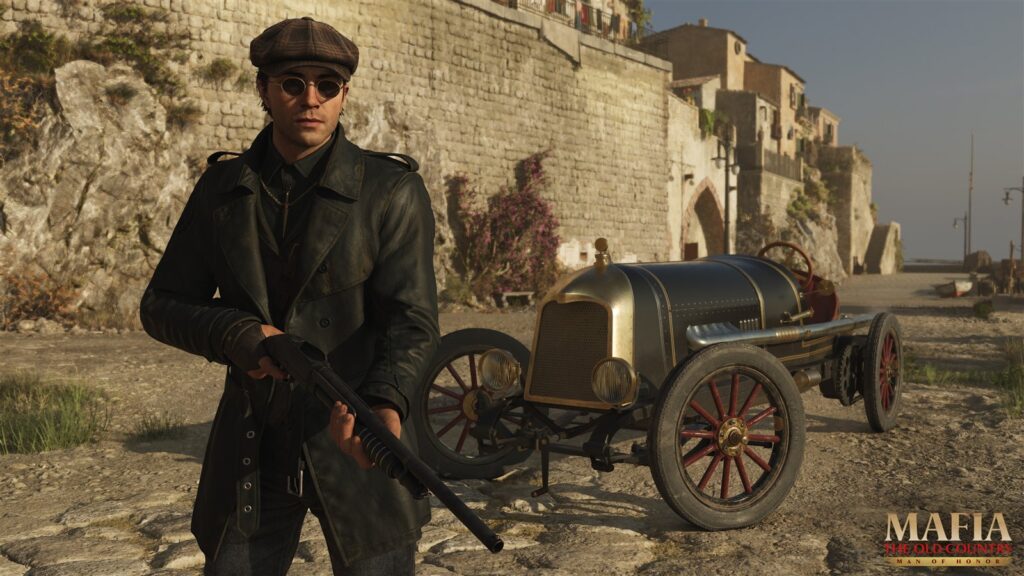
A year ago Hangar 13 released the prequel the series had been waiting two decades for. Last week a story expansion landed, and it pulled back even the people who had shelved the game in the autumn. Good moment to talk about it calmly, without the heat of a launch weekend.
- We wanted one story and got another
- Nobody compares it to GTA any more, and rightly so
- The open world got locked away
- Valle Dorata is worth driving through
- The callbacks a fan will forgive a lot for
- A knife that wears thin fast
- The shooting is a different game now
- Horses, cars and the best thing here
- The story that split the fanbase
- How long it runs
- How it looks and how it runs
- Should you buy it
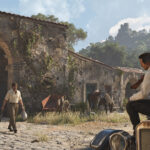
Developed by Hangar 13, published by 2K, running on Unreal Engine 5. It is set in Valle Dorata, a fictional corner of Sicily at the turn of the century, and you play Enzo Favara.
Let me put my cards down so the complaints below make sense. The game is beautiful, expensive and in places superb. It also does almost none of what people wanted from it.
We wanted one story and got another
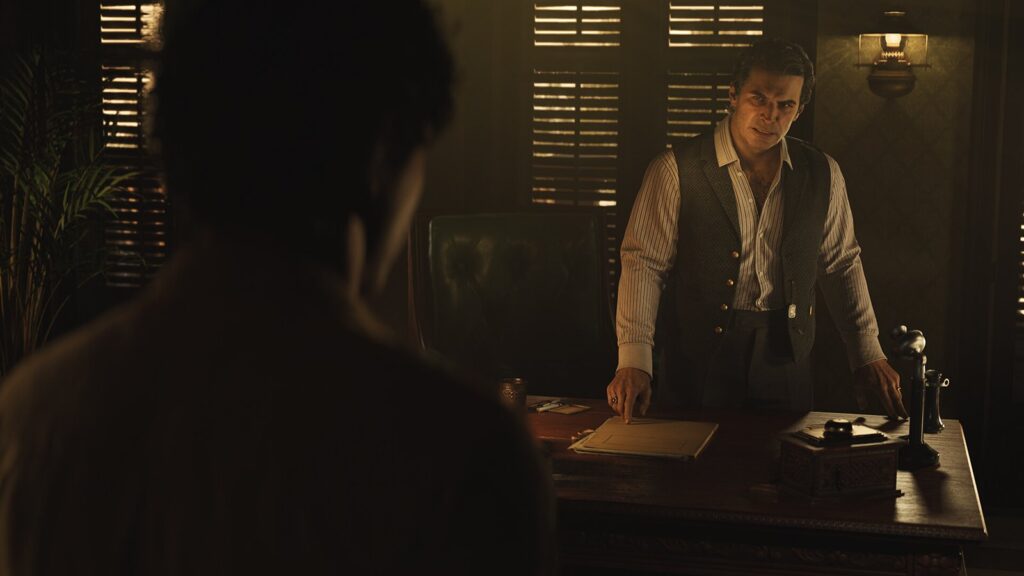
Everyone was sure we were about to learn where Don Salieri came from. The logic was airtight: a Sicilian we know from the first game, a prequel set in Sicily, no further explanation required. Instead the lead is Enzo Favara, a completely new character.
Familiar faces do turn up, and it is a pleasure to meet them. The trouble is that they pass by at a tangent. A nod, a moment, gone. For a fan of the series it is like running into an old friend at an airport: you hug, and then you never get to talk.
The funny part came a year later. The Man of Honor expansion, out on 14 August 2026, is about exactly that: a young Ennio Salieri, freshly out of prison, winter 1905. So Hangar 13 knew perfectly well what people wanted. It just sold it separately, for ten dollars.
Nobody compares it to GTA any more, and rightly so
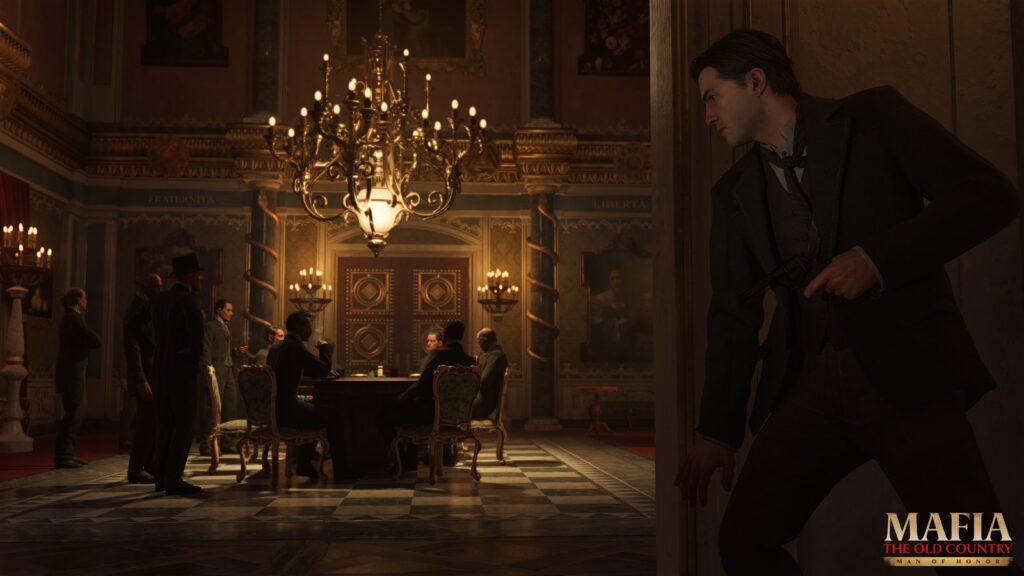
When the first Mafia arrived in 2002, every other headline called it the answer to GTA III. Cars, a city, crime, that was enough. Today the comparison sounds odd, and The Old Country closes the case for good.
GTA sells freedom: do what you like, the city is a sandbox, the plot will catch up eventually. Mafia sells fate: you walk somebody else's script, you know it from the opening scene, and you walk it anyway. Those are not two takes on one genre, they are two genres wearing similar coats.
Hangar 13 pushed its own idea to the limit here, past it in places, which I will get to. But you will not confuse the two again even if you try.
The open world got locked away
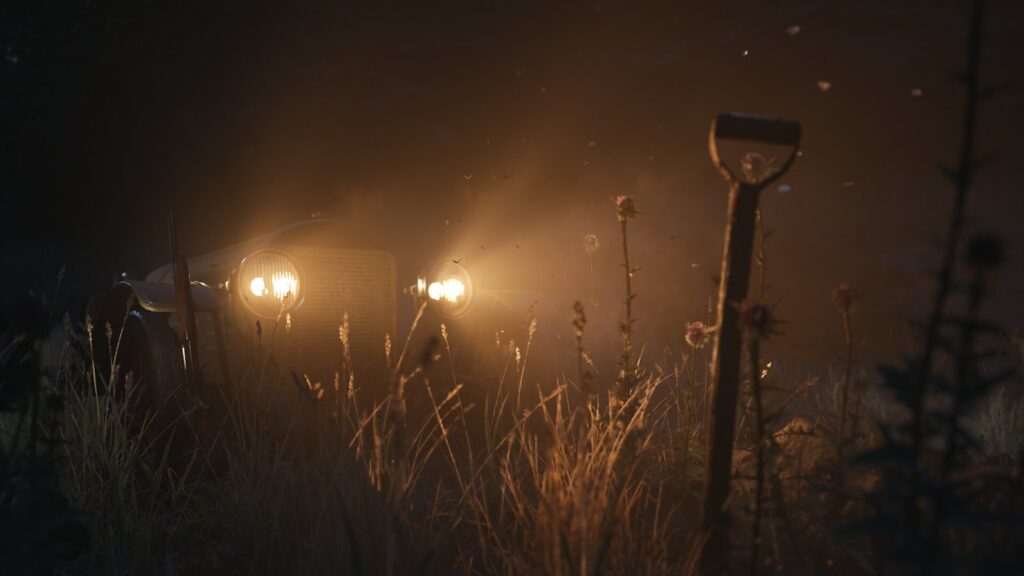
The biggest loss is not the protagonist. Mafia has always been about a place you can simply drive around between jobs. At launch there was none of that at all.
Free roaming only arrived on 20 November 2025, three months after release, and it arrived as a separate mode. The same update added a photo mode, a first person driving camera, a classic difficulty and Cinema Siciliano, a black and white filter styled after old Italian films. A generous gift, but the world still lives behind a menu entry rather than inside the story.
The campaign itself is scripted to the hilt. Step off the path and you meet an invisible wall or a prompt to get back on route. This is the most linear game in the series, and I take no pleasure in saying it.
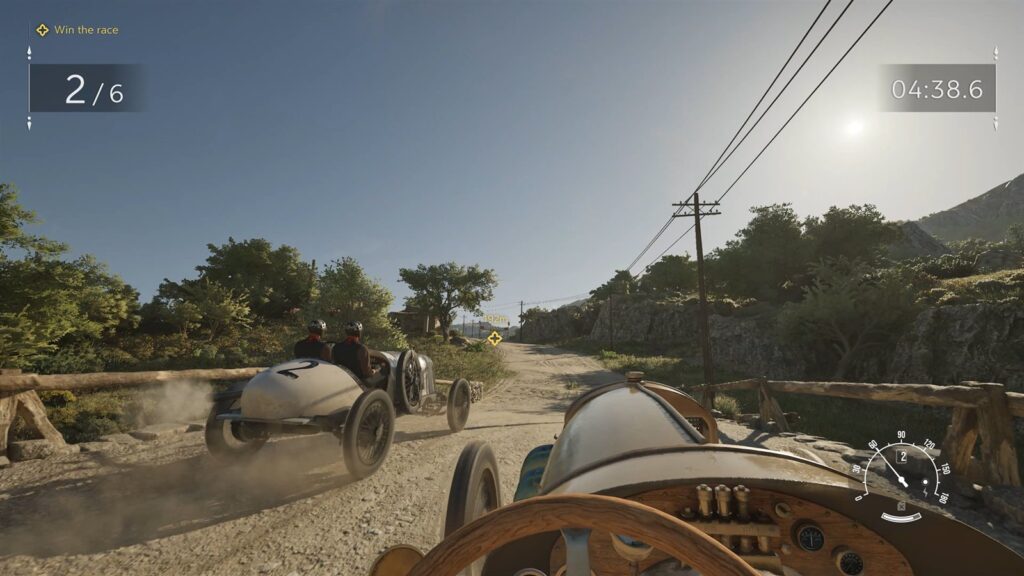
The race stings the most. It was in the trailers, people were waiting for it as a set piece, and this is not a spoiler, everyone knew it was coming. In practice it is a ride on rails where your main job is to stay out of the way.
Valle Dorata is worth driving through
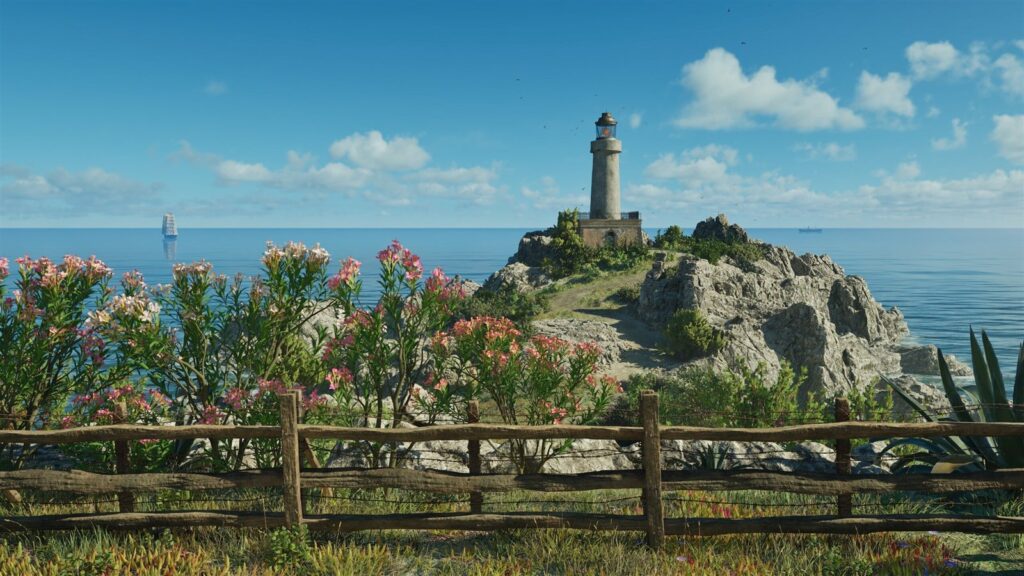
Here is the paradox. The world they locked away is excellent. Valle Dorata is not an endless map dotted with icons, it is a compact region where every stretch was clearly built by hand: sulphur mines, vineyards, a fishing coast with a lighthouse, underground crypts, an opera house, stone villages clinging to slopes.
It works vertically. Roads wind up the hills, from the village below you can see the monastery above, and the other way round. In an hour and a half of driving I never once caught the game copying and pasting itself, which is rare.
The size is modest, and that is a good thing. You can cross the map in a few minutes, but there are no empty kilometres between the interesting parts. A small Sicily where everything is made beats a big one where half of it was generated.
The callbacks a fan will forgive a lot for
The game is stuffed with nods to earlier entries, and not only in dialogue. There are locations whose layout and mood make you squint and try to remember where you have seen this before. For anyone who played the whole series, that is half the fun.
And there is one tradition Hangar 13 did not budge on. Every Mafia puts the new guy to work as a removals man.
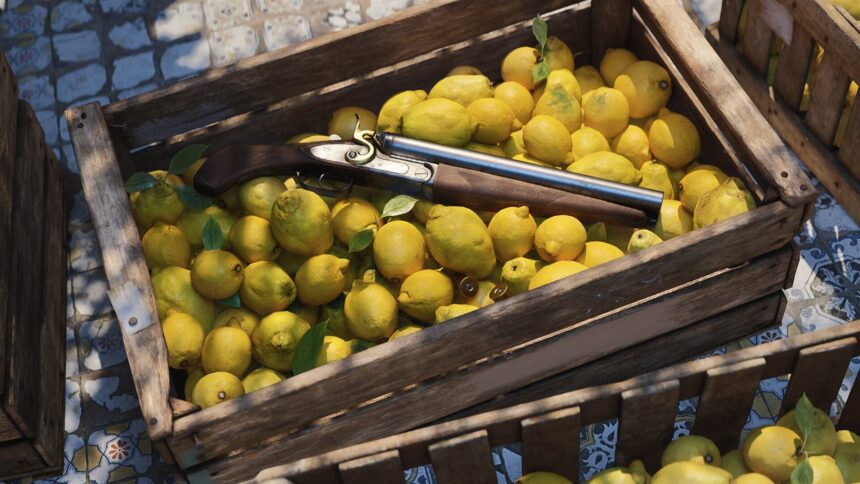
- Crates. You hauled them in the first game, you hauled them in the second, you haul them here. Twenty years, three eras, and a career in the mob still starts in a warehouse.
- A race. A staple the series cannot imagine itself without. In the 1900s it looks especially reckless, since cars of that vintage handle like carts with an engine bolted on.
- Driving drunk friends home. A ritual familiar to anyone who has played a Mafia game. Eras change, so do the cars and the language, but the drunk mate in the passenger seat is eternal.
That reads like a complaint and it is not one. Repeats like these are exactly what makes the thing feel like Mafia rather than a generic gangster game.
A knife that wears thin fast
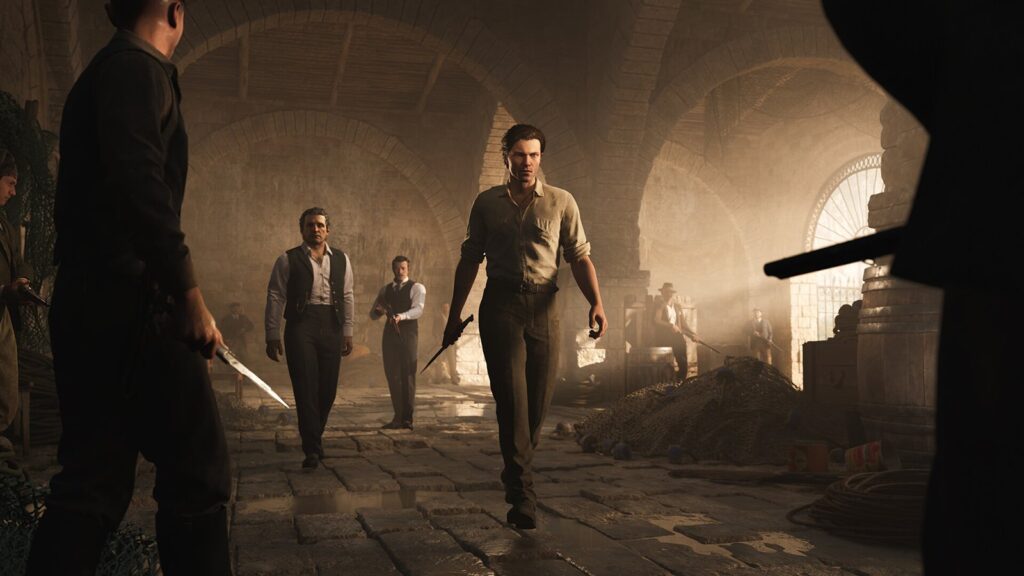
Stiletto duels are the new mechanic and they fit: turn of the century Sicily, the blade as a working tool. The first few fights genuinely land.
Then you notice there are not many moves and the enemies all behave the same. By the midpoint the knife becomes a minigame you want to skip. The mechanic is not bad, it is just small, and they built the whole of melee around it.
The shooting is a different game now
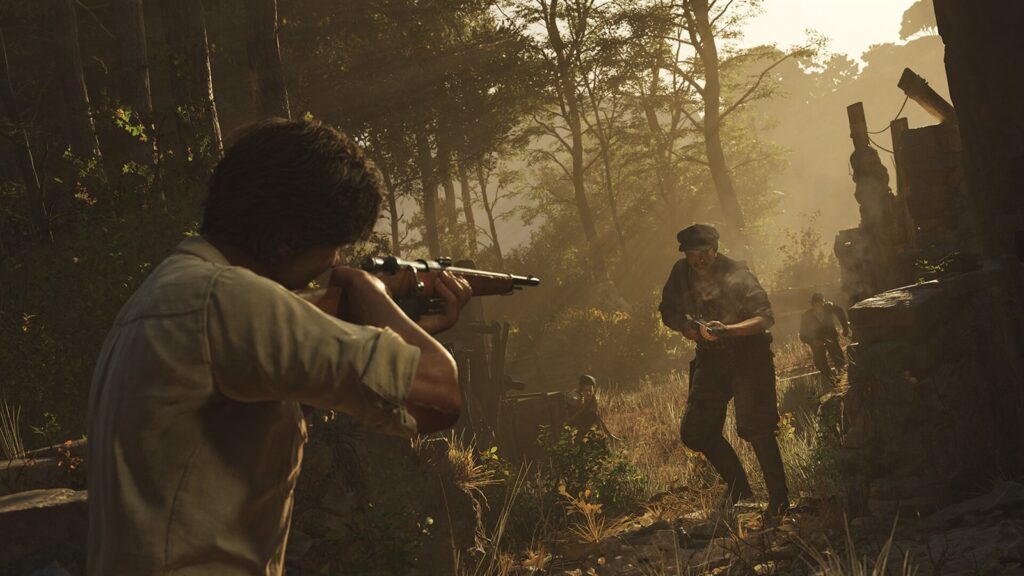
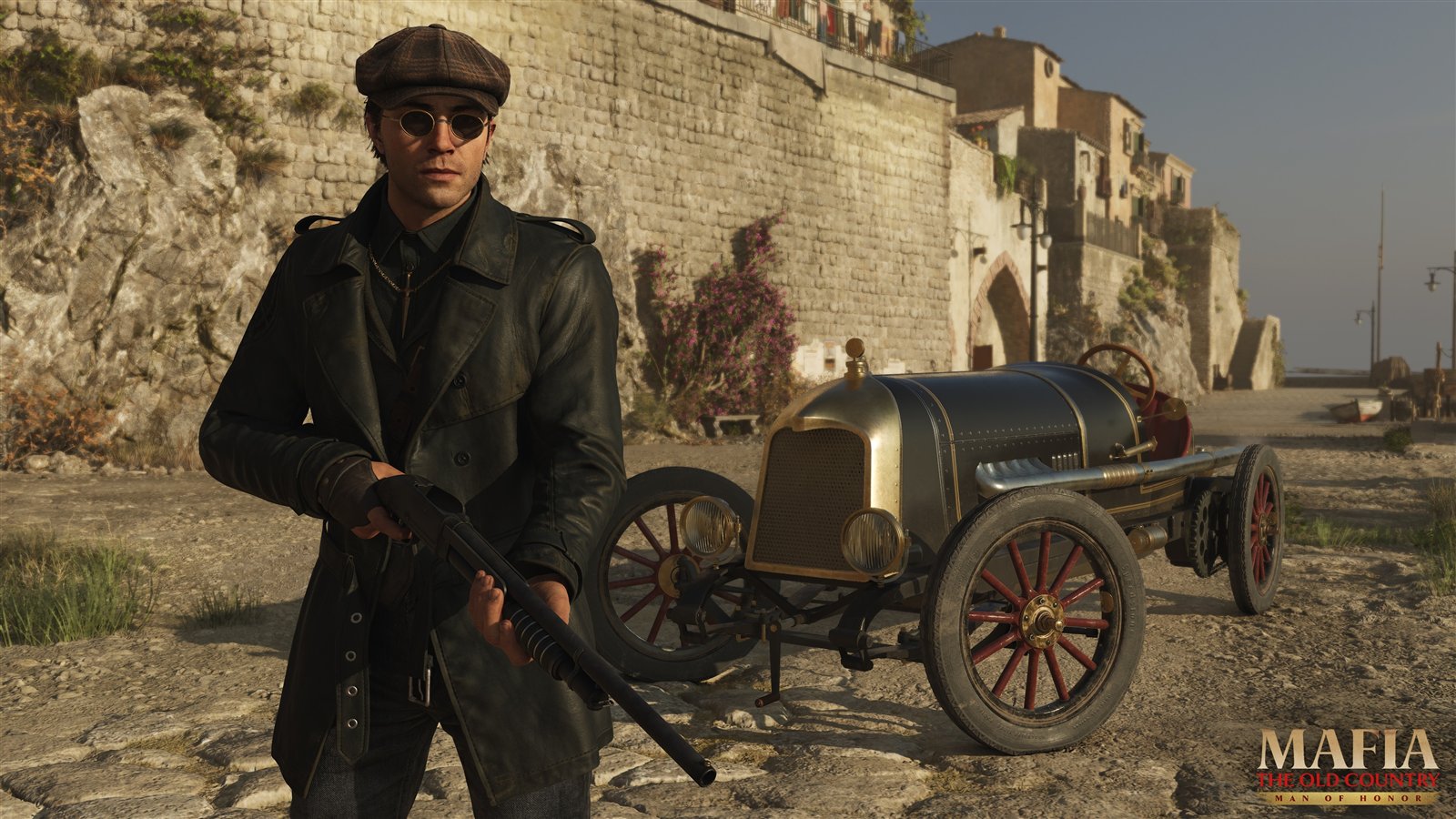
If you came for the gunplay of Mafia 3, let it go. The weapons are period pieces and behave like it: long reloads, tiny magazines, and a sawn off lupara that settles anything at arm's length and is useless beyond it.
I rather like it. Every firefight becomes a question of position and ammunition rather than a wave clear. It does take adjusting to, and for the first couple of hours it feels like the game is fighting you.
Horses, cars and the best thing here
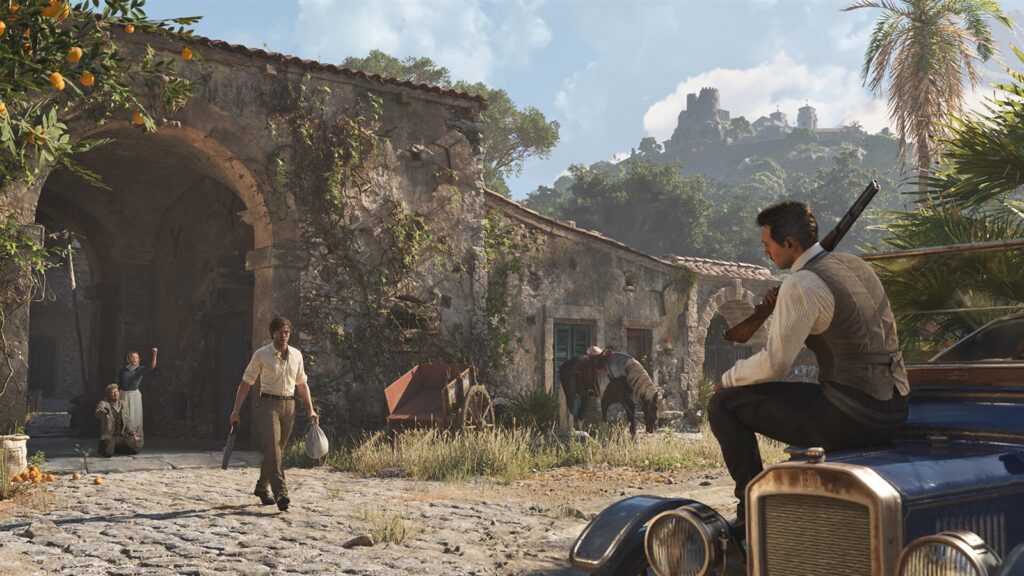
The turn of the century cars were made with love. They are heavy, they roll, they build speed reluctantly and answer the wheel late, and that is exactly why driving them is a joy. It is the best ride in the game.
Alongside the cars there are horses, which is an honest call for the 1900s: an engine will not get everywhere. A horse feels slower and calmer, and a couple of rides across the hills are worth not skipping for the sake of fast travel.
The story that split the fanbase
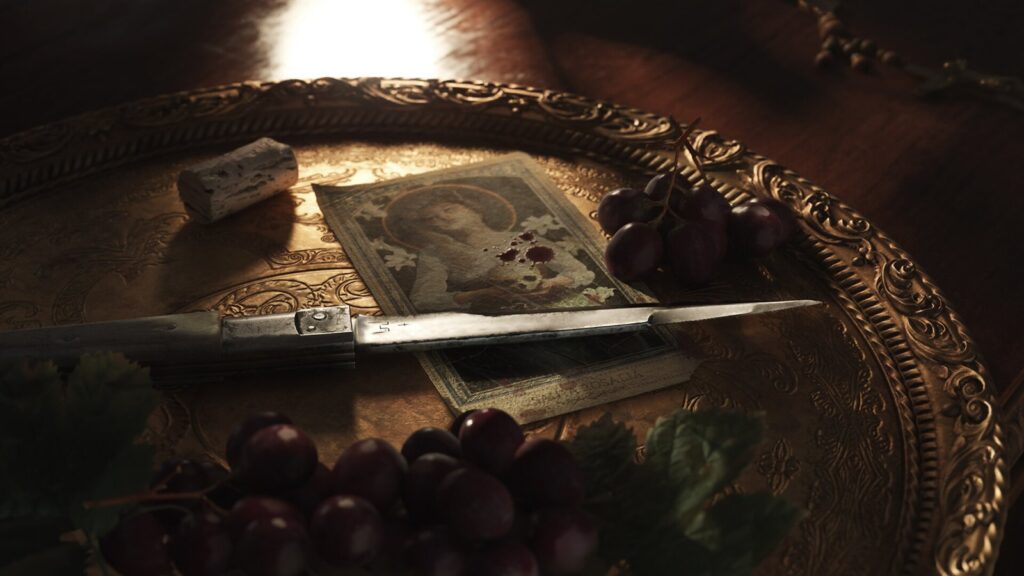
The plot is tightly wound and works fine as a standalone crime drama. The objections start where memory of the series kicks in: a share of the faithful, the stubborn ones in particular, walked away unhappy and are still arguing about it.
After the expansion a lot of them came back and played it through again. That is probably the best verdict available. The second game had a bumpy reception too, and today it gets held up as the benchmark. I would not be surprised if the same happens here in a few years.
How long it runs
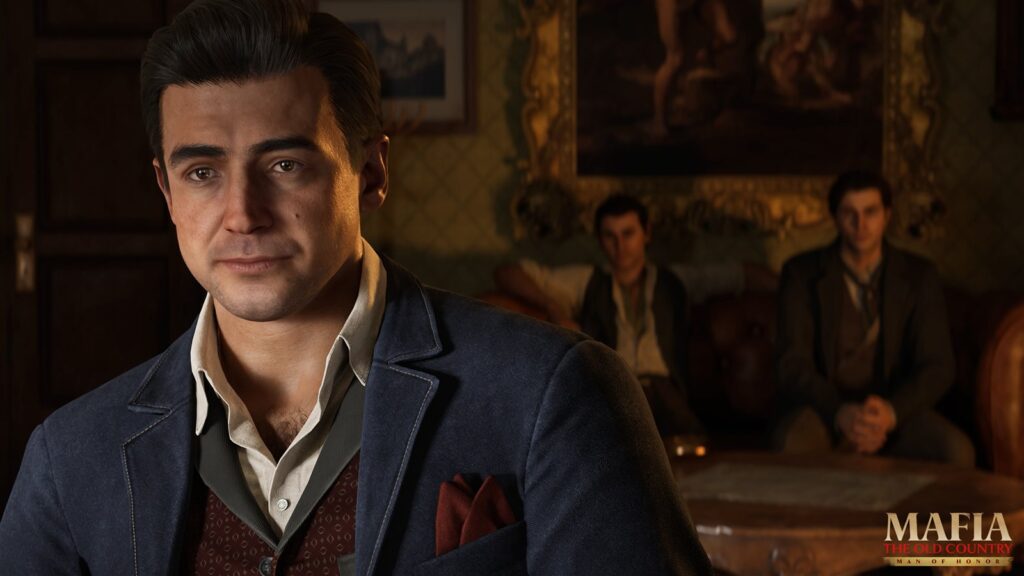
The main story takes about twelve hours, and a full run with everything found lands near thirty. Hangar 13 said in advance that it was aiming for the length of the first two games, and it kept its word: in hours this is Mafia 2 and Mafia: Definitive Edition.
That is a compliment, not a complaint. Twelve hours with no filler beats forty spent clearing outposts. The game ends when it has finished saying what it came to say, rather than stretching for a number on the store page.
How it looks and how it runs
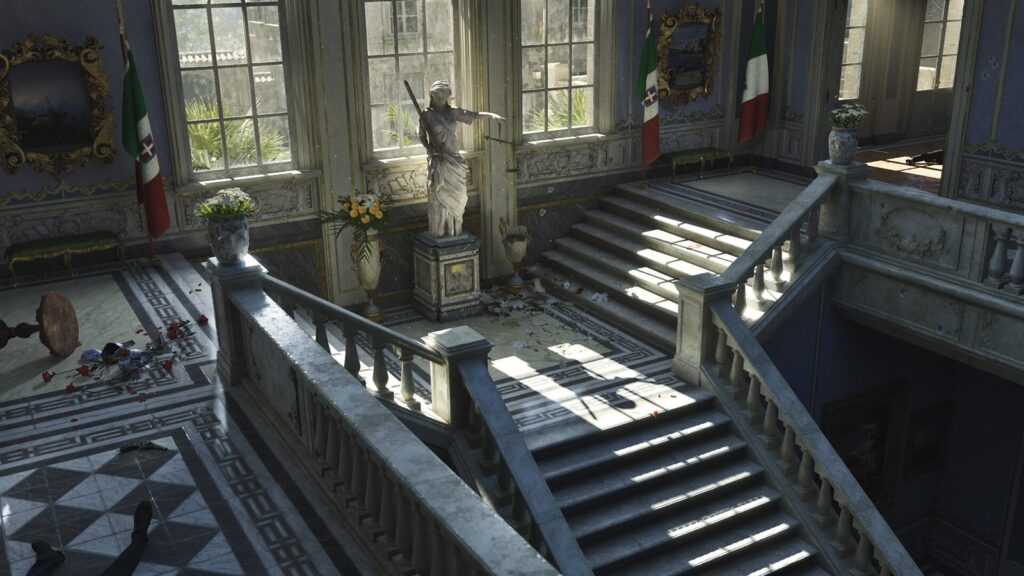
Artistically it is wonderful, on consoles included. Light, interiors, fabrics, faces, dust in a shaft of sun. Unreal Engine 5 is working here on the picture rather than on a list of technologies in a press release, and this is one of those games where you stop and look around.
Technically I have to be more careful. Consoles get two modes, quality at thirty frames and performance at sixty with a variable resolution. But not everywhere. The Xbox Series S did not get the sixty frame mode at all, only thirty, and I found it genuinely hard going there: the image falls apart in motion and no setting fixes it, because there is nothing to set.
On PS5 things are far more respectable, and yet I still see softness, even with quality mode on. An honest caveat: Digital Foundry praises the quality mode and recommends playing in it, and I am not arguing with their measurements. But I turned the game on myself, on my own television, and my impression differs. So that is what I am writing down.
On PC it comes down to whether you are willing to run an upscaler. If your card never got the latest FSR, OptiScaler can help, and we covered that separately.
Should you buy it
Buy it if you want a solid crime drama in a setting games almost never build, and you are fine with being led by the hand from start to finish. Skip it if you were hoping for a place you can drive around and fall into trouble.
The expansion I recommend almost without reservation: it is short, and it is about the very thing half the audience turned up for.
If you want the context, we have a piece on how truthful this game's Sicily is and why the real one was a great deal grimmer.