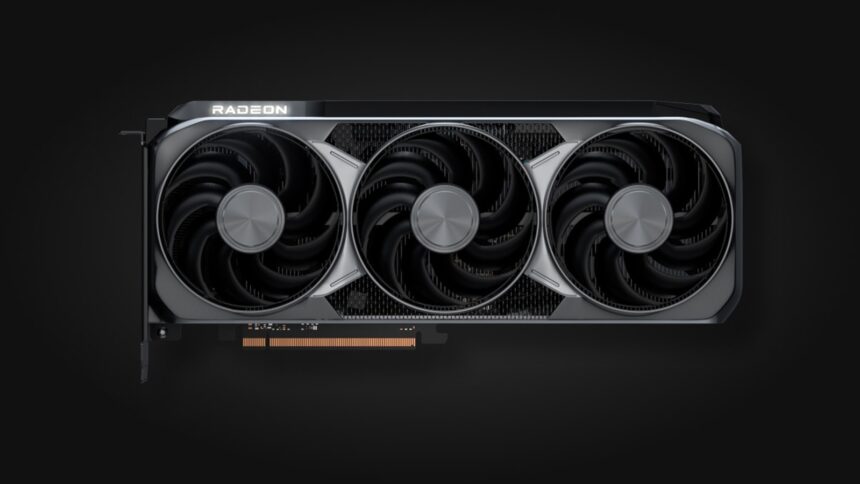
Waiting for the price rise is pointless, it already happened. Nvidia warned its partners on 25 July, AMD confirmed officially on 31 July, and since August both line-ups sell for more. Let us look at how much more, and at when this ends.
The only difference between the two companies is the order of moves. AMD deliberately waited for Nvidia to go first and only then raised its own prices. The price advantage Radeon was often bought for is gone.
How far above the launch price
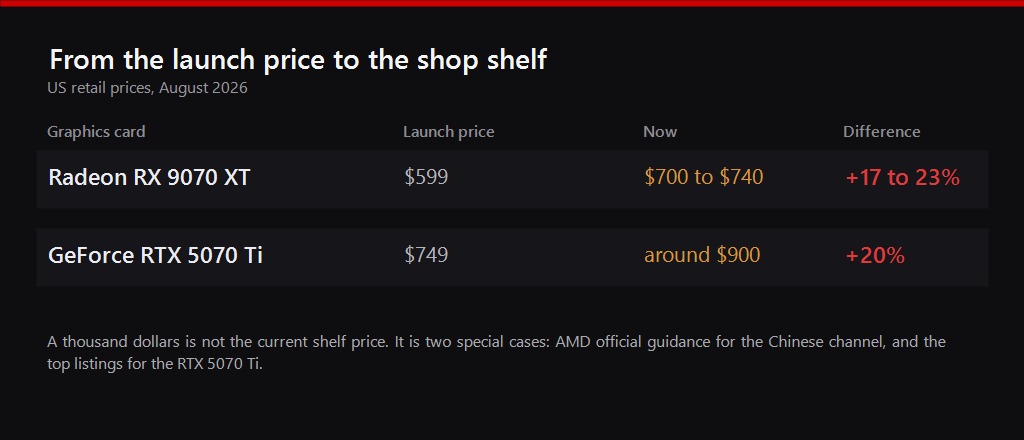
Two different numbers get mixed up here: the manufacturer's launch price, and what a shop actually charges.
Radeon RX 9070 XT. The launch price in March 2025 was 599 dollars. Today it retails at roughly 700 to 740. That is 17 to 23 per cent above the promise.
GeForce RTX 5070 Ti. Launch price 749 dollars, on sale for around 900. Roughly 20 per cent up, and this is the card that has come closest to a thousand.
Across the Radeon RX 9000 line, AMD's official increase of 31 July was at least ten per cent, and between five and twenty depending on the model. On Nvidia's side the whole GDDR7 based RTX 50 series went up, along with older GeForce cards on GDDR6.
A word about the thousand dollar figure being carried around in headlines, ours from yesterday included. A thousand is not today's shelf price. It is two special cases: AMD official guidance for the Chinese channel for the third quarter, around 1038 dollars, and the top listings on the RTX 5070 Ti. Cards have not moved there in general, and the RX 9070 XT sells at about seven hundred.
When to expect the peak
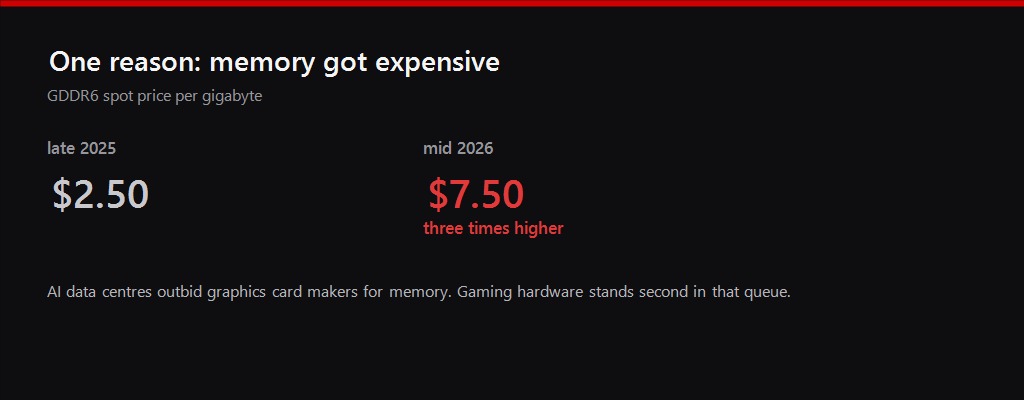
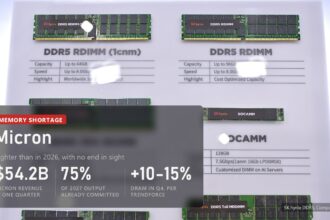
To guess at the peak you have to look past graphics cards and at memory. Memory is what pulls the prices up.
The GDDR6 spot price went from roughly two dollars fifty a gigabyte in late 2025 to roughly seven dollars fifty by the middle of 2026, three times higher in under a year. The cause sits outside gaming: AI data centres buy memory in volumes graphics card makers cannot compete with.
Now the forecasts, with one caveat: these are analyst estimates, not a timetable. They converge on roughly the following.
- All of 2026. The shortage only deepens. Gartner expects memory price inflation of around eighty per cent over the year.
- 2027. TrendForce expects the gap between supply and demand to widen further before it narrows. The earliest relief anyone names is the second half of 2027.
- 2028. Intel and several suppliers say it plainly: that is roughly when things normalise.
Which leads to a cautious conclusion. The peak is most likely still ahead rather than behind us. The most probable window is 2027, and that is when a thousand dollars for a card of the RX 9070 XT class could stop being a regional exception and become the ordinary price. A return to 2025 launch prices is not on the table for the next two years at all.
One more caveat: every forecast here rests on how AI demand grows. If it slows down, memory gets cheaper faster than anyone expects. There is no sign of it slowing yet.
What a buyer should do
- Found a card near its launch price, take it. Those tags are leftovers from stock bought before the increase, and they are running out.
- Do not use launch prices from reviews as a guide. Every 2025 article works out value against numbers that no longer exist.
- More memory hurts more. Eight gigabytes cost about twenty dollars at the old prices and about sixty at the new ones. On a sixteen gigabyte card the difference approaches eighty dollars on the memory chips alone.
- Waiting only makes sense if you can wait years. Holding off for a couple of months achieves nothing here, it will not get cheaper.
And a pleasant side effect: as new hardware gets more expensive, anything that squeezes more out of what you already own gets more valuable. We went through upscalers in detail, including what Radeon and GeForce owners should each turn on.