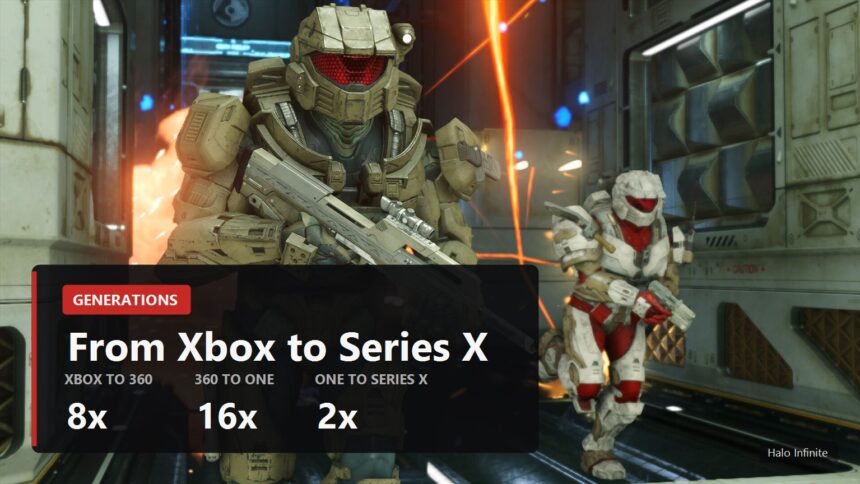
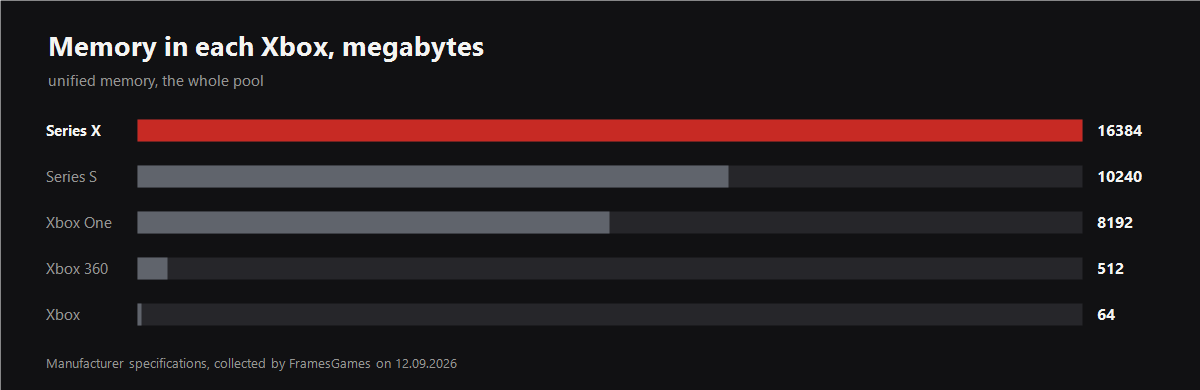
This is a walk through all four Xbox generations in order: how each console was shown, what was inside it, and how much more powerful it was than the one before. From a black box with 64 megabytes of memory in 2001 to a Series X with sixteen gigabytes in 2020.
- Xbox, November 2001. A computer pretending to be a console
- Xbox 360, November 2005. Eight times the memory and a 1.15 billion dollar bill
- Xbox One, November 2013. Sixteen times the memory, but games got five gigabytes
- Series X, November 2020. Only twice the memory, but 9.3 times the graphics
- Series S, the same day. Three times the gap inside one generation
- What you see when you put all four together
Microsoft's history is shorter than Sony's and more interesting in hardware. The first Xbox was literally a personal computer in a black case. The Xbox 360 cost the company 1.15 billion dollars in repairs. The Xbox One left games five gigabytes out of eight. And in the last generation the memory jump collapsed to two times, exactly as it did at Sony, while graphics did the opposite. I explain why below.
Xbox, November 2001. A computer pretending to be a console
Microsoft was walking into somebody else's market and did not bother inventing an architecture. The machine was assembled from off the shelf computer parts, and developers coming from the PC needed almost no retraining. Out on 15 November 2001 at 299 dollars.
- Processor. An Intel Pentium III at 733 MHz, an ordinary desktop chip.
- Memory. 64 MB of DDR at 6.4 GB/s, shared across everything.
- Graphics. An NVIDIA NV2A at 233 MHz, a relative of the GeForce cards of the day.
- Storage. A built in 8 GB hard drive, the first in console history.
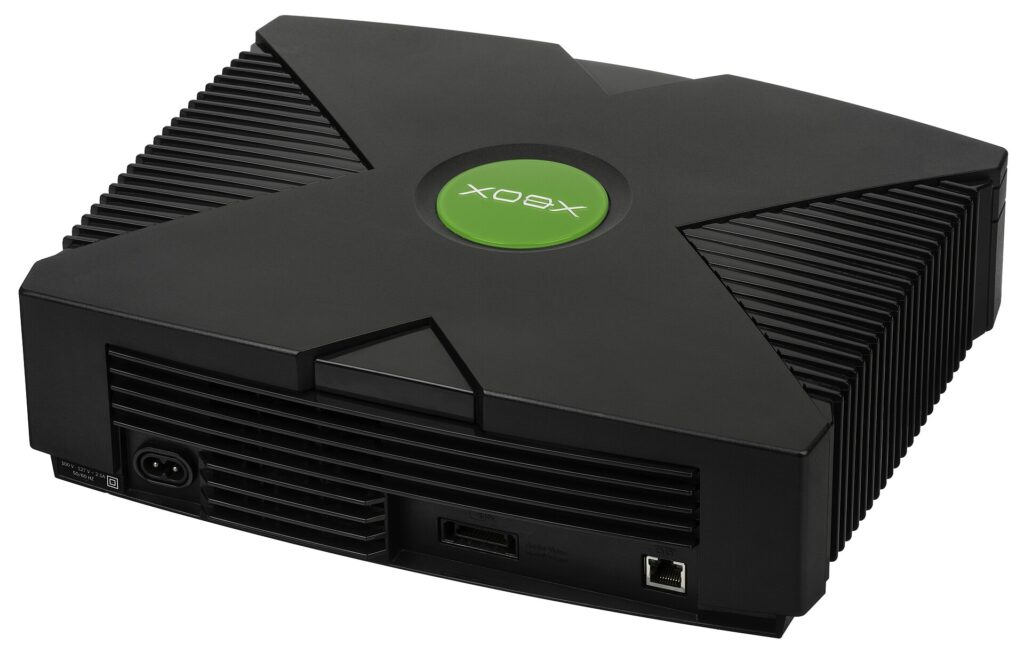
A hard drive looked like a luxury then. Everyone else lived on memory cards where you counted saves one by one, while the Xbox let you rip music from a disc and keep it in the system.
It was expensive. At 299 dollars the build cost was around 425, so roughly 125 dollars lost on every box sold. Microsoft closed the whole venture around 4 billion dollars down and treated that as the price of entry. 24 million sold, against 160 million for the PS2 of the same generation.
Xbox 360, November 2005. Eight times the memory and a 1.15 billion dollar bill
Out on 22 November 2005, a year ahead of the PS3, at 299 dollars without a drive and 399 for the full model.
- Processor. A three core Xenon at 3.2 GHz, a claimed 115.2 GFLOPS.
- Memory. 512 MB of GDDR3 at 700 MHz, unified for processor and graphics.
- Graphics. Xenos at 500 MHz, a claimed 240 GFLOPS, plus a separate die carrying 10 MB of embedded memory.
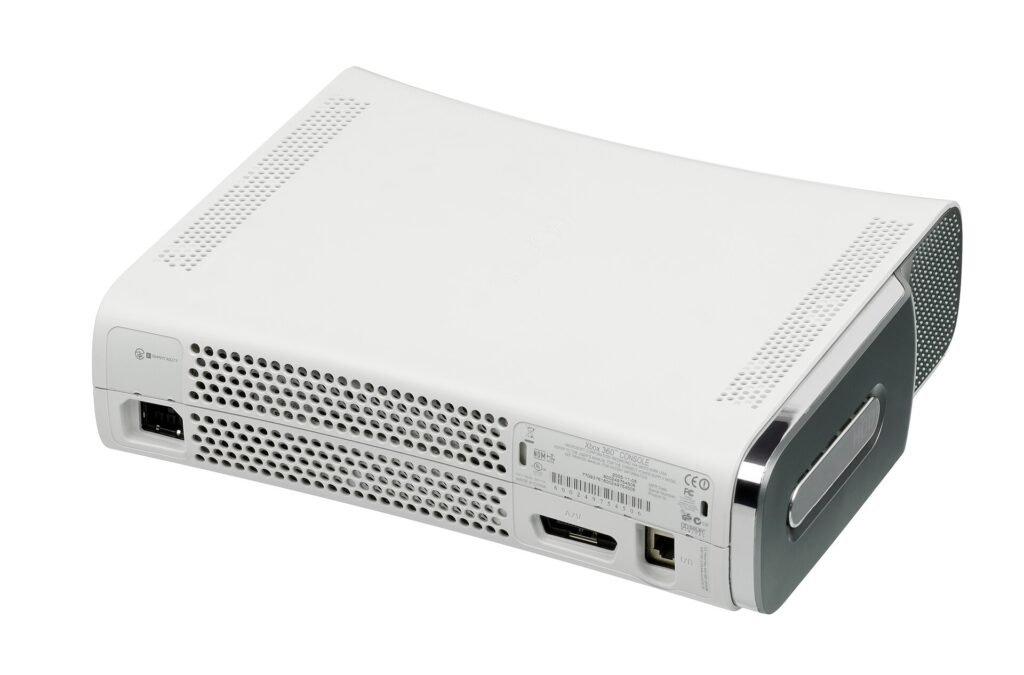
Against the first Xbox. Eight times the memory, 512 megabytes against 64. The processor clock went up four times and there were three cores instead of one.
Those 10 megabytes inside the graphics package deserve a word. It was not just fast memory but memory with logic on the same die: anti aliasing and depth buffer work happened there without touching the main bus. A clever trick, but 10 megabytes did not comfortably hold a 1080p frame, which is why so many games of that generation rendered at 1024 by 600 and were stretched.
And then came the most famous failure in console history. Three red lights in a ring meant a general hardware fault, and people got them in droves. Estimates of how many broke differ: SquareTrade counted 23.7 percent in 2009, a Game Informer survey put it at 54.2.
Peter Moore, then head of the gaming division, recalled naming the extended warranty figure to Steve Ballmer: about 1.15 billion dollars. Ballmer said do it.
Microsoft only said publicly what caused it in 2021, sixteen years after launch. Lead solder balls inside the graphics package were cracking, the ones joining the graphics and embedded memory dies to the substrate. The culprit was an unsuitable underlayer that lost strength at ordinary operating temperatures, finished off by power cycling.
84 million sold. In spite of all that, the best result Microsoft has ever had.
Xbox One, November 2013. Sixteen times the memory, but games got five gigabytes
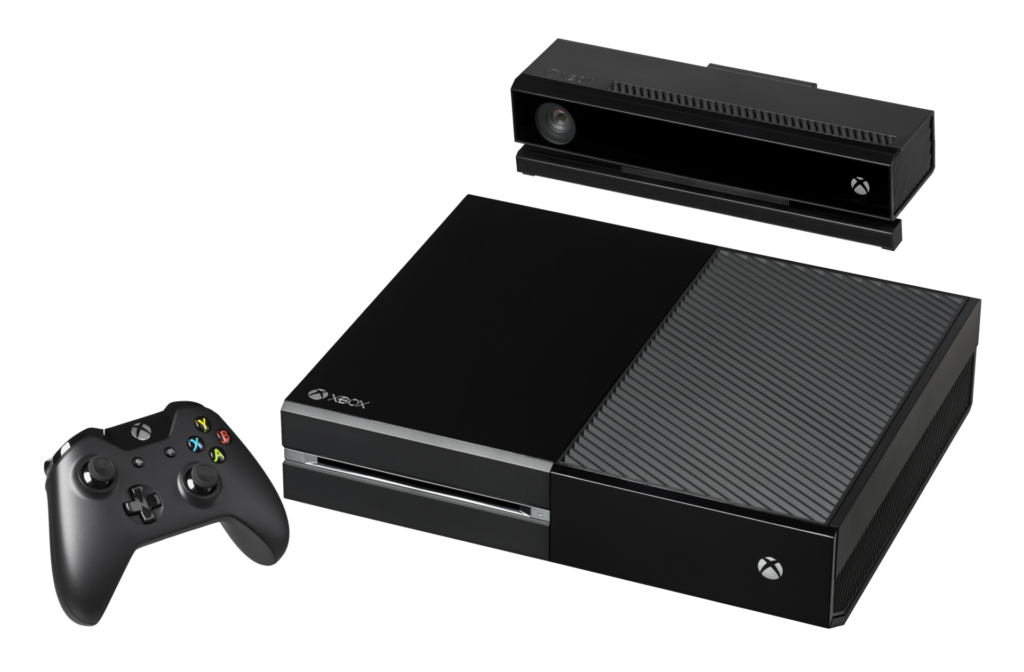
Out on 22 November 2013 at 499 dollars, a hundred more than the PS4, because a Kinect was in the box whether you wanted it or not.
- Processor. Eight AMD Jaguar cores at 1.75 GHz, x86 architecture.
- Memory. 8 GB of DDR3, of which games were handed five.
- Graphics. 853 MHz, 1.3 TFLOPS.
Against the Xbox 360. Sixteen times the memory, 8 gigabytes against 512 megabytes. That is the best step in the whole Xbox line. On graphics, 1.3 TFLOPS against 240 GFLOPS, which is 5.4 times.
But three of those eight gigabytes went to the system. The machine was designed as the centre of the living room with television, apps and voice control rather than a games console in the plain sense, and hardware was reserved for that.
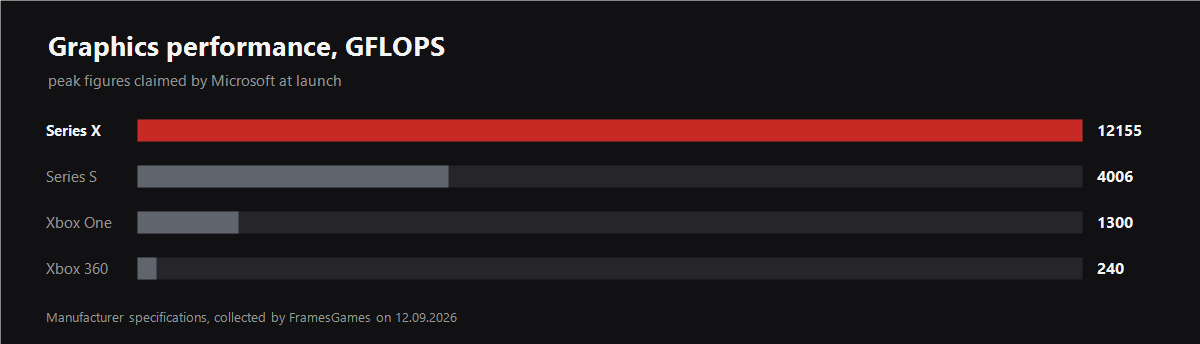
On graphics it cost Microsoft the generation: 1.3 TFLOPS against 1.84 on the PS4 of the same year. A small gap on paper and a very visible one in the resolution of multiplatform games for seven straight years.
Series X, November 2020. Only twice the memory, but 9.3 times the graphics
Out on 10 November 2020, two days before the PS5, at 499 dollars.
- Processor. Eight Zen 2 cores at a fixed 3.8 GHz.
- Memory. 16 GB of GDDR6, but split: 10 GB run at 560 GB/s and 6 GB at 336.
- Graphics. 52 compute units at 1.825 GHz, 12.155 TFLOPS.
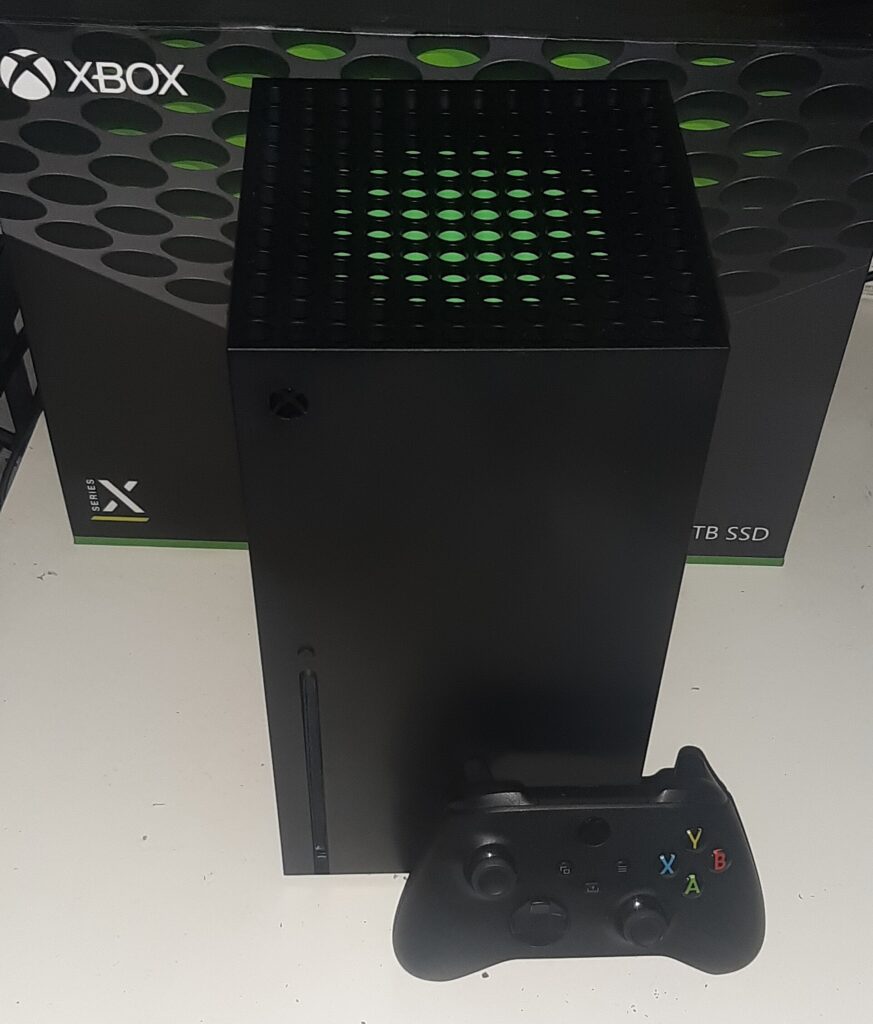
Against the Xbox One. On memory only twice, 16 gigabytes against 8. The same cliff as at Sony, and for the same reason: memory is expensive and the price is held at 499.
On graphics it is the opposite. From the 360 to the One was 5.4 times, from the One to the Series X it is 9.3. The last jump is nearly twice the previous one, so at Microsoft graphics did not slow down at all.
The explanation is not that the Series X is extraordinary but that the Xbox One was weak. A big multiplier here is counted from a low base, and this is exactly the case where you should look not at the multiplier but at what it was measured from. Measure against the PS4 instead of the Xbox One and the step to the Series X is 6.6 times, roughly what Sony managed.
A curious detail about that split memory. Nobody else did this: 10 gigabytes of the fast part are meant for graphics, 6 gigabytes of the slow part for the system and game logic, and a developer has to decide what goes where. Sony that same year made all 16 gigabytes identical.
Series S, the same day. Three times the gap inside one generation
Eight Zen 2 cores at 3.6 GHz, 20 compute units at 1.565 GHz, 4.006 TFLOPS, 10 GB of memory, 299 dollars.
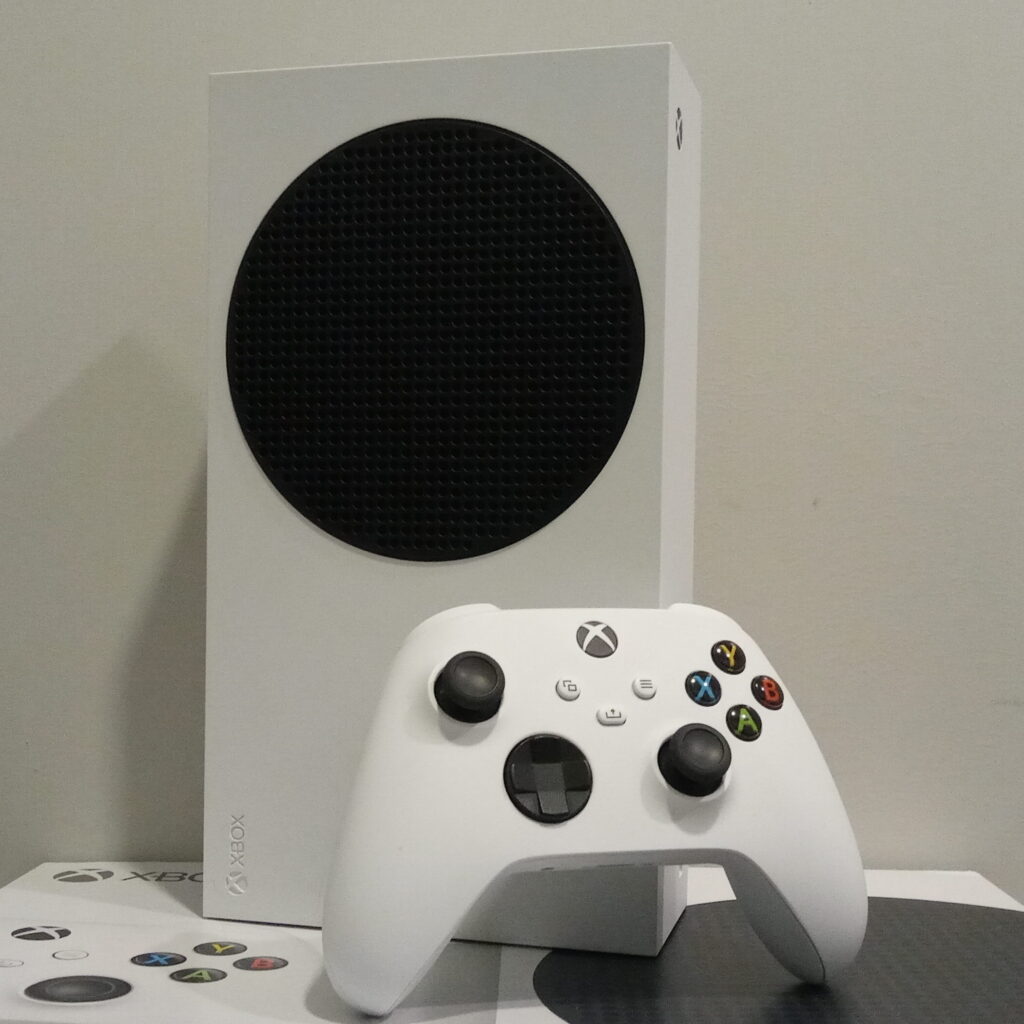
The gap inside a single generation came out at three times, while between the Xbox 360 and the Xbox One it was 5.4. Two consoles released on the same day sit almost two generations apart, and a developer has to support both.
What you see when you put all four together
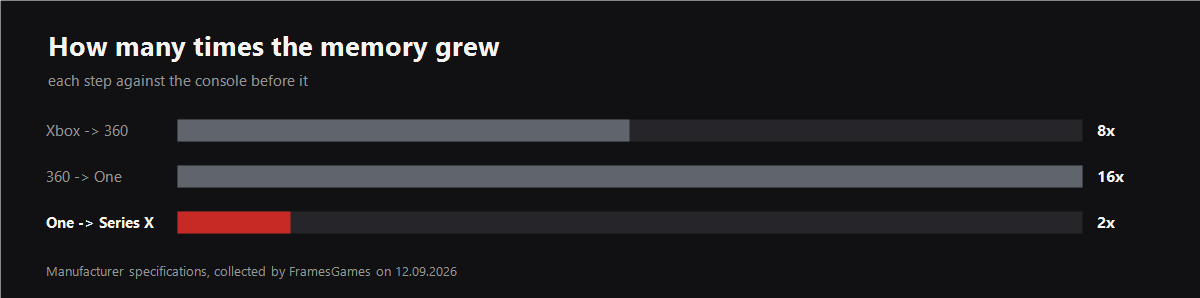
On memory the series runs eight times, sixteen, two. The cliff on the last step is the same one Sony hit, in the same November of 2020.
On graphics the picture is different, 5.4 and then 9.3, and the honest thing is to say it plainly: on Xbox the graphics jump did not slow. The slowdown that is so clear at Sony does not transfer to Microsoft as it stands, because the previous machine was weaker than it should have been.
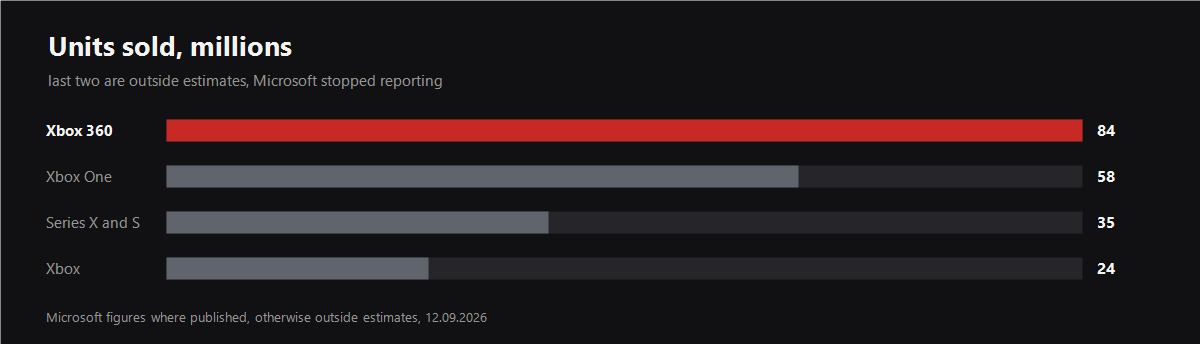
One caveat before you read the chart. Microsoft stopped publishing console sales. The first Xbox at 24 million and the Xbox 360 at 84 are still official numbers. The Xbox One at 58 million and the Series X and S at 35 are outside estimates. The silence is data too: companies that are selling well usually say so themselves.
Here is what all four generations add up to. Microsoft's most successful console, the Xbox 360, was also its most breakable, and it arrived on an eight times memory jump. The Series X is fifty times more powerful on graphics, was built without a single notorious failure, and sells considerably worse. If there was ever a direct line between power and success, four generations have left nothing of it.
Sources
Specifications come from the published hardware descriptions of each console. The first Xbox: an Intel Pentium III at 733 MHz, 64 MB of DDR at 6.4 GB/s, an NVIDIA NV2A at 233 MHz, a built in 8 GB hard drive, released 15 November 2001 at 299 dollars against a build cost of about 425 and a loss of about 125 dollars per console, a total project loss for Microsoft of about 4 billion dollars, 24 million sold, the machine assembled from off the shelf computer parts and the first console with a built in hard drive. Xbox 360: a three core Xenon at 3.2 GHz with a claimed 115.2 GFLOPS, 512 MB of GDDR3 at 700 MHz, Xenos at 500 MHz with 10 MB of embedded memory carrying anti aliasing and depth buffer logic on the same die and a claimed 240 GFLOPS, released 22 November 2005 at 299 and 399 dollars, 84 million sold. Three red lights meant a general hardware failure; failure rate estimates of 23.7 percent from SquareTrade in 2009 and 54.2 percent from a Game Informer survey; the figure of about 1.15 billion dollars for the extended warranty was named by Peter Moore in conversation with Steve Ballmer; Microsoft disclosed the cause publicly only in 2021, the cracking of lead solder balls in the graphics package joining the graphics and embedded memory dies to the substrate, caused by an unsuitable underlayer and temperature cycling. Xbox One: eight Jaguar cores at 1.75 GHz, 8 GB of DDR3 with 5 GB for games, graphics at 853 MHz with 1.3 TFLOPS, released 22 November 2013 at 499 dollars with a Kinect included. Xbox Series X: eight Zen 2 cores at 3.8 GHz, 16 GB of GDDR6 split as 10 GB at 560 GB/s and 6 GB at 336 GB/s, 52 compute units at 1.825 GHz, 12.155 TFLOPS, 499 dollars. Xbox Series S: eight Zen 2 cores at 3.6 GHz, 10 GB of GDDR6, 20 compute units at 1.565 GHz, 4.006 TFLOPS, 299 dollars, both released 10 November 2020. Sales: the first Xbox at 24 million and the Xbox 360 at 84 million are Microsoft's own figures, the Xbox One at 58 million and the Series X and S at 35 million are outside estimates, because Microsoft stopped publishing these numbers. The comparisons with the PS4 and PS5, all the growth multipliers, the charts and the argument about the Series X low base are ours. The videos are official uploads from the Xbox channel. The console photographs come from Wikimedia Commons. The first Xbox, Xbox 360 and Xbox One shots are by Evan-Amos and released into the public domain, the Series X shot is by Der. Bellemer and the Series S shot by AsmodeanUnderscore, both under CC BY-SA 4.0.