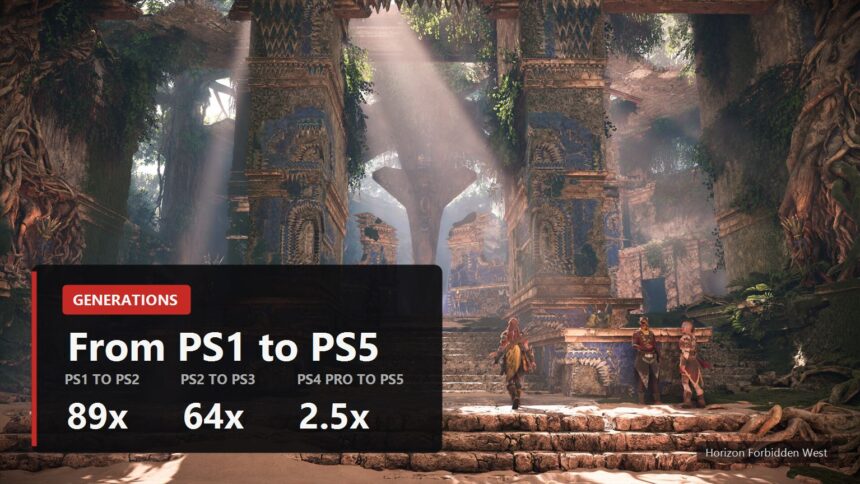
This is a walk through all five PlayStations in order: what each one was announced as, what was inside it, and how much more powerful it was than the machine before. From a box with three megabytes of memory in 1994 to one with sixteen gigabytes in 2020.
- PS1, December 1994. Three megabytes for the whole console
- PS2, March 2000. Eighty nine times the polygons of a PS1
- PS3, November 2006. Sixty four times the compute and 306 dollars lost on each one
- PS4, November 2013. Only 9.6 times, but an ordinary computer at last
- PS5, November 2020. 5.6 times a PS4 and only 2.5 times a PS4 Pro
- PS5 Pro, November 2024. Half a generation for 699 dollars
- What you see when you put all five together
The reason to look at them back to back is simple. The early steps multiplied performance by dozens of times. The last one managed two and a half. Below you can see exactly where it broke.
PS1, December 1994. Three megabytes for the whole console
The PlayStation began as someone else's add on. Sony was building a CD drive for the SNES, and the contract handed Sony international rights to the discs. Nintendo's president Hiroshi Yamauchi found those terms unacceptable, and at CES in 1991 came the thing later called the greatest betrayal in the industry: on day one Sony announced the partnership, and at nine the next morning Howard Lincoln told the room that Nintendo was going with Philips. Sony found out from the audience.
Furious, Sony finished the machine alone and shipped it on 3 December 1994 in Japan, September 1995 in the United States at 299 dollars.
- Processor. An R3000 made by LSI Logic at 33.8688 MHz.
- Memory. 2 MB of main and 1 MB of video. Three megabytes for everything.
- Graphics. 180 thousand textured polygons per second, 360 thousand flat shaded, 4 thousand sprites.
- Result. 102.49 million consoles sold.
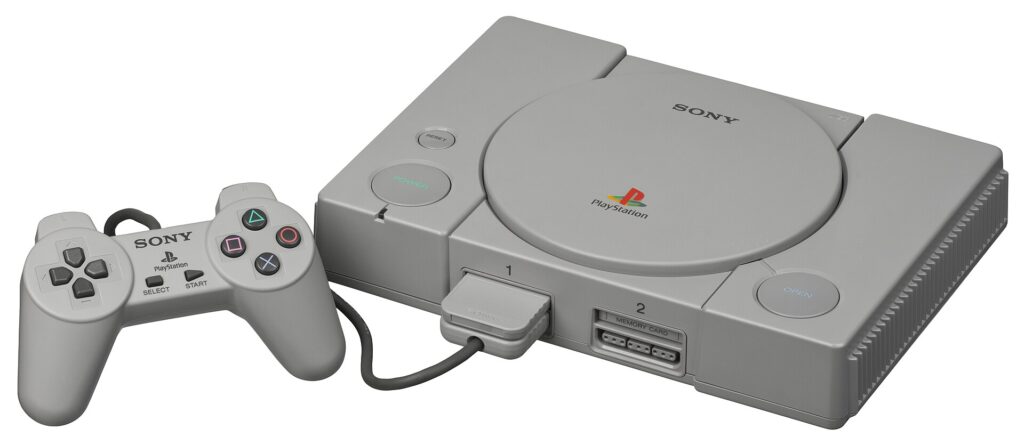
Three megabytes is less than one photo from a modern phone. Final Fantasy VII and the first Resident Evil were made on that.
PS2, March 2000. Eighty nine times the polygons of a PS1
Out on 4 March 2000 in Japan, October in the United States, the same 299 dollars.
- Processor. An Emotion Engine at 294.912 MHz.
- Memory. 32 MB of RDRAM plus 4 MB inside the graphics chip itself.
- Graphics. A Graphics Synthesizer at 147.456 MHz, up to 75 million small polygons per second, a fill rate of 2.352 gigapixels.
- Compute. 6.2 GFLOPS across all units.
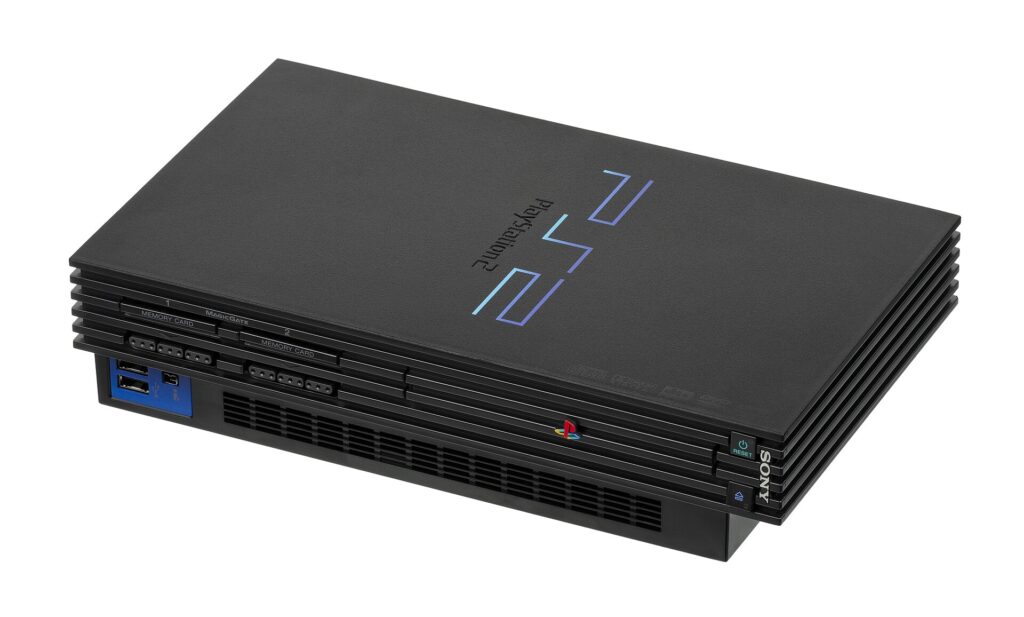
Against the PS1. Twelve times the memory, 36 megabytes against three. On graphics the gap is far wider: 16 million polygons with texture, depth buffer, alpha and fog against 180 thousand on the PS1, which is about 89 times. Compare the untextured peaks instead and it is 208 times.
One caveat before we go further, or the rest will be confusing. There is no single ruler across thirty years: for the PS1 and PS2 Sony measured in polygons, from the PS3 onward in flops, and those quantities do not compare directly. So the first two steps are counted on polygons and the later ones on flops, and each time I say which number comes from where.
A nice detail about the backward compatibility. The PS2 played PS1 discs without emulation: the PS1's processor was physically inside it, working as the input output controller. The old chip was not thrown away, it was given a second job.
160 million sold. That is the industry record and nobody has beaten it.
PS3, November 2006. Sixty four times the compute and 306 dollars lost on each one
Out on 11 November 2006 in Japan and 17 November in the United States, at 499 dollars for the 20 GB model and 599 for the 60 GB one.
- Processor. Cell at 3.2 GHz, 204.8 GFLOPS.
- Graphics. An RSX at 500 MHz, 192 GFLOPS.
- Memory. 256 MB of XDR for the processor and 256 MB of GDDR3 for graphics, split apart from each other.
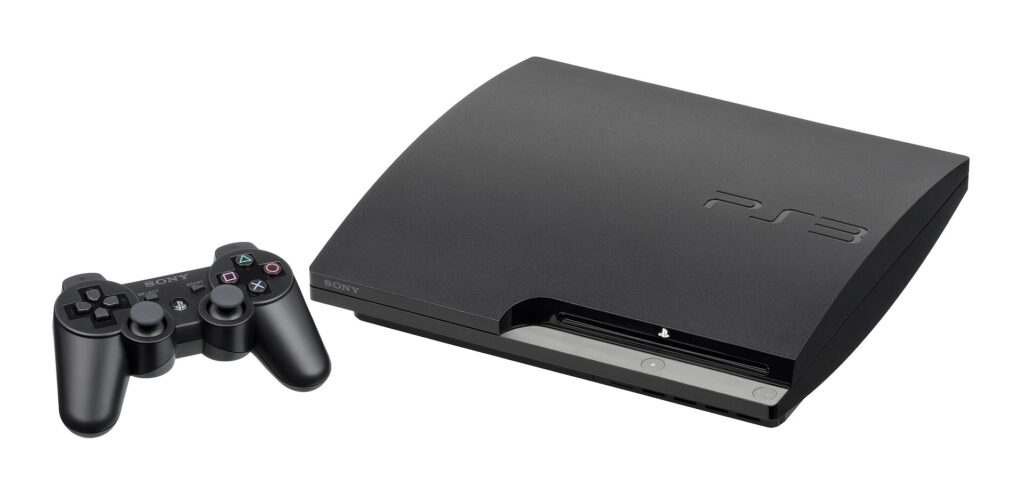
Against the PS2. Fourteen times the memory, 512 megabytes against 36. On compute, 396.8 GFLOPS against 6.2, which is 64 times. That is the biggest jump Sony has ever delivered in figures that can be compared directly.
It cost the company dearly. The 20 GB model reportedly took about 805.85 dollars to build and sold for 499, so roughly 306 dollars lost on every box that went out of the door.
The graphics chip arrived late and in a hurry. The original bet was that Cell would handle graphics on its own. Sony's own team showed that was not enough against the Xbox 360, and an RSX was dropped into the project. The split memory is a direct consequence of that decision, and porting to the PS3 tormented developers for seven years.
One more fact that says a lot about the headroom. In 2010 the Air Force Research Laboratory built a supercomputer called the Condor Cluster out of 1,760 PS3 consoles and got 500 trillion floating point operations per second from it. That may be why firmware 3.21 in April of the same year removed the console's ability to install another operating system, after which the lawsuits started.
87.4 million sold. The worst in the family, from the most powerful machine in it.

PS4, November 2013. Only 9.6 times, but an ordinary computer at last
Out on 15 November 2013 in the United States at 399 dollars.
- Processor. Eight AMD Jaguar cores at 1.6 GHz, x86 architecture.
- Memory. 8 GB of GDDR5 shared across everything, no split.
- Graphics. 18 compute units at 800 MHz, 1.84 TFLOPS.
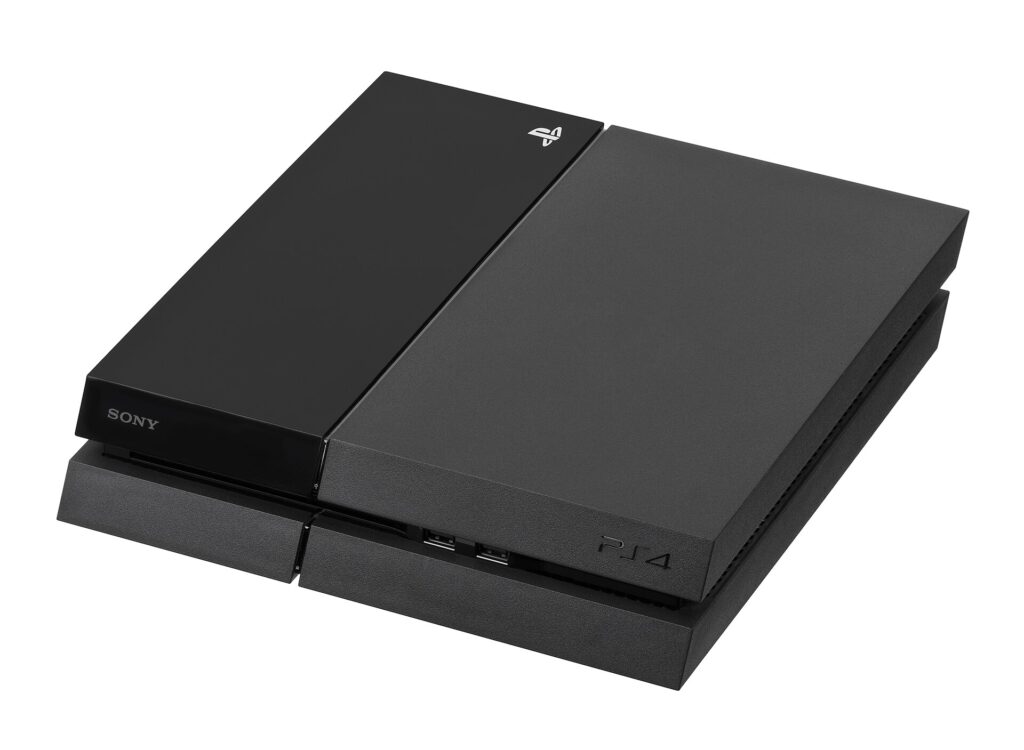
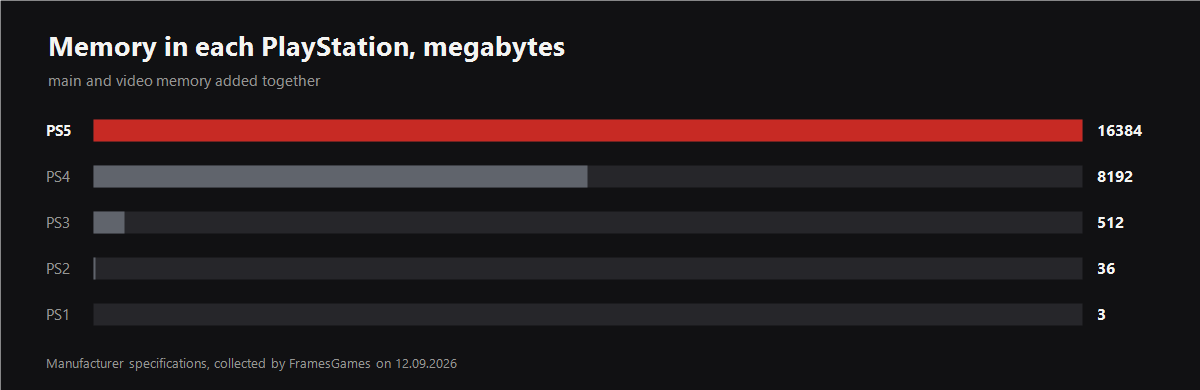
Against the PS3. On memory an excellent step, sixteen times, 8 gigabytes against 512 megabytes. On graphics, modest for the first time: 1.84 TFLOPS against 192 GFLOPS, only 9.6 times after sixty four.
And it is still Sony's best decision ever. What matters about the PS4 is not a number but three letters: x86. After the exotica of the Emotion Engine and Cell, the console was finally built on ordinary computer architecture with unified memory. Ports stopped being heroic, engines worked on day one, development got cheaper. 117.2 million sold.
In November 2016 came the PS4 Pro: 36 compute units at 911 MHz and 4.19 TFLOPS. Graphics grew 2.3 times inside a single generation, which had never happened before. Remember that number, it matters two paragraphs from here.
PS5, November 2020. 5.6 times a PS4 and only 2.5 times a PS4 Pro
Out on 12 November 2020, 499 dollars with a drive and 399 without.
- Processor. Eight Zen 2 cores at a variable frequency up to 3.5 GHz.
- Memory. 16 GB of GDDR6 at 448 GB/s.
- Graphics. 36 compute units up to 2.23 GHz, 10.28 TFLOPS.
- Storage. 8 to 9 GB per second, peaking at 22 with decompression.
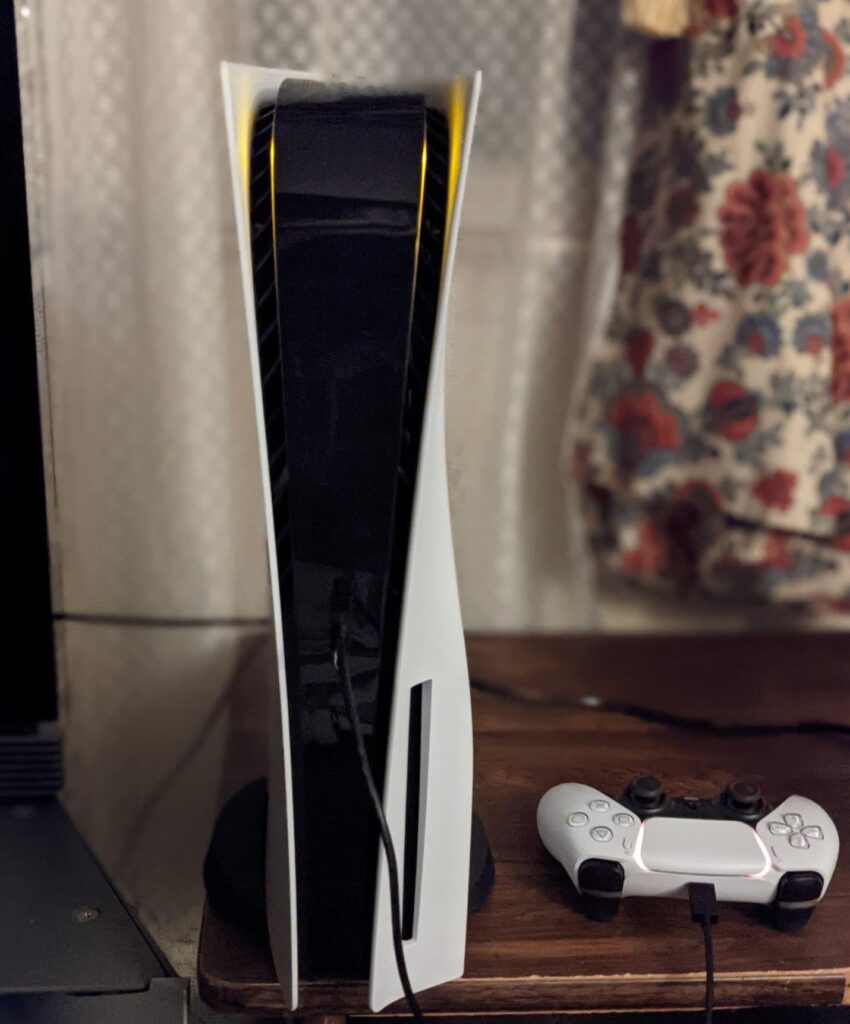
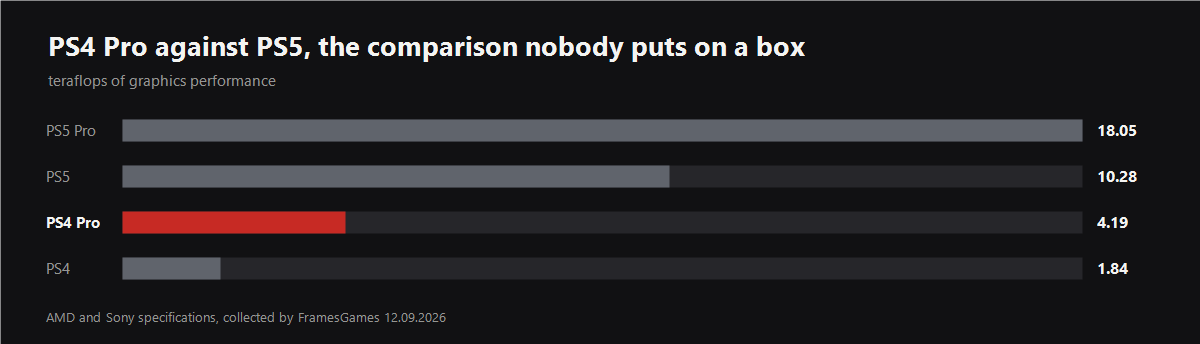
Against the PS4. The memory exactly doubled, 16 gigabytes against 8. Graphics 5.6 times, 10.28 against 1.84 TFLOPS.
Now against the PS4 Pro. 10.28 against 4.19, which is 2.5 times. Somebody who bought a Pro in 2016 waited four years for the next console and got two and a half times more. No generational step in PlayStation history has ever been that small.
Notice what the PS5 show actually talks about. Memory and flops barely come up, the whole pitch is the storage. That is not a trick: storage is genuinely the one place where the jump stayed the old size. Against the mechanical disk in a PS4 it is not twice as fast, it is a different quantity altogether.
PS5 Pro, November 2024. Half a generation for 699 dollars
60 compute units at 2.35 GHz, 18.05 TFLOPS, plus 2 GB of separate memory for the system. 699 dollars.
Against a standard PS5 that is 1.76 times. So inside one generation Sony now takes a step comparable to the one between the PS4 and the PS5, and asks seven hundred dollars for it.
What you see when you put all five together
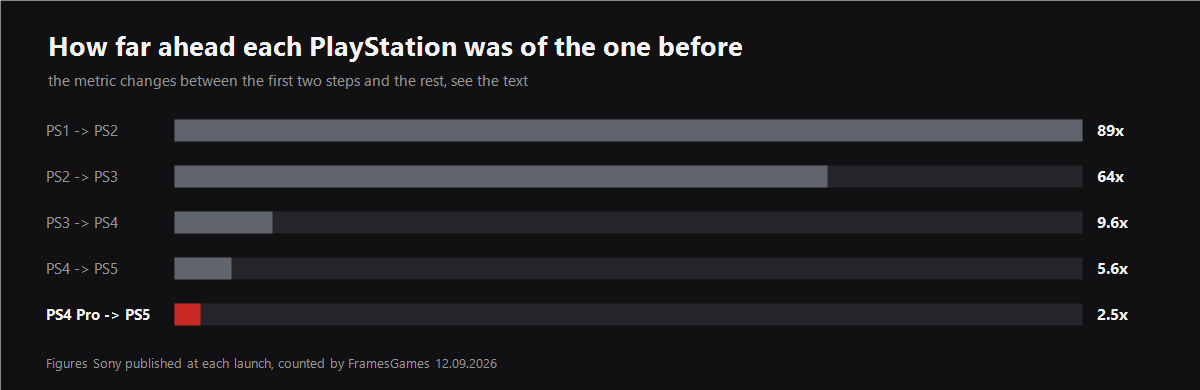
The series runs 89 times, 64, 9.6, 5.6 and 2.5. One direction, and changing the metric does not change it.
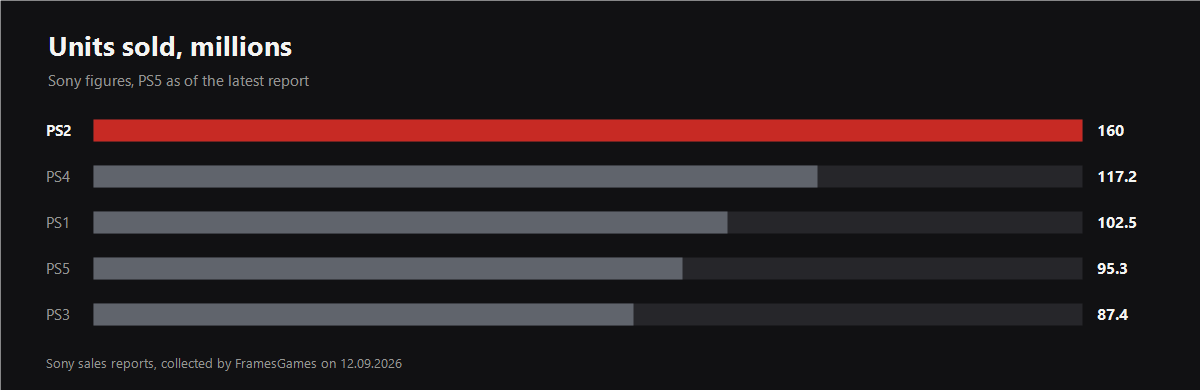
The reason is price, not physics. The PS2 cost 299 dollars and sold 160 million. The PS3 cost 499 and 599, was the most powerful thing on the market and sold worst in the family. Sony never ran that experiment again: PS4 at 399, PS5 at 499.
The budget is set by the buyer, and what fitted inside the 2020 budget was exactly 16 gigabytes of memory and 36 compute units. Not because engineers forgot how, but because nobody pays for a console that costs as much as a good graphics card.

One practical thing follows from this. While the jump was measured in dozens of times, the question of whether to upgrade did not exist, a new generation looked like a different reality. At two and a half times the question is worth asking for the first time, and everyone now has to answer it for themselves.
Sources
Specifications come from the published hardware descriptions of each console. PS1: an R3000 by LSI Logic at 33.8688 MHz, 2 MB of main and 1 MB of video memory, 180 thousand textured and 360 thousand flat shaded polygons per second, 4 thousand sprites, released 3 December 1994 in Japan and 9 September 1995 in the United States at 299 dollars, 102.49 million sold. The SNES add on history, the contract terms, Hiroshi Yamauchi's objection, Howard Lincoln's announcement at CES 1991 and Nintendo's move to Philips are drawn from published accounts of the console's history. PS2: an Emotion Engine at 294.912 MHz, 32 MB of RDRAM, 4 MB embedded in a graphics chip at 147.456 MHz, 6.2 GFLOPS across the FPU, VU0 and VU1, up to 75 million small polygons per second and 16 million with a depth buffer, alpha, texture and fog, a fill rate of 2.352 gigapixels per second, released 4 March 2000 in Japan and 26 October in the United States at 299 dollars, 160 million sold. PS3: Cell at 3.2 GHz with 204.8 GFLOPS, an RSX at 500 MHz with 192 GFLOPS, 256 MB of XDR and 256 MB of GDDR3, released 11 November 2006 in Japan and 17 November in the United States at 499 and 599 dollars for the 20 and 60 GB models, a reported build cost of about 805.85 dollars for the 20 GB model and a loss of about 306 dollars per unit, the late addition of the RSX after Sony's own team showed Cell could not carry graphics at Xbox 360 level, the removal of the other operating system feature by firmware 3.21 in April 2010 and the lawsuits that followed, the Condor Cluster supercomputer of 1,760 consoles reaching 500 trillion operations per second built by the Air Force Research Laboratory in 2010, 87.4 million sold. PS4: eight Jaguar cores at 1.6 GHz, 8 GB of GDDR5, 18 compute units at 800 MHz, 1.84 TFLOPS, released 15 November 2013 at 399 dollars, 117.2 million sold. PS4 Pro: 36 compute units at 911 MHz, 4.19 TFLOPS. PS5: eight Zen 2 cores up to 3.5 GHz, 16 GB of GDDR6 at 448 GB/s, 36 compute units up to 2.23 GHz, 10.28 TFLOPS, storage at 8 to 9 GB per second peaking at 22 with decompression, released 12 November 2020 at 499 and 399 dollars, 95.3 million sold. PS5 Pro: 60 compute units at 2.35 GHz, 18.05 TFLOPS and 2 GB of extra system memory, released 7 November 2024 at 699 dollars. All the growth multipliers were calculated by us from these figures, and the change of metric between polygons and flops is stated separately in the text. The videos are official uploads from PlayStation channels. The console photographs come from Wikimedia Commons. The PS1, PS2, PS3 and PS4 shots are by Evan-Amos and released into the public domain, the PS5 shot is by Osh33m under CC BY-SA 4.0.