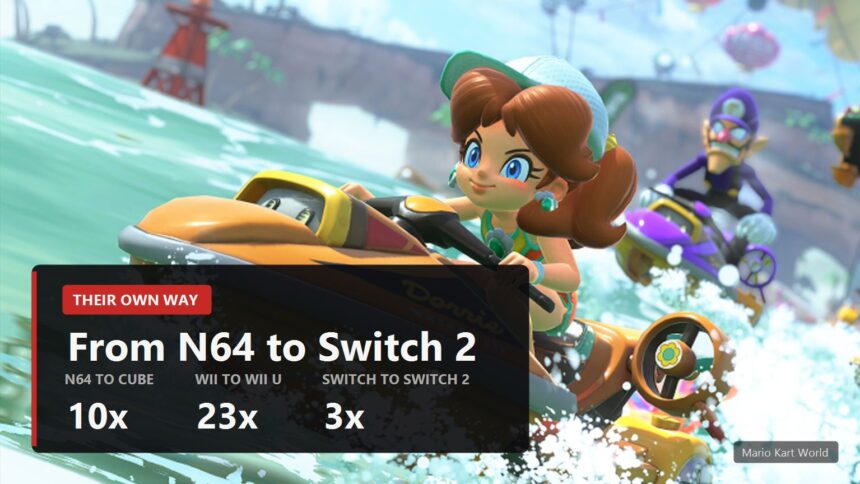
This is a walk through six Nintendo home consoles in order: how each was shown, what was inside it, and how much more powerful it was than the one before. From a 64 megabyte cartridge in 1996 to a Switch 2 with twelve gigabytes in 2025.
- N64, June 1996. Cartridges against discs
- GameCube, September 2001. Ten times the memory and the worst result so far
- Wii, November 2006. A jump of only 2.2 times, and it was a choice
- Wii U, November 2012. A 23 times jump and the company's worst failure
- Switch, March 2017. Weaker than a four year old PS4 and the second best selling console ever
- Switch 2, June 2025. Three times the memory and still not a flagship
- What you see when you put all six together
At Sony and Microsoft the growth is a tidy staircase with a cliff at the end. At Nintendo it jumps up and down with no pattern at all, because the company kept changing not its power but the question its console was answering. Twice it played the specification race, lost on sales both times, and then simply stopped playing.
N64, June 1996. Cartridges against discs
Out on 23 June 1996 in Japan, September in the United States, at 199 dollars. Technically a strong machine that lost on one decision, and that decision mattered more than any megahertz.
- Processor. A NEC VR4300 at 93.75 MHz, 64 bit, which is where the console's name comes from.
- Graphics. An RCP coprocessor at 62.5 MHz, designed together with Silicon Graphics.
- Memory. 4 MB of RDRAM shared across everything, expandable to 8 MB with the Expansion Pak.
- Media. A cartridge holding at most 64 MB against 650 MB on a CD.
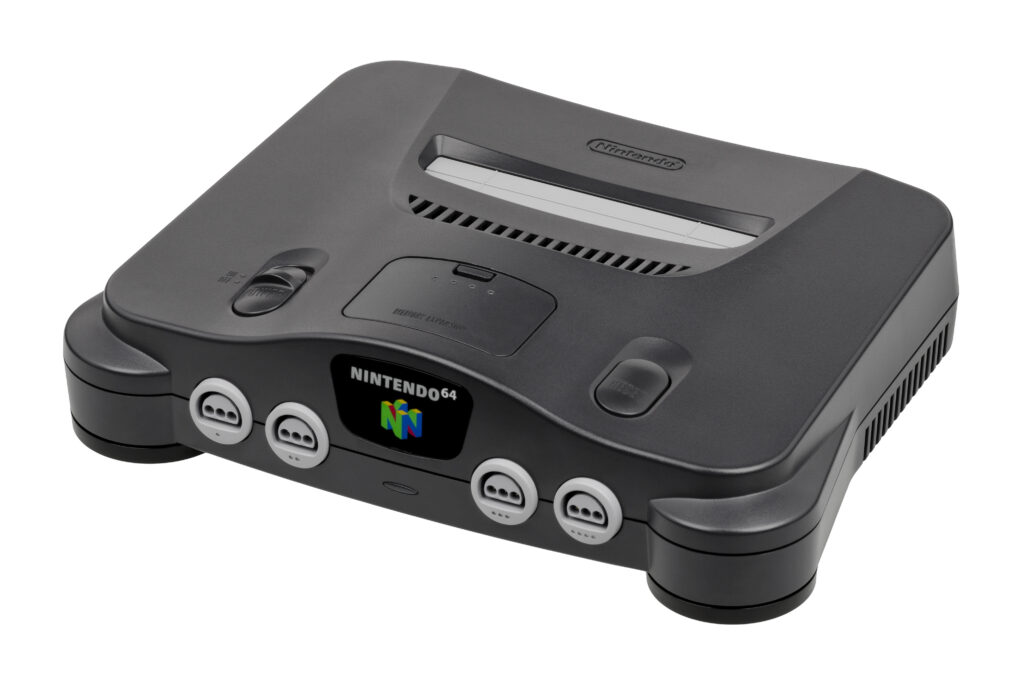
Against the media the competition used that is more than ten times less room. Hence the compressed music, the trimmed text and the absence of video sequences in every big game on the console. Nintendo's argument was speed: a cartridge reads instantly, a disc makes you wait, and it is harder to pirate. The buyer paid for it, with games costing around 10 dollars more, because pressing a cartridge costs more than stamping a disc.
A word on the graphics. The RCP could do what the PS1 could not: texture filtering and perspective correction in hardware. That is why N64 games look soft and free of wobbling textures while PS1 games look sharp and swimming. This is exactly the case where two machines of one generation look different not because of power but because of what somebody decided to build in.
32.93 million sold against 102 million for the PS1. First warning.
GameCube, September 2001. Ten times the memory and the worst result so far
Out on 14 September 2001 in Japan, November in the United States, at 199 dollars.
- Processor. An IBM Gekko at 486 MHz, PowerPC architecture.
- Graphics. An ATI Flipper at 162 MHz.
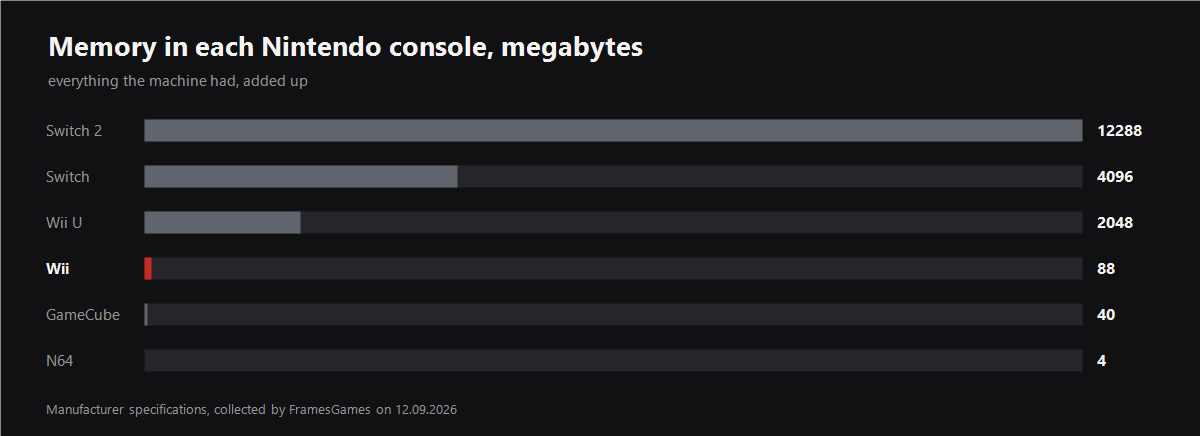
- Memory. 24 MB of 1T-SRAM plus 16 MB of auxiliary, 40 MB in total.
- Media. Mini discs holding 1.5 GB instead of ordinary DVDs.
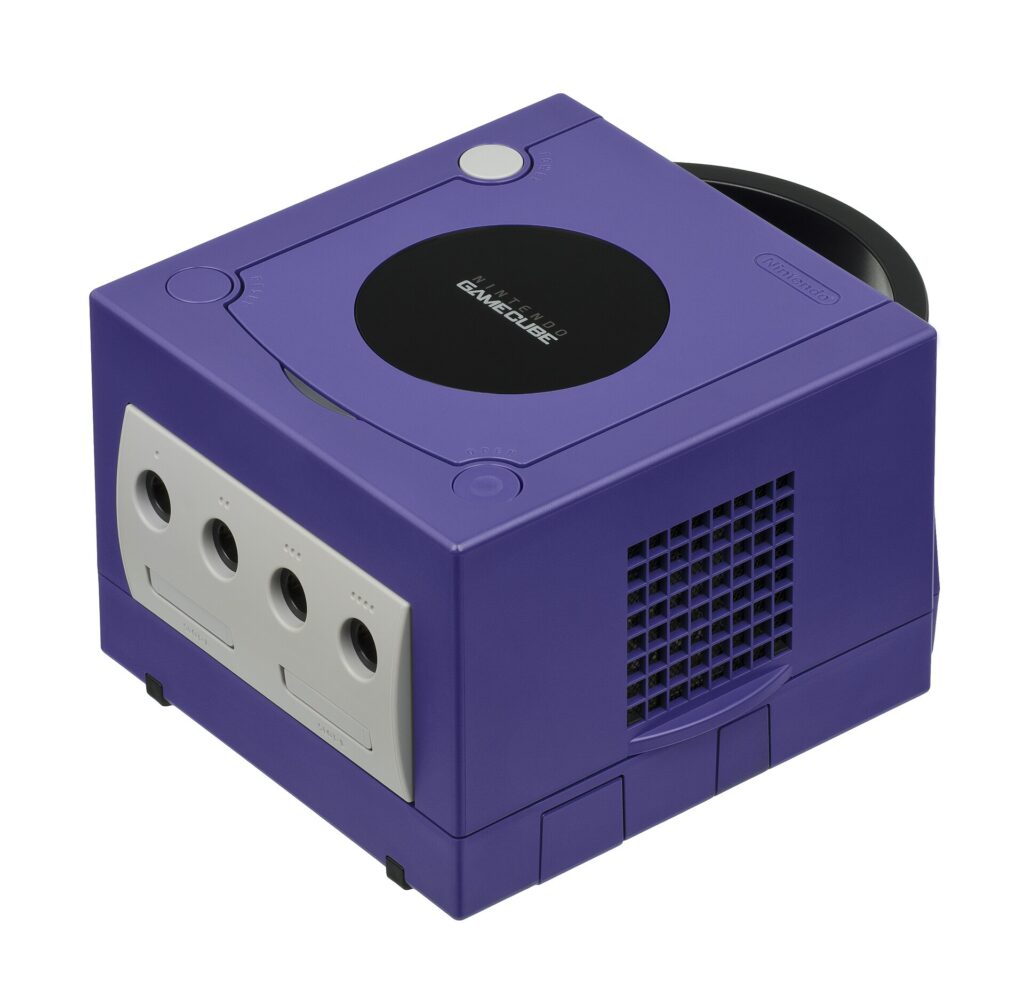
Against the N64. Ten times the memory, 40 megabytes against four. The processor clock went up five times. Nintendo was moving at the pace of the generation and conceded nothing in hardware.
The media mistake was partly repeated. Mini discs holding 1.5 gigabytes against 4.7 on an ordinary DVD, again for copy protection and again at the cost of how big a game could be. Large projects like Resident Evil 4 had to be cut across two discs where one was enough on the PS2.
21.74 million sold. Nintendo's worst result at that point, while the PS2 of the same generation took 160 million. This is where everything changed: the conclusion inside the company was not "we are weaker" but "strength is not helping".
Wii, November 2006. A jump of only 2.2 times, and it was a choice
Out on 19 November 2006 at 249.99 dollars. The same generation as the PS3 and Xbox 360, and weaker than both by a wide margin.
- Processor. A Broadway at 729 MHz, the same PowerPC architecture as the Gekko, just built on 90 nanometres instead of 180.
- Graphics. A Hollywood at 243 MHz.
- Memory. 24 MB of 1T-SRAM and 64 MB of GDDR3, 88 MB in total.
- Controls. A controller that tracked its position in space, the project's main expense.
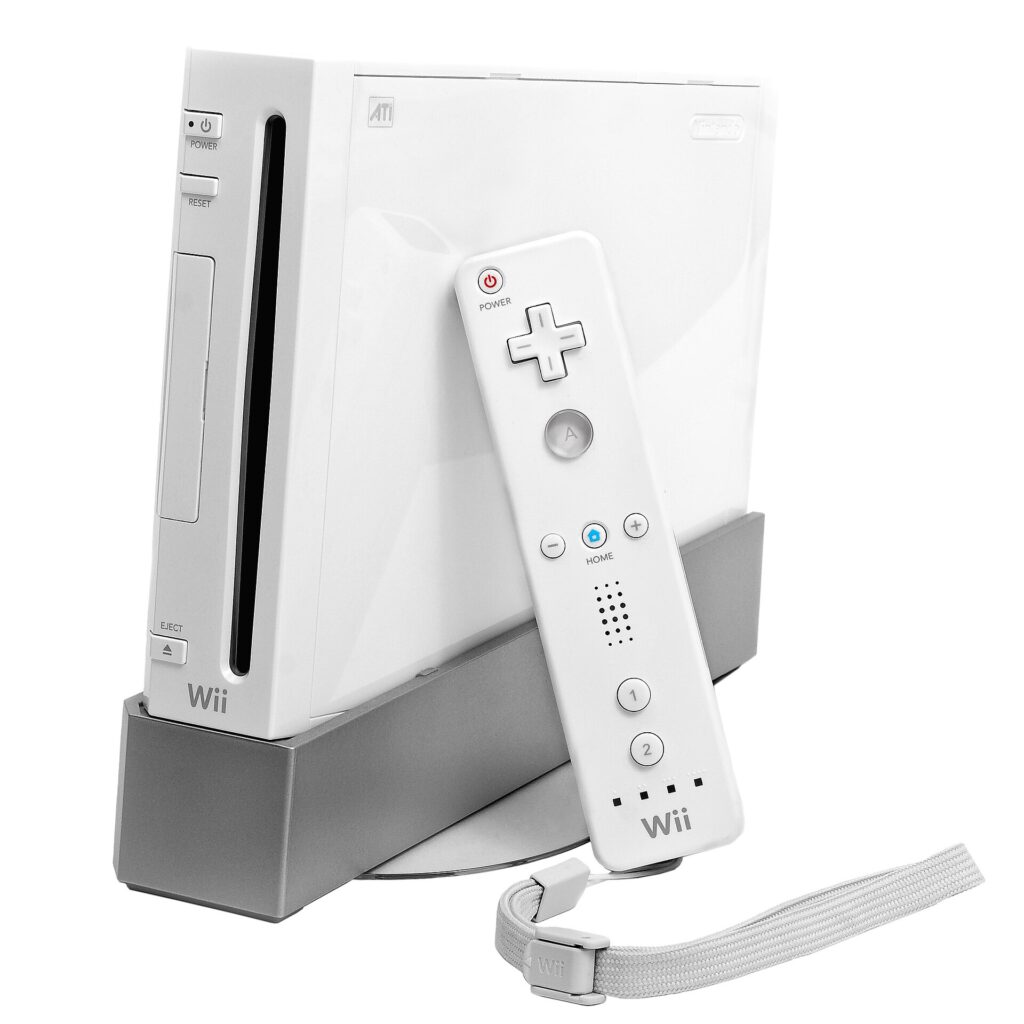
Against the GameCube. On memory only 2.2 times, 88 megabytes against 40, in a generation where Sony added fourteen times and Microsoft sixteen. In computing terms the Wii was roughly one and a half to two times the GameCube and remained the least powerful home console of its generation.
It is essentially the same GameCube, just faster: the Broadway is the Gekko on a new process, the Hollywood is an overclocked Flipper. That is exactly why the Wii played GameCube discs with no emulation at all, it only had to read the media.
And it was a choice, not a ceiling. Shigeru Miyamoto said so outright:
Originally, I wanted a machine that would cost $100. My idea was to spend nothing on the console technology so all the money could be spent on improving the interface and software.
Shigeru Miyamoto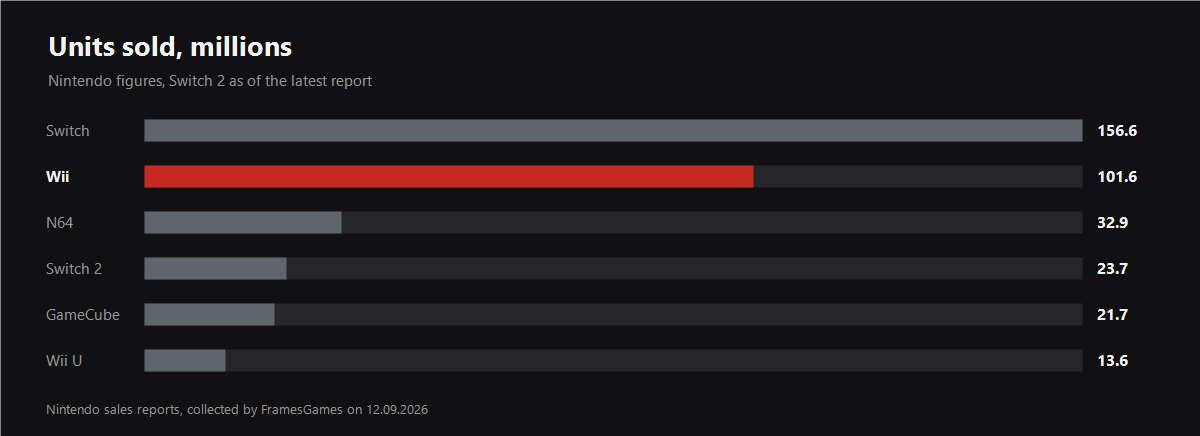
101.63 million sold. Five times the GameCube. The console's working name during development was Revolution, and for once that was not marketing.
Wii U, November 2012. A 23 times jump and the company's worst failure
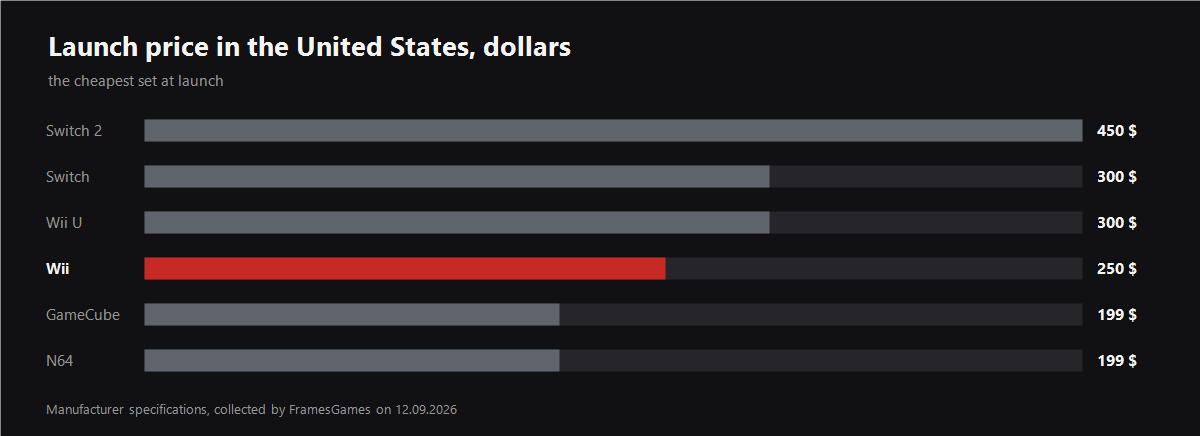
Out on 18 November 2012, 299.99 dollars for the Basic Set and 349.99 for the Deluxe.
- Processor. A three core Espresso at 1.24 GHz, PowerPC again.
- Graphics. An AMD Latte at 550 MHz with 32 MB of embedded memory.
- Memory. 2 GB of DDR3, of which games were handed one gigabyte.
- Controls. A GamePad tablet with a 6.2 inch screen.
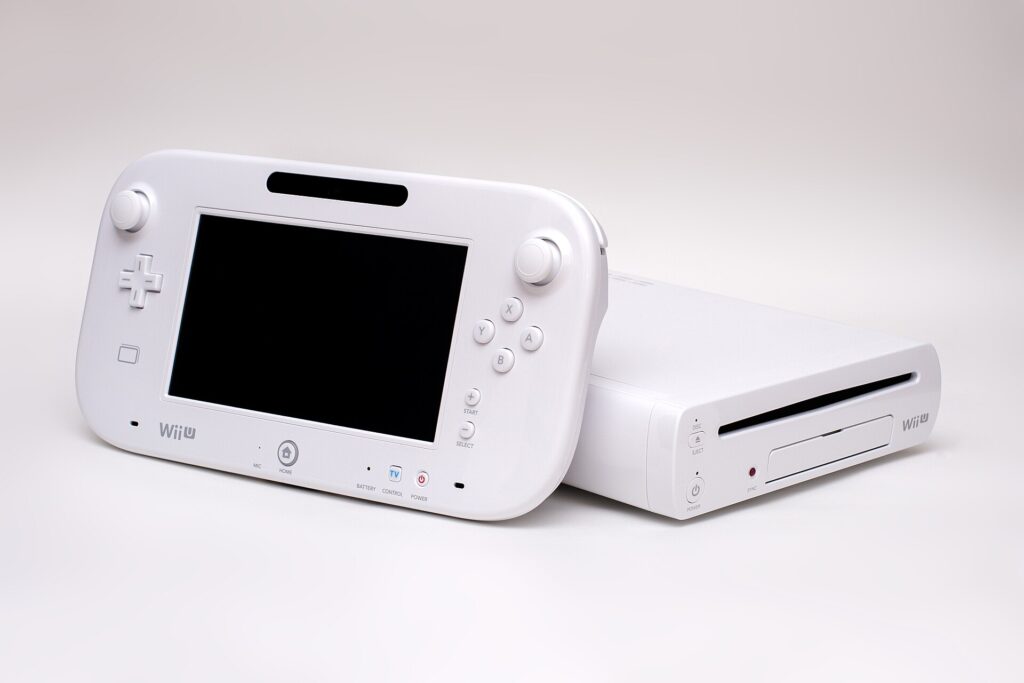
Against the Wii. Twenty three times the memory, 2 gigabytes against 88 megabytes. That is the biggest jump in the company's history, bigger than any step Sony took after the PS3.
13.56 million sold. The worst result of any Nintendo home console.
There were reasons enough, and power is not among them: a name that made buyers think it was an add on for the Wii, a tablet controller with no clear use, an empty release calendar. But for our subject the point is narrower. The biggest power jump in the company's history landed on its biggest failure. There is no direct line between those two quantities, and there never was.
Switch, March 2017. Weaker than a four year old PS4 and the second best selling console ever
Out on 3 March 2017 at 299.99 dollars.
- Processor. An NVIDIA Tegra X1, four Cortex-A57 cores at 1.02 GHz.
- Graphics. 256 Maxwell cores, 393 GFLOPS docked and 157 handheld.
- Memory. 4 GB of LPDDR4.
- Screen. 6.2 inches at 720p, output up to 1080p docked.
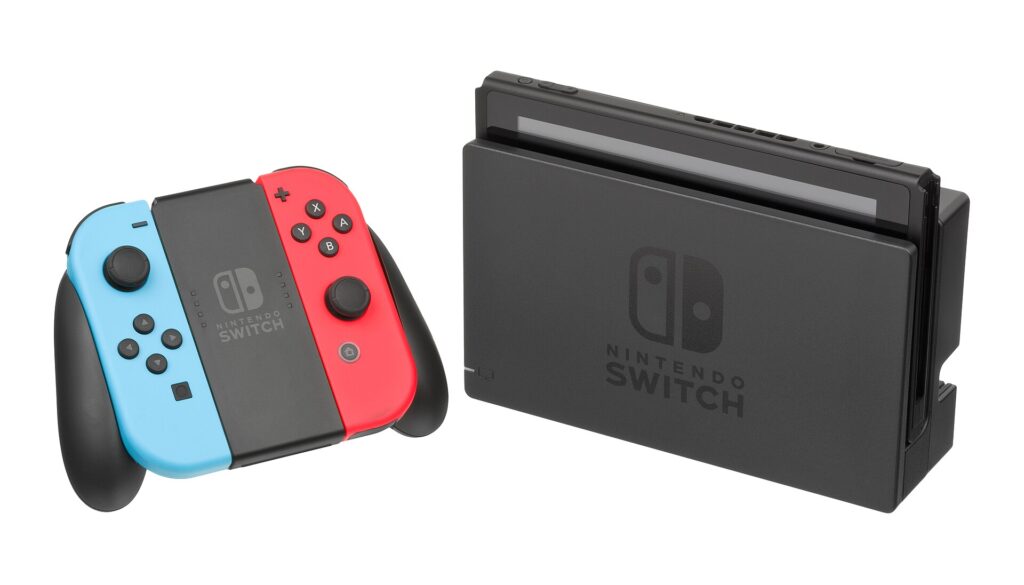
Against the Wii U. On memory only twice, 4 gigabytes against 2. By 2017 standards that is weak in absolute terms too: the PS4 had been putting out 1.84 TFLOPS for four years, five times what a docked Switch managed.
The interesting thing in the hardware is not the power but the fact that the Tegra X1 is an off the shelf mobile chip NVIDIA designed for tablets, and by 2017 it was no longer new. Nintendo did not commission a custom die the way Sony and Microsoft did, it took an existing one and saved years and hundreds of millions in development.
156.59 million sold. More than any PlayStation except the PS2. Because Nintendo stopped answering "how many frames at 4K" and started answering "can I take this on a train". On the second question it had no competition at all, and there the power is limited not by money but by the battery and the weight.
Switch 2, June 2025. Three times the memory and still not a flagship
Out on 5 June 2025 at 449.99 dollars.
- Processor. An NVIDIA Tegra T239, eight Cortex-A78C cores.
- Graphics. 1536 Ampere cores with hardware ray tracing and DLSS upscaling.
- Memory. 12 GB of LPDDR5X.
- Screen. 7.9 inches at 1080p up to 120 Hz, output up to 4K docked.
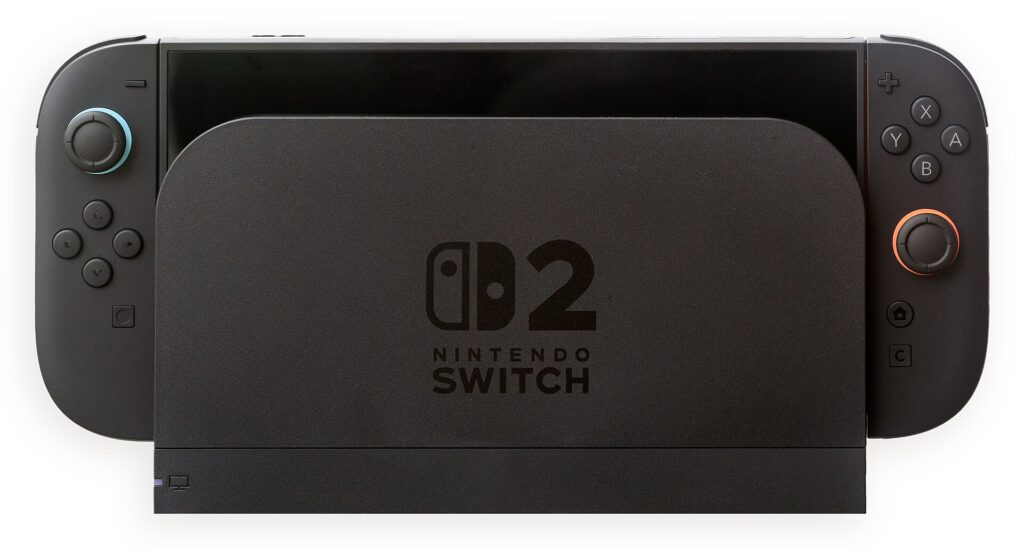
Against the first Switch. Three times the memory, 12 gigabytes against 4, and six times the graphics cores, 1536 against 256. A decent jump, but it is still not a hardware flagship and is not trying to be: the Switch 2 is weaker than a PS5 released five years earlier. 23.68 million sold in its first months.
What you see when you put all six together
On memory the series runs 10 times, 2.2, 23, 2, 3. No staircase and no cliff, just a zigzag.
Put the three parts of this series together and it comes to this. Sony and Microsoft slowed down because they hit a price: memory is expensive, buyers will not go far past 499 dollars, and the rest is arithmetic. Nintendo never hit that wall because it was never walking towards it.
I did not arrive at that conclusion comfortably, because it devalues thirty years of arguing about specifications. But the numbers are stubborn: the weakest console of its generation sold 101 million, the biggest power jump the company ever made ended at 13 million, and a machine slower than a four year old PS4 became the second best selling console ever made.
The slowdown we measured in the first two parts is a problem for Sony and Microsoft. For Nintendo it is simply not the coordinate system.
Sources
Specifications come from the published hardware descriptions of each console. N64: a NEC VR4300 at 93.75 MHz, an RCP coprocessor at 62.5 MHz designed with Silicon Graphics and carrying hardware texture filtering and perspective correction, 4 MB of RDRAM doubling to 8 MB with the Expansion Pak, released 23 June 1996 at 199 dollars, 32.93 million sold; the same source gives the maximum cartridge size of 64 MB against 650 MB on a CD, Nintendo's argument about load speed and copy protection, and the roughly 10 dollar price difference on games. GameCube: an IBM Gekko at 486 MHz, an ATI Flipper at 162 MHz, 24 MB of 1T-SRAM and 16 MB of auxiliary memory, 1.5 GB mini discs against 4.7 GB on an ordinary DVD, released 14 September 2001 at 199 dollars, 21.74 million sold. Wii: a Broadway at 729 MHz on a 90 nanometre process against the Gekko's 180, a Hollywood at 243 MHz, 24 MB of 1T-SRAM and 64 MB of GDDR3, an estimate of roughly one and a half to two times the GameCube while being the least powerful home console of its generation, backward compatibility with GameCube games, the working name Revolution, released 19 November 2006 at 249.99 dollars, 101.63 million sold. Shigeru Miyamoto's words about a hundred dollar machine come from published accounts of the Wii's development. Wii U: a three core Espresso at 1.24 GHz, an AMD Latte at 550 MHz with 32 MB of embedded memory, 2 GB of DDR3 with one gigabyte for games, a GamePad with a 6.2 inch screen, released 18 November 2012 at 299.99 and 349.99 dollars, 13.56 million sold. Switch: an NVIDIA Tegra X1 with four Cortex-A57 cores at 1.02 GHz and 256 Maxwell cores, 393 GFLOPS docked and 157 handheld, 4 GB of LPDDR4, a 6.2 inch 720p screen, released 3 March 2017 at 299.99 dollars, 156.59 million sold. Switch 2: an NVIDIA Tegra T239 with eight Cortex-A78C cores and 1536 Ampere cores with ray tracing and DLSS, 12 GB of LPDDR5X, a 7.9 inch 1080p screen up to 120 Hz and output up to 4K docked, released 5 June 2025 at 449.99 dollars, 23.68 million sold. For comparison we cite PS1 sales of 102 million, PS2 sales of 160 million and PS4 graphics of 1.84 TFLOPS. The growth multipliers, the charts and the argument about different coordinate systems are ours. The videos are official uploads from Nintendo channels; for the N64, GameCube and Wii, Nintendo has nothing online from the time of their launches, so those three are the company's own later material. The console photographs come from Wikimedia Commons. The N64, GameCube, Wii and Switch shots are by Evan-Amos and released into the public domain, the Wii U shot is by Takimata under CC BY-SA 3.0 and the Switch 2 shot by Crisco 1492 under CC BY-SA 4.0.