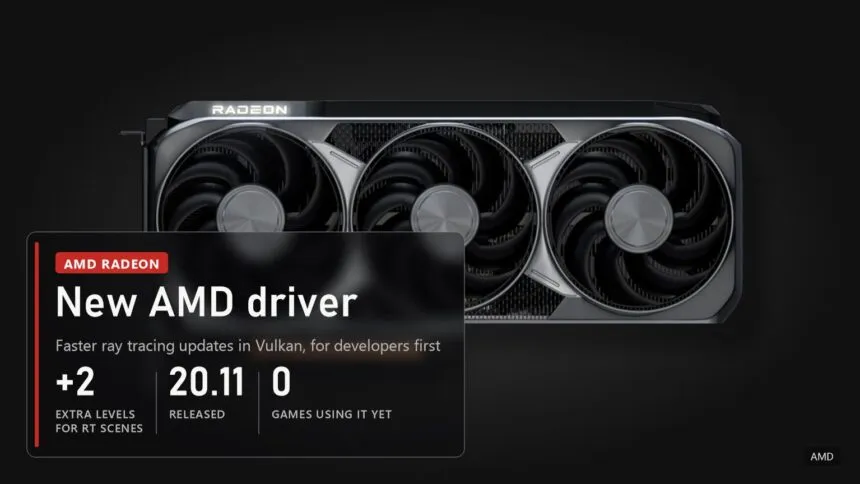
AMD has released a separate driver, Adrenalin 26.20.25.01 for Expanded Vulkan Extension Support, with one new feature: an experimental Vulkan extension that should make ray tracing in large, complex scenes cheaper to update and lighter on memory. It's out for the Radeon RX 9000 and RX 7000 series. There's a catch, though: your current games won't run any faster with it. The extension does nothing until developers build it into their games, and so far nobody has measured a single frame of gain.
Read next:
What the new extension changes
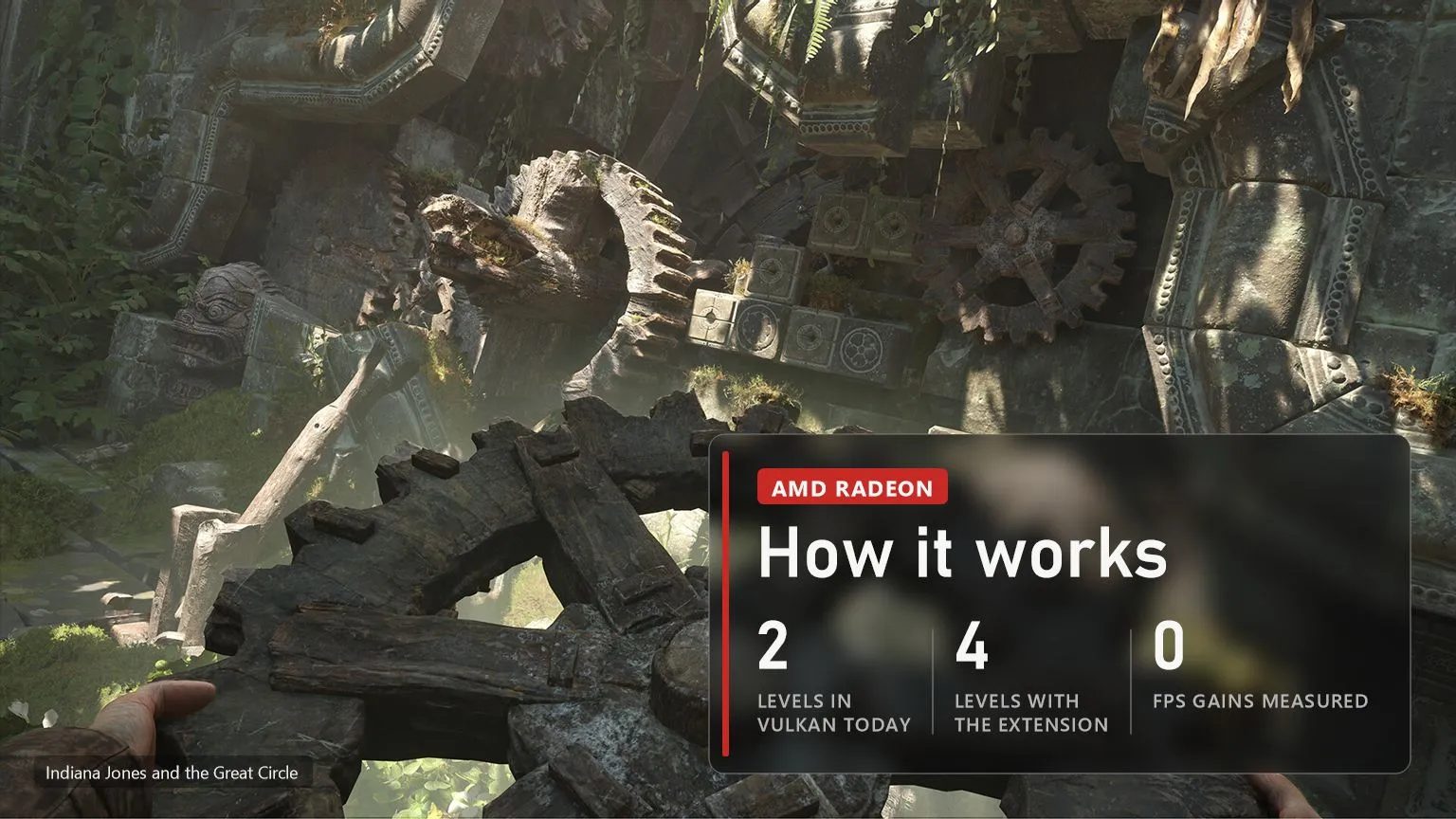
To trace rays quickly, the GPU keeps the scene in a tree of boxes called an acceleration structure. In Vulkan today it has two levels: the bottom one holds the geometry of individual models, the top one lists every copy of those models in the scene. When something moves, the top level has to be rebuilt or updated across the whole scene, and in a big open world with crowds, traffic and a forest that's a lot of work every frame.
The extension, VK_AMDX_multi_level_acceleration_structure, allows up to two extra levels in between. A developer can pack a city block, a building or a group of trees into its own mid-level structure and update only the part that changed, instead of the whole top level. AMD's release notes say it improves "build/update speeds and memory footprints for complex ray traced scenarios". The extension is listed in the Vulkan specification since version 1.4.369, but it's marked provisional and not ratified, and the X in AMDX stands for experimental.
Which cards it supports
| Group | Supported |
|---|---|
| Desktop RDNA 4 | Radeon RX 9070, 9060 and 9050 series |
| Desktop RDNA 3 | Radeon RX 7900, 7800 and 7650 series |
| Workstation | Radeon AI PRO R9700, R9700S and R9600D |
| Laptops | Radeon RX 7900M, 7800M and 7600M series, Ryzen and Ryzen AI processors with Radeon graphics |
| Not supported | Radeon RX 6000 and older, handhelds (use the maker's driver) |
AMD released the driver on November 20. It only works on Windows 10 and Windows 11 from version 21H2, and AMD itself recommends that laptop owners stick to drivers from their laptop's manufacturer.
Should you install it
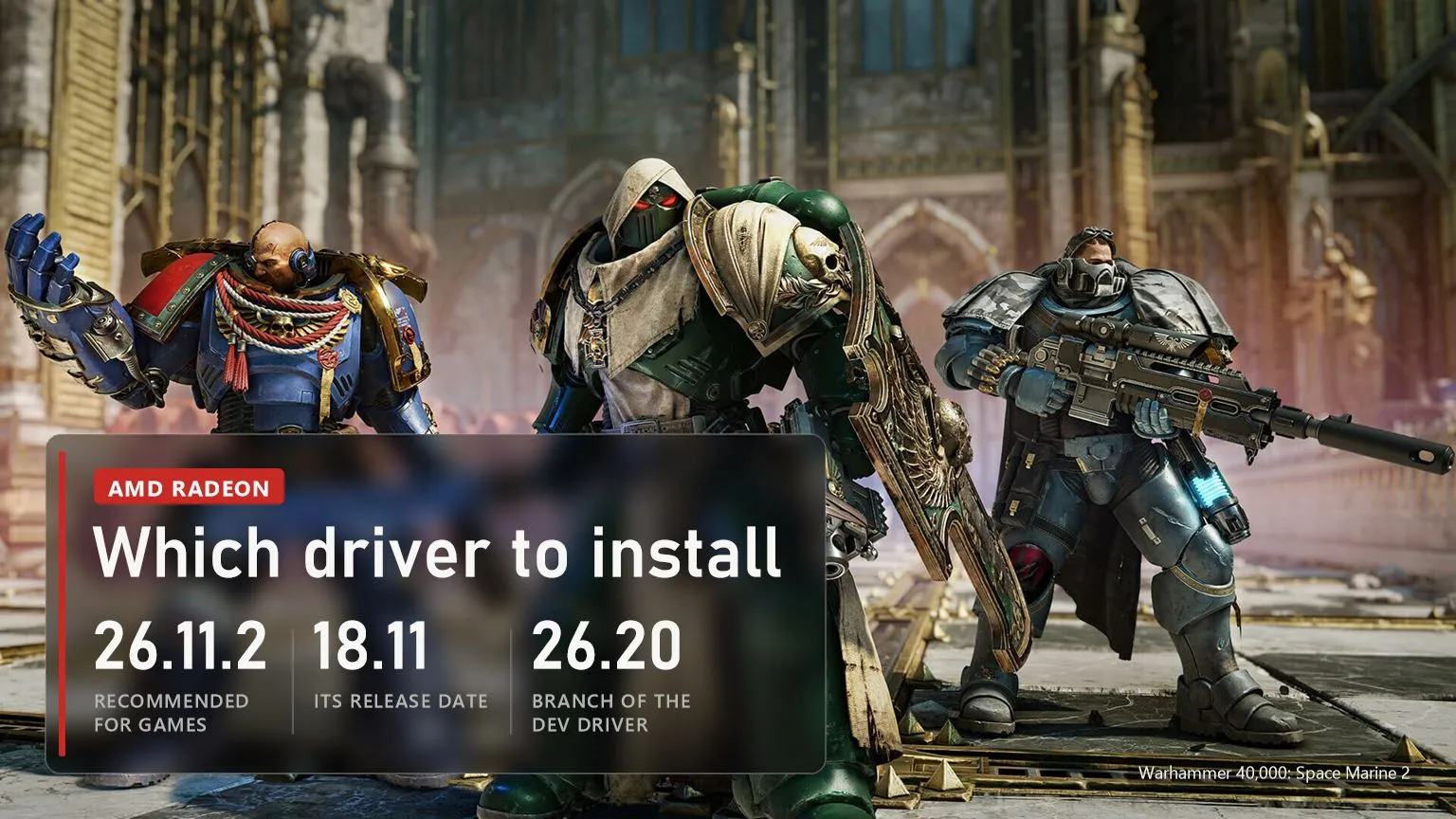
If you just play games, no. This is a separate branch for developers who want to try the new extension, and it isn't a WHQL release. Gains will only show up when a game or an engine adds support, and none has been announced yet. Your driver for games is still Adrenalin 26.11.2 WHQL from November 18, which fixed a memory leak and the excessive SSD writes on RX 5000 and RX 6000 cards.
The bigger picture is worth noting, though. Both AMD and Microsoft are now working on the same problem: ray tracing in huge, constantly changing worlds, where rebuilding the scene structure each frame eats a lot of time. AMD's cards have historically lagged behind NVIDIA in heavy ray tracing, so changes at this level could matter for future open-world games. Whether they do will only be clear from the first game that uses the extension and from independent tests.
Sources
AMD, release notes for AMD Software: Adrenalin Edition 26.20.25.01 for Expanded Vulkan Extension Support: the extension, supported products and Windows versions. AMD, Vulkan driver support page: release date November 20, 2026. Vulkan Documentation Project, VK_AMDX_multi_level_acceleration_structure reference page: up to two extra instance levels, provisional status. Phoronix: the extension in Vulkan 1.4.369. GameGPU: no performance results yet. AMD, Adrenalin 26.11.2 release notes, November 18, 2026. Microsoft's DirectX Raytracing preview: Wccftech. Images: AMD; Indiana Jones and the Great Circle and Warhammer 40,000: Space Marine 2, official screenshots from Steam.