People have been arguing about A-Life since 2007, and mostly about the wrong thing. Some expect clever artificial intelligence from it, others use the word for any bunch of NPCs that wandered off without the player. What it really is, is a fairly down to earth bookkeeping system for a population. Here is how it got there.
What it actually is
A-Life is not the brain of one bandit. It is the ledger of everyone in the Zone at once: where each of them is, where they are heading, whether they are still alive. The player cannot be everywhere, so the system runs in two modes.
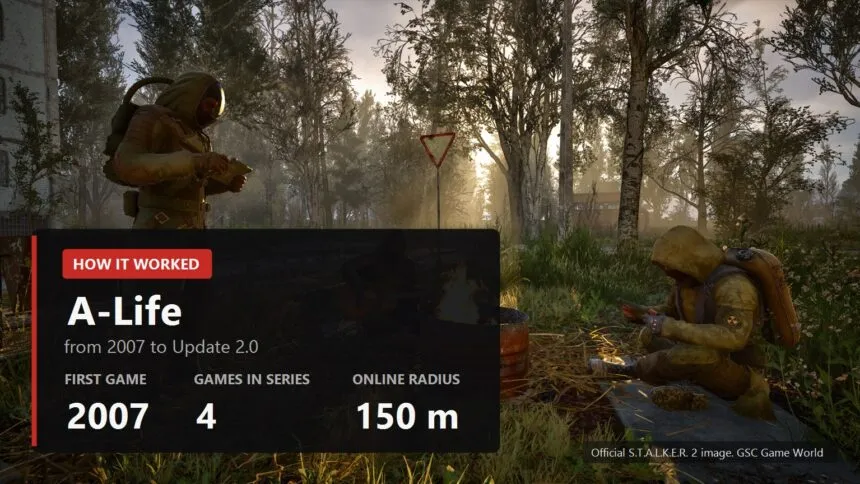
Close to you a character lives in full: animations, sounds, gunfire, physics. Walk away and he switches to a simplified mode where all that is left is coordinates, a goal and a state. Dmitriy Iassenev, the AI programmer on the first game, put it plainly: in offline mode a character plays neither animations nor sounds, it is a level of detail system, only for life instead of models. The radius of the detailed mode in Shadow of Chernobyl was around a hundred and fifty metres and designers could tune it.
That is also where every complaint about every game in the series comes from. If the seam between the two modes is visible, the magic dies: you can see the world switching on exactly where you look at it.
2007: what was planned and what shipped
There was a lot more on the drawing board than made it onto the disc. From the same interview: they cut following a specific stalker across several levels while he gathers artifacts. They cut unarmed characters who would go and find themselves weapons and ammunition. They cut hunger and sleep. And they cut the most famous one, NPCs who could uncover the mystery of the Zone before the player did.
What remained was simpler. Levels are dotted with smart terrains, scripted points that hand out tasks: a camp here, an ambush there, a patrol over there. Characters walk between them and do as they are told. Less romantic than the legend, but this is exactly what produced the Zone where you could run into someone else firefight that nobody had placed by hand.
And the numbers were real. GSC talked about more than a thousand characters living in the Zone at the same time, and playing it, that tracks.
Clear Sky: A-Life as a war
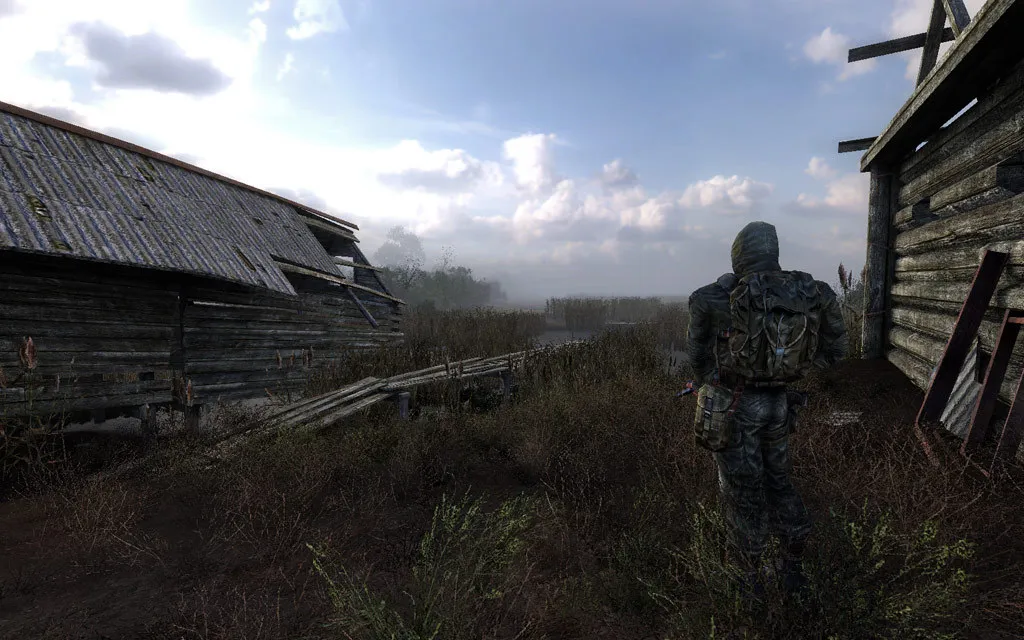
In 2008 the system got a story job. The faction war is A-Life handed bigger goals: squads move for territory, take points, lose them again. On paper the best thing that ever happened to the series.
In practice Clear Sky launched in a state people still bring up. Squads got stuck, the front line either froze or ground itself into dust, and the player sat inside a system that lived too hard and not always by its own rules. Patches fixed a lot. The reputation stuck anyway.
Call of Pripyat: the one that worked
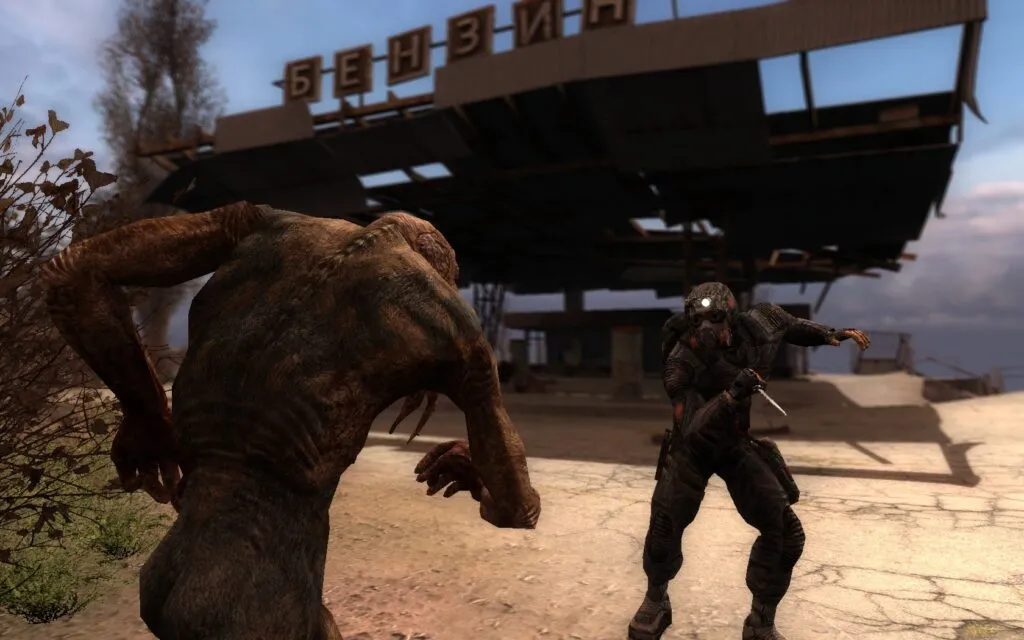
The third game, which reached Steam in February 2010, went the other way: three large maps instead of a dozen, less global ambition, and all of it holds together. This is the one people mean when they say A-Life used to work.
I do not think the tech is the whole answer. In Call of Pripyat the camps and factions got a readable rhythm: you come back to a familiar spot and see that something changed while you were away. That is enough for your brain to fill in the rest.
| Game | Year | What A-Life did | Main problem |
|---|---|---|---|
| Shadow of Chernobyl | 2007 | The population of the Zone goes about its business, in full detail near you and simplified far away | Half of the design was cut before release |
| Clear Sky | 2008 | Faction war: squads march for territory and take points | Fell apart on bugs at launch |
| Call of Pripyat | 2010 | Smaller in scope but stable, camps and factions have a readable rhythm | Nothing loud, and that is a compliment |
| S.T.A.L.K.E.R. 2 | 2024 | A-Life 2.0 was promised, at launch life appeared almost on top of the player | Two years of patching, back to normal only with Update 2.0 |
S.T.A.L.K.E.R. 2 and the A-Life 2.0 mess
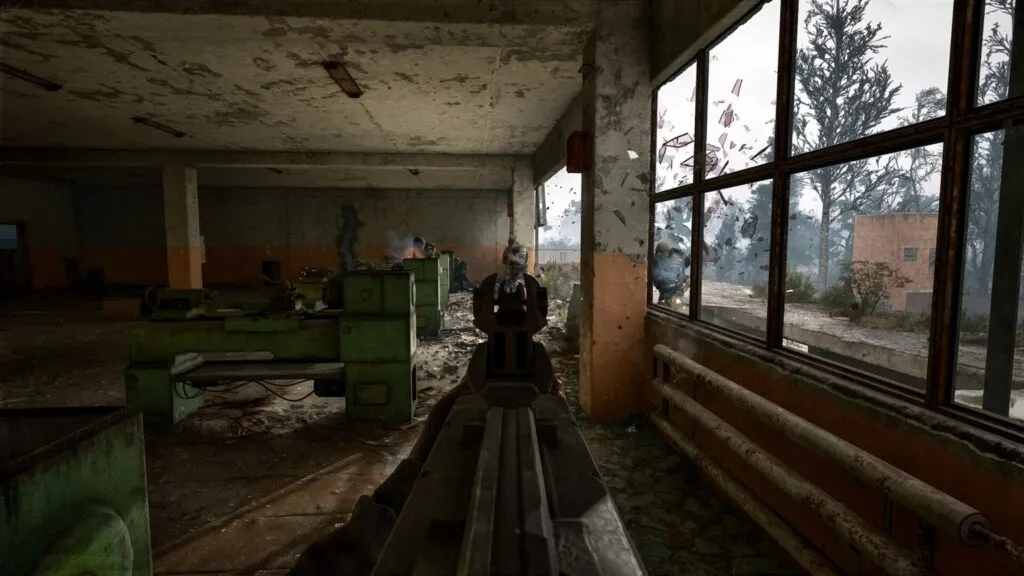
By 2024 A-Life 2.0 had become the headline promise of the new game. It launched on 20 November, and it very quickly turned out that life in the Zone appeared right behind the player and vanished the moment he turned away. Then the mention of A-Life 2.0 disappeared from the Steam description, and that is what really set everything on fire.
GSC later explained both halves. The line was removed by someone in marketing, without discussion and without permission, on the reasoning that the words A-Life would mean nothing to new players. The system itself had been switched off for release: they had tried to shrink its radius for performance, ran into game breaking bugs and turned it off, because working properly it needs both a bigger area and more memory.
Two years of patching followed. I am calmer about this than most: the promise was broken, but the repair happened in public and fairly stubbornly.
What changed with Update 2.0
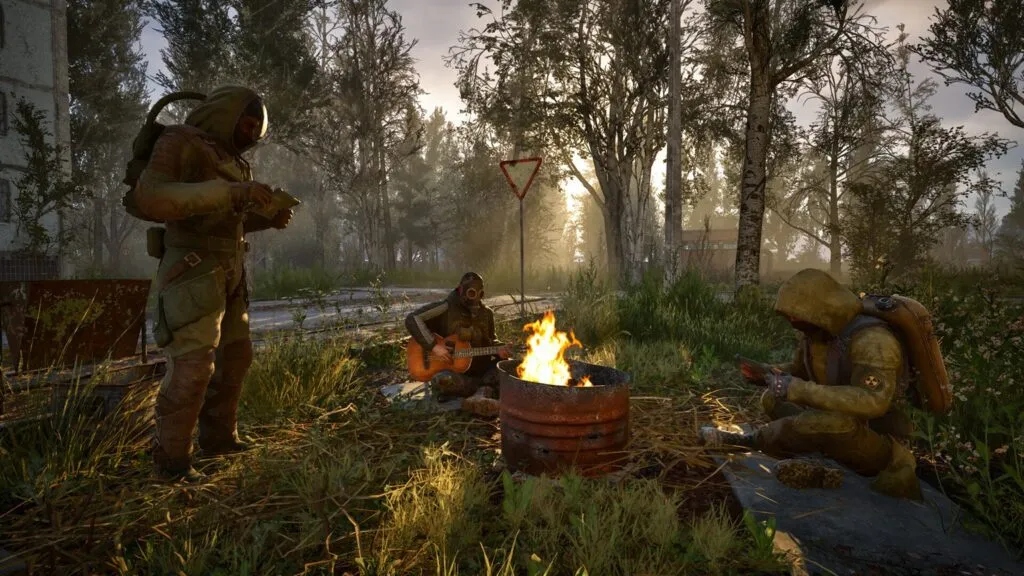
The August Update 2.0, Back to the Zone, is the first time GSC has described A-Life in words that sound like the first game. The patch notes put it this way.
A-Life now simulates more believable behaviour, the Zone isn't one constant gunfight. It's a lonely place where life carries on by its own rules, and every encounter or firefight is the result of stalkers and mutants simply doing stalker and mutant things.
Update 2.0 patch notes, GSC Game World- Living things have places to be. More campfires, bus stops and other points of interest that stalkers and mutants contest.
- Looting happens without you. Stalkers across the Zone loot the fallen all the time, not only when you are standing there watching.
- The immersion killers got fixed. Enemies shooting through walls, sudden overpopulation of certain areas, NPCs stuck in shelters after an emission.
Then the tail of small patches: 2.0.1 for textures and 2.0.2 for the vanishing bodies, which arrived on 23 August. What changed on the maps themselves we went through shot by shot, and the overall verdict after a hundred hours sits in our review.
The short version of this nineteen year story: A-Life was never clever. It was an accountant that honestly keeps track of a couple of hundred people and mutants while you are looking the other way. And there is one test for it: is the Zone still interesting two hundred metres behind your back.
Sources
How A-Life works, the radius of the detailed mode and the list of cut features come from the interview with Dmitriy Iassenev, AI programmer on Shadow of Chernobyl, published by Game Developer on 12 March 2008. Release dates from the game pages on Steam: Shadow of Chernobyl 20 March 2007, Clear Sky 15 September 2008, Call of Pripyat 11 February 2010, S.T.A.L.K.E.R. 2 20 November 2024. The A-Life quote and the list of fixes come from the Update 2.0 notes in the Steam community announcements. The GSC explanations about A-Life 2.0 and the Steam description are quoted from GameSpot and Insider Gaming reporting on interviews with Maria and Ievgen Grygorovych.