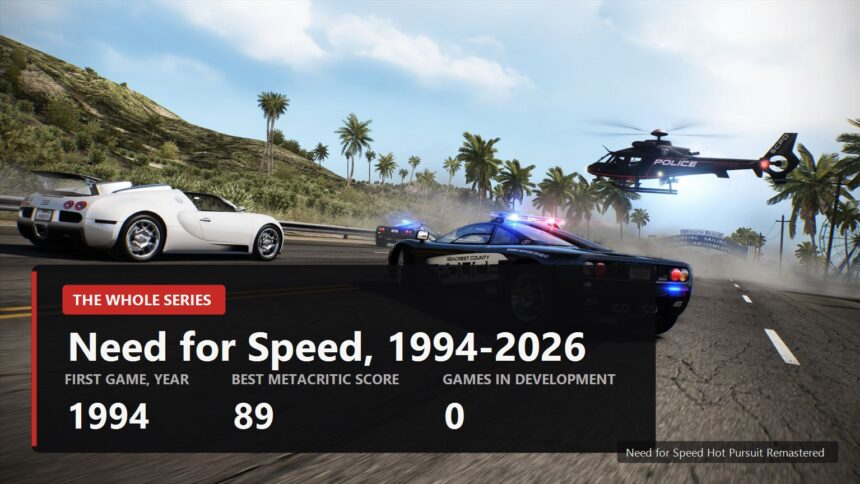
Nobody is making Need for Speed any more. That is not a rumor or a guess: in July 2026, at Criterion's thirtieth anniversary, Rebecka Coutaz, vice president and head of Battlefield Studios Europe, said two things to an IGN journalist and that was enough. First "we are not here to talk about the past", and then, when asked directly whether the studio's remit includes anything besides Battlefield, "we are solely focused on Battlefield". Behind her, on the wall, hung the new logo: Criterion, a Battlefield Studio.
- 1994-2002: Road & Track magazine, the cops and the first taste of fame
- 2003-2008: Black Box, tuning and the annual conveyor belt
- 2009-2013: three series instead of one, Autolog and the always online era
- How the series lost America
- 2015-2022: the reboot, loot boxes and Criterion's return
- February 2025 and July 2026: how the series was put on pause
- What is left of Need for Speed
The series that began in 1994 as a joint project with Road & Track magazine is now thirty two years old. In that time more than two dozen entries came out, five developer studios took turns on it, and the scores swung from 89 points down to 59. FramesGames went through the whole line: what each game brought, what it is remembered for, and what it was criticized for in the year it shipped, not in hindsight.
One note on the numbers up front. EA stopped publishing sales of individual entries after the reboot era, so where there is no official data we say exactly that instead of dropping in analyst estimates. Scores come from Metacritic and we always name the platform: on the older games the spread between versions runs as high as twenty points.
1994-2002: Road & Track magazine, the cops and the first taste of fame
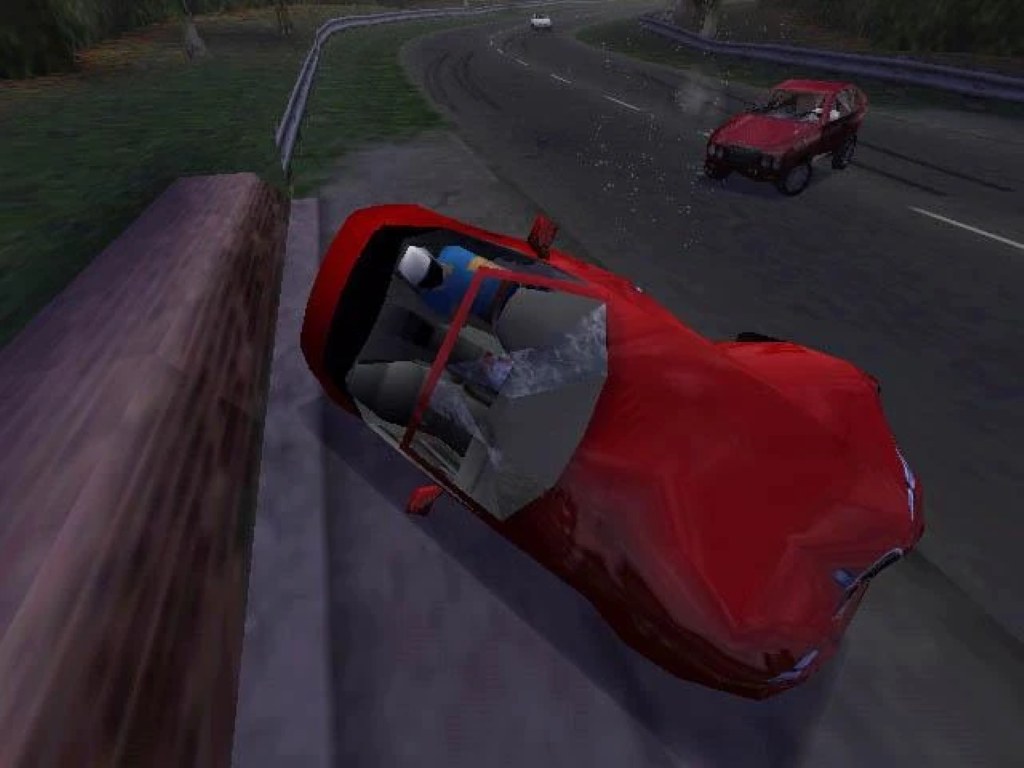
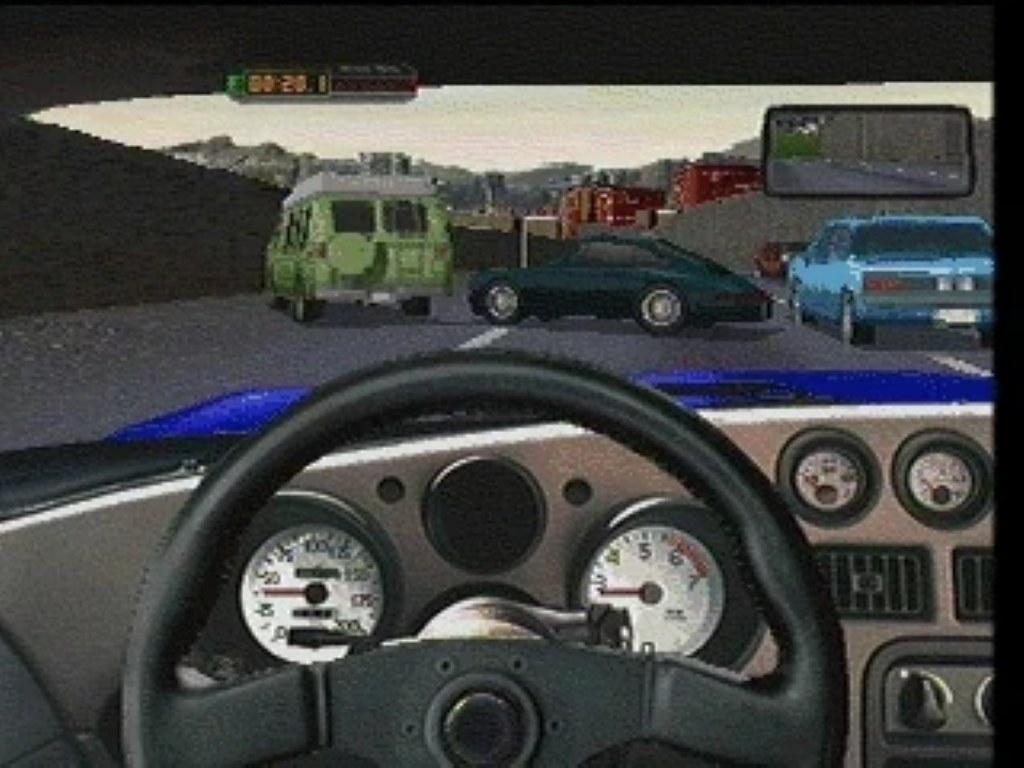
The Need for Speed, December 1994. It came out on 3DO first, on PC a year later, then on PlayStation and Saturn. EA Canada made it together with Pioneer Productions, and the full title read Road & Track Presents: The Need for Speed. The magazine was not there for show: its editors helped tune the physics, and every car came with a video shot on track and from a helicopter, with a live voice reading out the specs.
What it is remembered for: point to point races on ordinary roads, with civilians coming at you in the oncoming lane and the police writing tickets and eventually arresting you. Weak spots according to reviews of the time: Next Generation gave it 2 out of 5 and called it "a pleasant Sunday drive", Maximum complained that the cars were far too reluctant to take damage, and GameSpot, even at its 8.3, pointed at a blocky, cluttered picture.
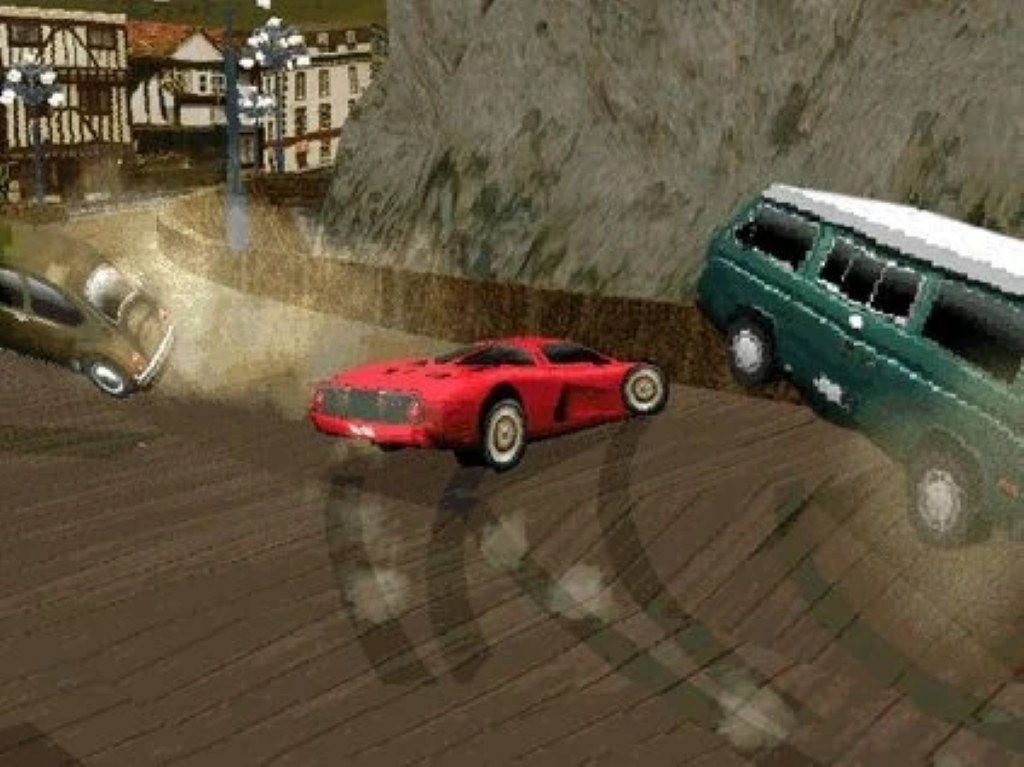
Need for Speed II, March 1997. The PlayStation version came first, and that is an important turn: the series started living on consoles. The game is all exotics, from the McLaren F1 to the Ford GT90, and instead of real roads it has fantasy tracks. The police were cut out entirely, and everyone noticed. The PlayStation version sits at 71 on Metacritic, the worst result of the early series. GameSpot went after the repeating textures and tracks that belonged "in Monster Truck Madness", and IGN took a separate swing at the frame rate.
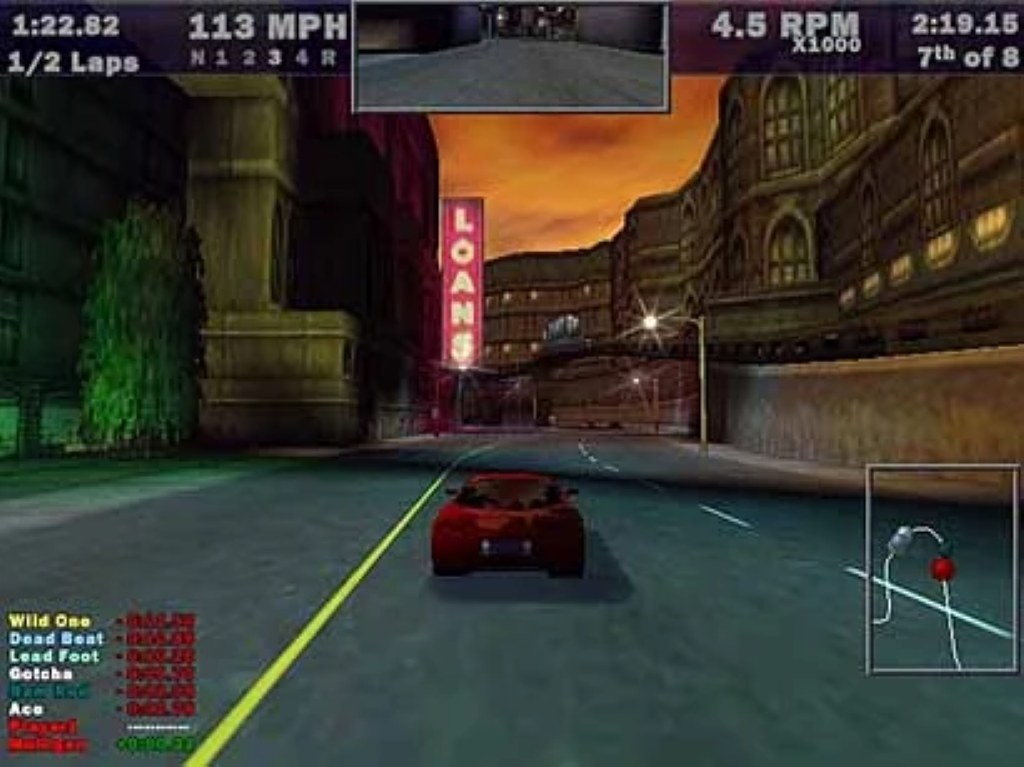
Need for Speed III: Hot Pursuit, March 1998. The cops are back and this is the best score of the early series: 88 points on PlayStation per Metacritic. The chase became a full mode with roadblocks, spike strips and radio chatter, and on PC you could play as a cop. Edge, meanwhile, wrote about "the weightlessness of some of the cars", while Next Generation and GamePro noted frame drops in two player mode. A separate credit to the third game: fans took apart its file formats, and mods for it are still coming out.
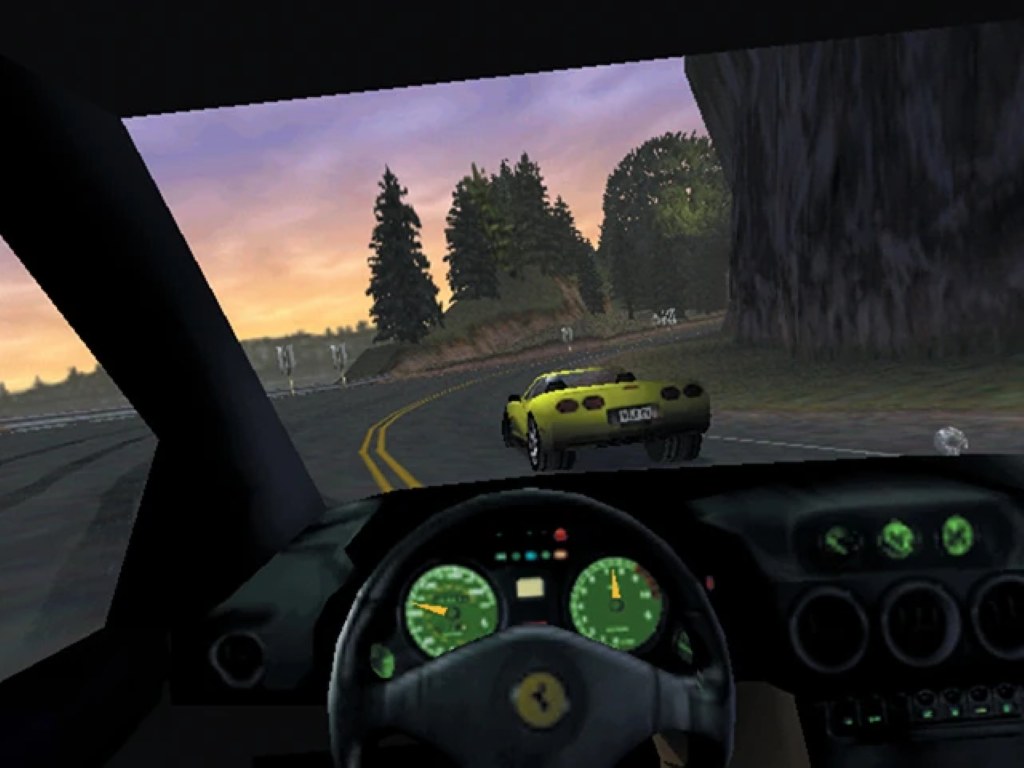
Need for Speed: High Stakes, March 1999. In Europe it was called Road Challenge. This is where the series got things it almost never had again: pink slip races where the loser hands his car to the winner, damage you have to pay to repair, and a garage you fill yourself. Score: 86 on PlayStation. It was criticized for an odd frame rate when cars filled the screen and for not being able to call in backup during a co-op pursuit.
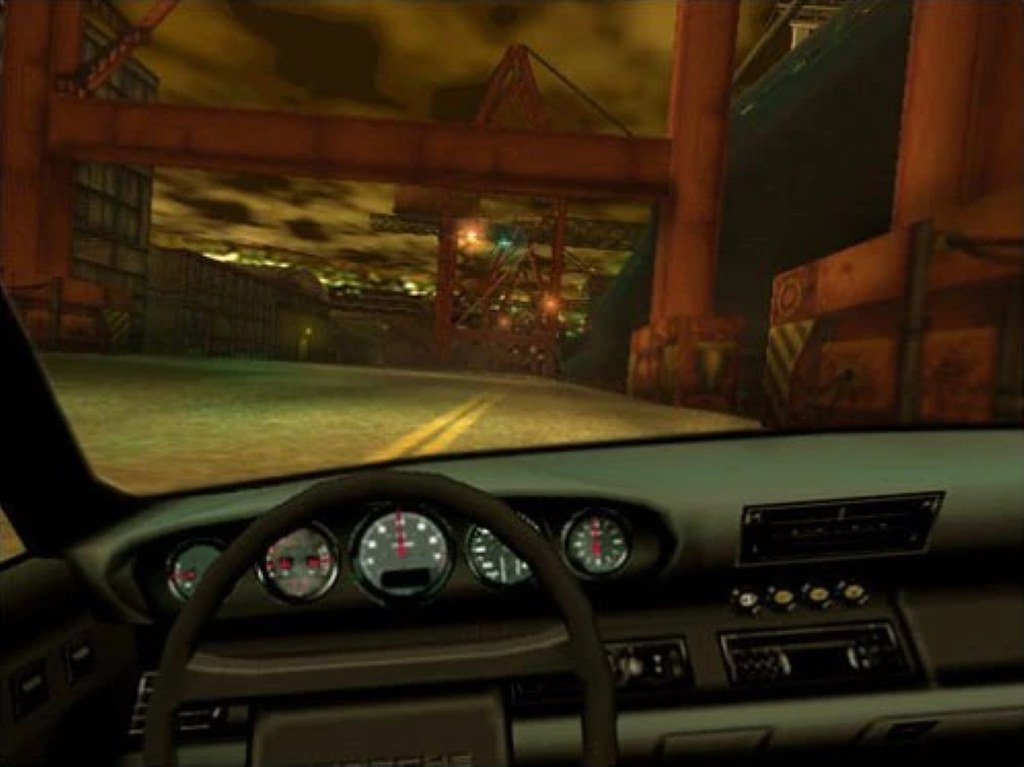
Need for Speed: Porsche Unleashed, March 2000. The strangest entry in the history of the series: the whole career is built around a single manufacturer, and the Evolution mode walks the player from 1950 to 2000, unlocking cars as they appeared in reality. Plus a factory test driver mode with three dozen assignments. On PC there is no Metacritic score at all, but GameSpot gave it 8.8 and called the game beautiful and exhaustive. The PlayStation version was made by a different studio, Eden Studios, and it got 5.9 from that same GameSpot. Commercially the game flopped, and it was right after it that EA turned the series back toward arcade.
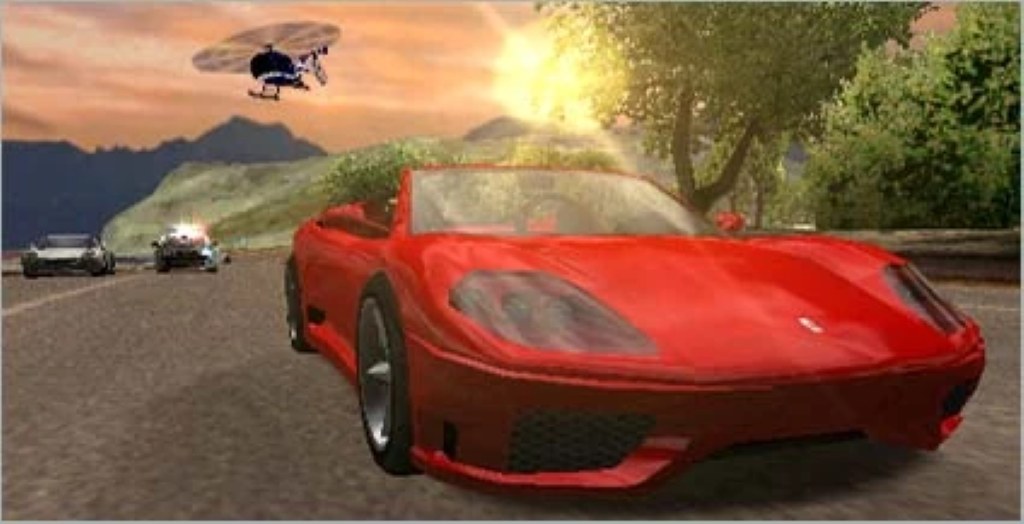
Need for Speed: Hot Pursuit 2, October 2002. Here the series picks up the studio that will define the next six years. The PS2 version was made by Black Box Games out of Vancouver, which EA bought right in the middle of development, in June 2002. The PC, Xbox and GameCube versions were put together by a different team, EA Seattle, so everything could ship at once. The result shows in the scores: PS2 got 89, Xbox 75, PC 73, GameCube 68. GameSpot put it plainly about the PC version: "not nearly as much fun as the PlayStation 2 version".
What changed from the previous era. In eight years the series went from a simulator with a magazine license to an arcade game about outrunning police helicopters, and learned to make more money on consoles than on PC. Along the way it found the studio that would give it its golden years.
2003-2008: Black Box, tuning and the annual conveyor belt
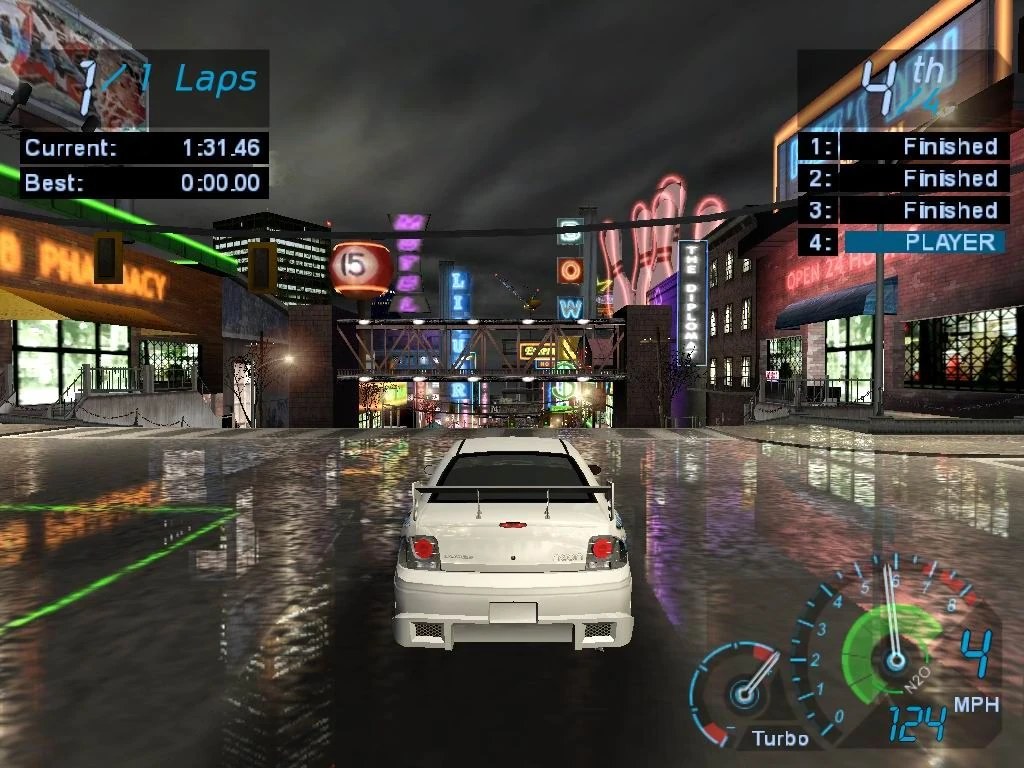
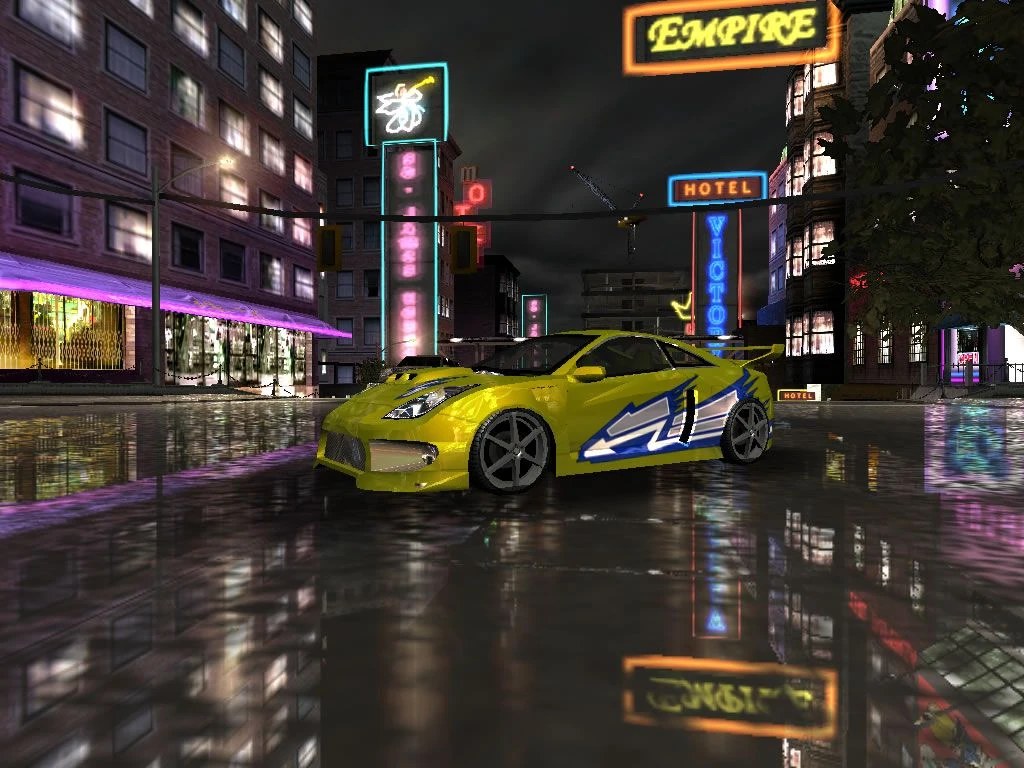
Need for Speed: Underground, November 2003. The sharpest turn in the history of the series. No exotic supercars, no daytime tracks: a night city, Japanese cars, body kits, vinyls, neon under the floor and a soundtrack of 26 licensed songs. The GameSpot review opened honestly: you cannot talk about import racing without bringing up The Fast and the Furious. PS2 score 85, user score 8.3.
EA disclosed the sales itself: a July 2004 regulatory filing says Underground sold more than seven million copies over its life. This is also where the annual conveyor belt started, the one that would later break the series.
What it was criticized for: Eurogamer gave it 7 out of 10 and described the rubber banding AI harshly, "the game pulls the nasty trick where rivals always let you catch up, however many times you mess up". IGN, at 9 points, still missed the vanished police. GameSpot flagged the repeating tracks and the fact that going off the road just puts the car back on it.
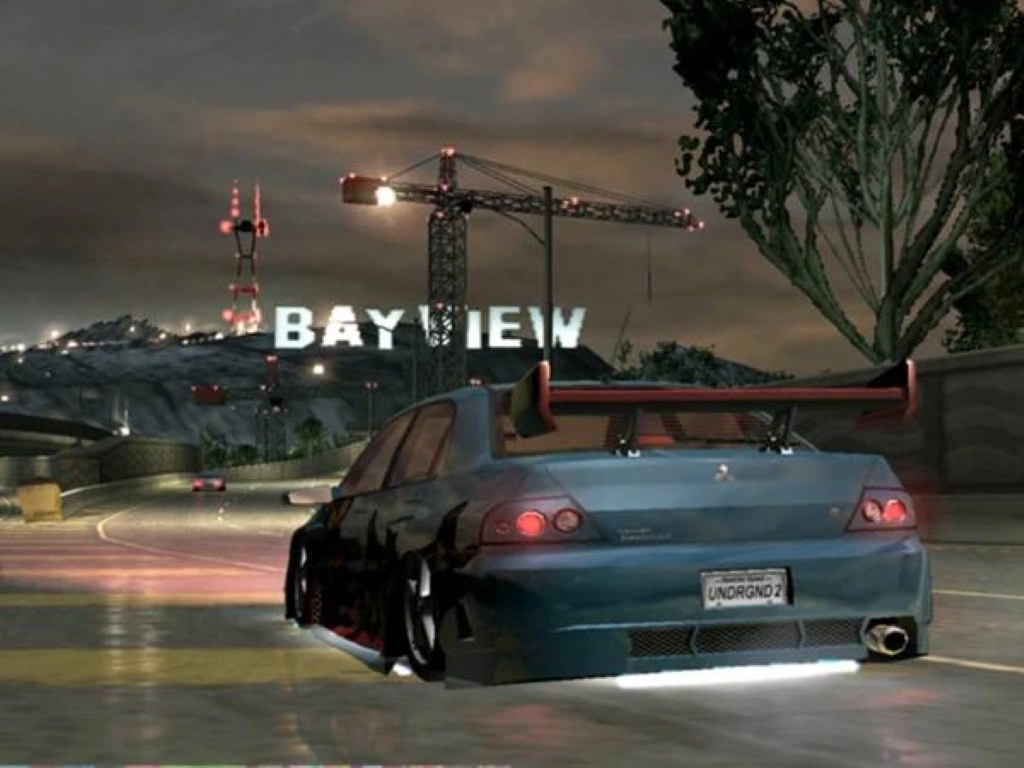
Need for Speed: Underground 2, November 2004. The first open world in the series: the city of Bayview with five districts to drive around looking for events, plus the Outrun mode and even deeper tuning. PS2 score 82, user score 8.6. Sales of 8.4 million copies, and in the same filing EA reported that the series had crossed a billion dollars lifetime.
It was criticized because the open world turned out to be empty transit between races. GameSpot's cons list said it outright: "too much pointless driving between events" and "the heavy advertising presence turns the game into one big billboard". Eurogamer dropped its score to 6 and went after the rubber banding again.
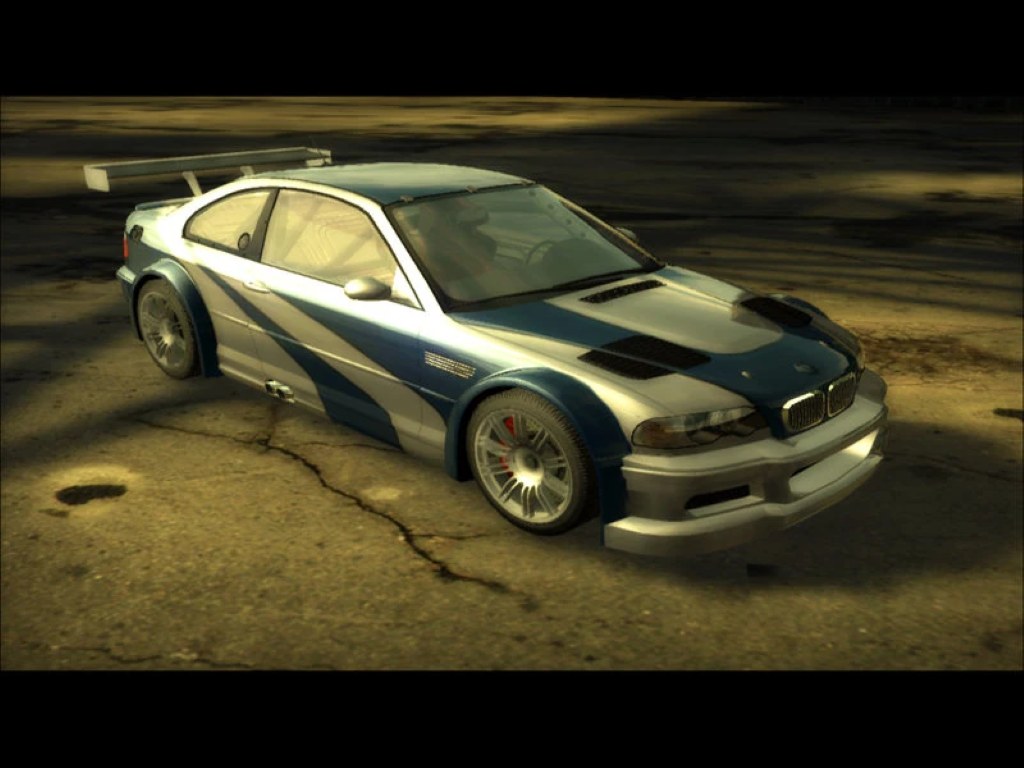
Need for Speed: Most Wanted, November 2005. The peak of the era and, for a lot of people, of the whole series. A Blacklist of fifteen rivals, five heat levels, destructible pursuit traps, cooldown and hiding after a chase, the orange filter over all of Rockport, and the BMW M3 GTR that became the face of the series for twenty years. Xbox 360 score 83, user score 8.5, and on PS2 the user score is a full 8.9.
The sales figures here are the most reliable in the whole series: 16 million copies worldwide per EA itself, 3.9 million of them in the United States. The game launched on the day the Xbox 360 came out in North America and on the day of the console's European launch, which helped it too.
What it was criticized for: the same rubber banding, only meaner. GameSpot described an experiment where the reviewer put the pad down for twenty seconds, picked it back up and still caught the rivals on the last lap. IGN complained about a difficulty curve that "turns from a stroll into a beating around Blacklist number seven".
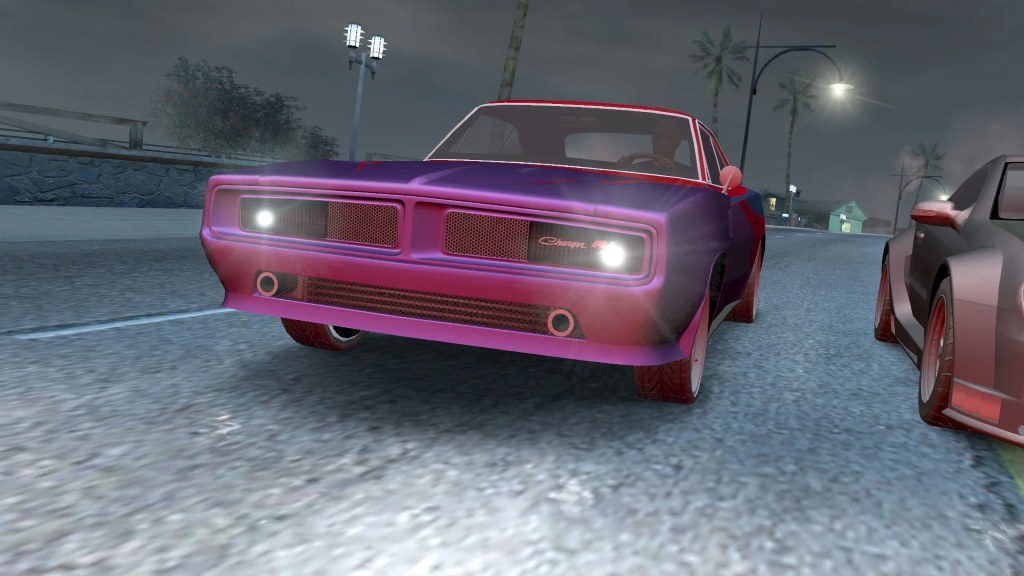
Need for Speed: Carbon, October 2006. This is where Autosculpt showed up, tuning by slider, where you can pull the shape of a body kit around instead of picking from a list. Plus crews with wingmen, a turf war over the districts of Palmont, and two stage canyon duels inspired by Japanese mountain downhills. Xbox 360 score 77. The sales number is funny here: EA's quarterly filing says in the highlights that Carbon sold more than eight million copies, while a paragraph earlier in the same document it sits among games that sold more than three million. Both lines are official, so it is more honest not to name an exact figure.
The complaints: a short campaign, only three rivals on track in a standard race, and wingmen who are not much use. Game Informer wrote straight out that it is a shame to race against three cars, and IGN admitted the drifting was arguable. The feeling of "an expansion to Most Wanted, not a new game" has followed Carbon ever since.
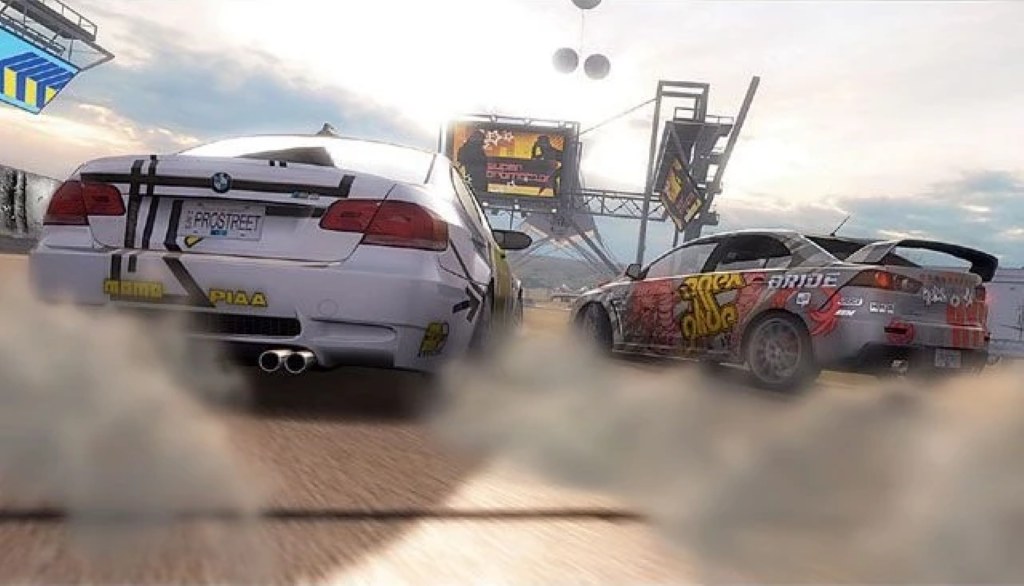
Need for Speed: ProStreet, November 2007. A 180 degree turn: no open world and no police, only closed tracks, four disciplines and real damage, up to a completely wrecked car. The physics were built on data from the Porsche test track in Leipzig. The scores sagged: PS3 73, PC 70, PS2 62, Wii 61. Sales of 5.5 million for the quarter, two thirds of them outside the United States.
The most honest review of ProStreet was not written by a journalist but by the head of EA. John Riccitiello said this about the game at an investor meeting in June 2008: "Gameplay wise, I think it is an okay game. It is not a good game. But who needed Pro Street?". He explained the reason in the same place: the team in Vancouver had worked on an annual cycle for eight years straight, and in the summer of 2007 it had to be split in two to move to a two year cycle. His phrasing: "We were torturing a very talented group of people".
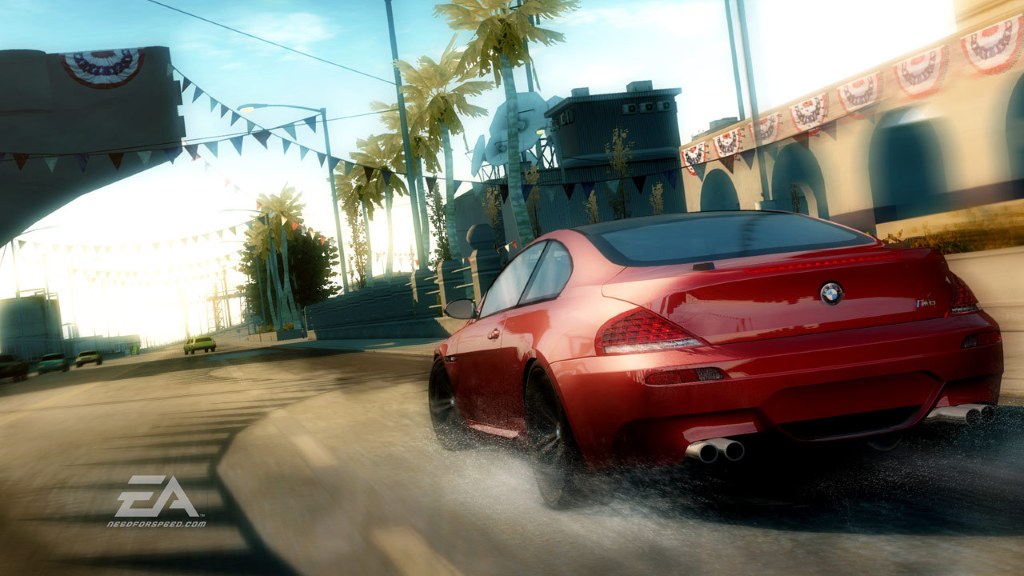
Need for Speed: Undercover, November 2008. An attempt to bring back everything good at once: open world, Most Wanted style pursuits, live actors in the cutscenes, Maggie Q in the lead. What came out was the worst technical state in the history of the series. Xbox 360 score 64, PS3 59, user score 5.7.
In the cons list for the PS3 version, GameSpot wrote a line that was not in the Xbox review: "the frame rate at times makes the game nearly unplayable". Eurogamer gave it 5 out of 10 and named the reason directly: "a depressing lack of optimization, frame rate problems everywhere". Sales were still 5.2 million for the quarter, but EA admitted the quarter came in worse than expected.
What changed from the previous era. Six games in six years, one of them great and one of them a disaster, both from the same studio. A month after Undercover, in December 2008, EA announced a thousand layoffs and the closure of at least nine locations, naming Black Box in Vancouver among them. The annual conveyor belt ended exactly the way it had to.
2009-2013: three series instead of one, Autolog and the always online era
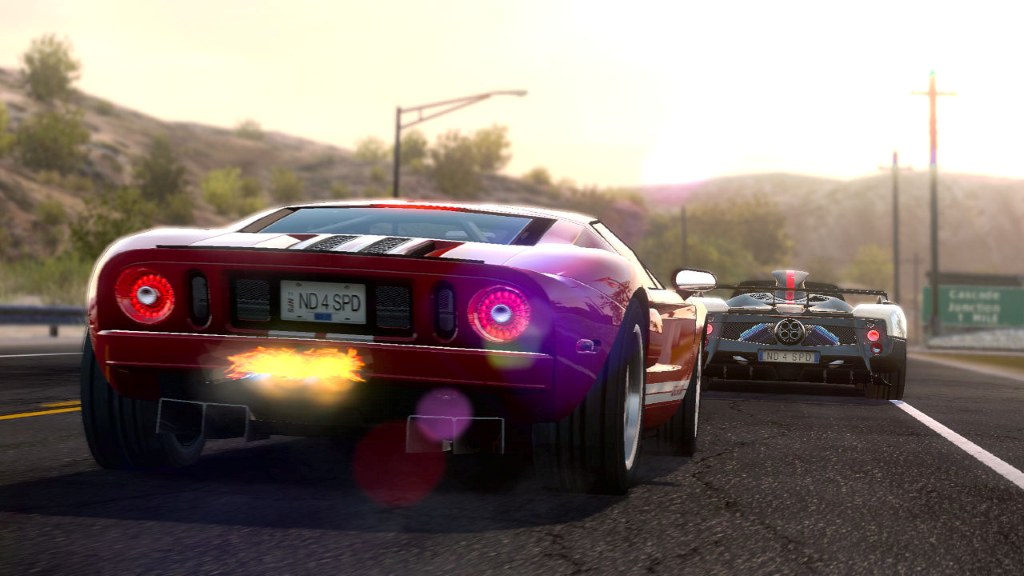
In January 2009 EA announced an unusual plan: Need for Speed becomes three independent lines with different studios, a simulator, an arcade game and an online game. Marketing vice president Keith Munro put it this way: "we are making different games for different audiences". By October of that year the series had passed a hundred million copies sold.
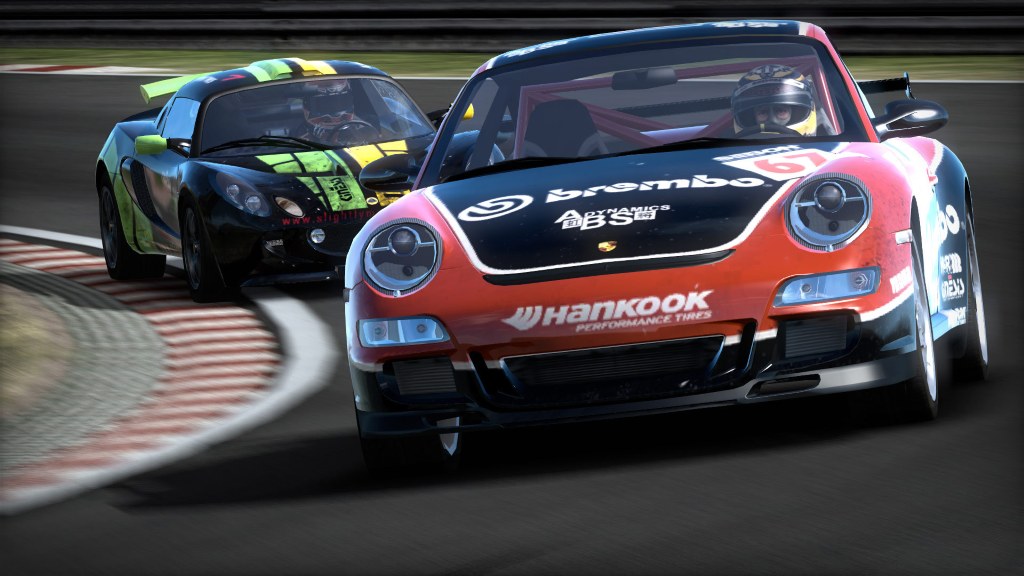
Need for Speed: Shift, September 2009. The simulator branch, made by Britain's Slightly Mad Studios, the people behind GT Legends. The main thing here is the helmet view and the sense of g forces: EA sold the game as "the most realistic and intense perspective in racing history". Scores: PS3 84, Xbox 360 83, with a user score of 6.7. EA disclosed the sales: 2.5 million for the quarter and more than four million for the fiscal year.
Eurogamer gave it 7 and stated the main problem more precisely than anyone: this is the best game under this name since Most Wanted, but it is stuck between two stools, because "it has stopped being Need for Speed in any recognizable sense, and does not yet reach the elegance of real simulators". The handling in the same review is called twitchy.
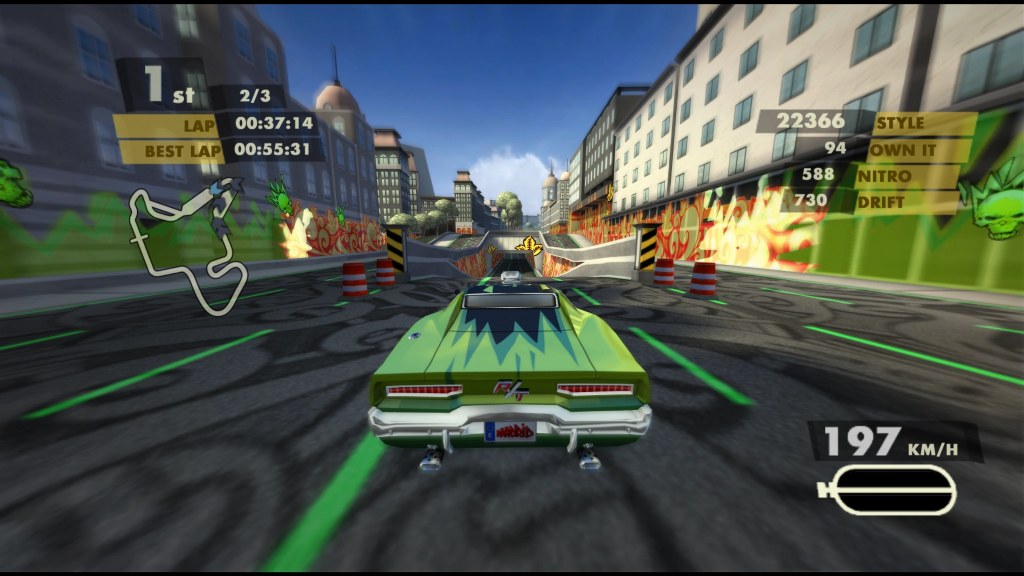
Need for Speed: Nitro, November 2009. The arcade branch for Wii and DS, cartoonish and bright. Wii score 69. Eurogamer gave it 5 and noted that the game's pep turns into monotony fast. EA never named official sales, and Nitro is not mentioned in the filings at all.
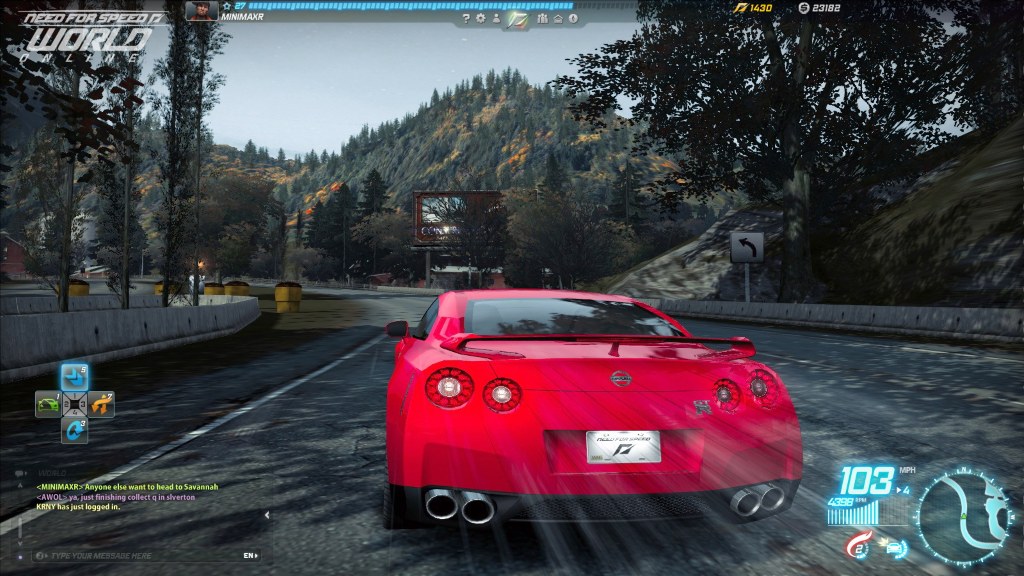
Need for Speed: World, July 2010. The online entry, free to play, PC only, made by Black Box together with EA Singapore. Score 62. By November 2012 EA reported twenty million registered players, but the paid level cap at launch and the repetitiveness ate the reputation quickly. Eurogamer's review admitted honestly that the writer could not fill a race: at most three participants showed up in a heat.
The game was shut down on 14 July 2015 at 16:00 UTC, announced three months in advance, along with Battlefield Heroes and two other free EA games. The farewell message said it straight: the game no longer meets the bar of the series, and a full rebuild is beyond the company. Nobody refunded the boosts people had bought.
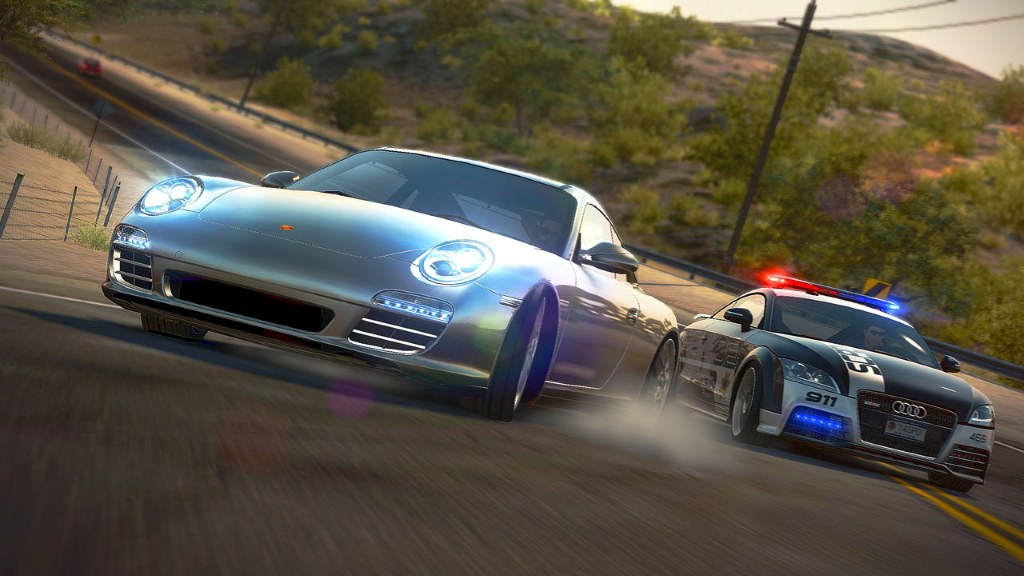
Need for Speed: Hot Pursuit, November 2010. The best entry of the decade and the first from Criterion, the Burnout studio. Cops against racers, EMPs, spike strips and helicopters, and the era's key invention: Autolog. EA described it as a network that compares your results with your friends' and serves you the events where a friend beat you. Essentially a social feed inside a racing game, and it worked better than any leaderboard.
Scores: PS3 89, Xbox 360 88, PC 86. And a separate line: the Wii version, made by a different studio, got 50, thirty eight points below the main one. The main complaint against the game itself was that tuning had been taken out: after Underground that looked like a step back. In the fiscal 2011 report the game made the list of titles that shipped more than five million copies.
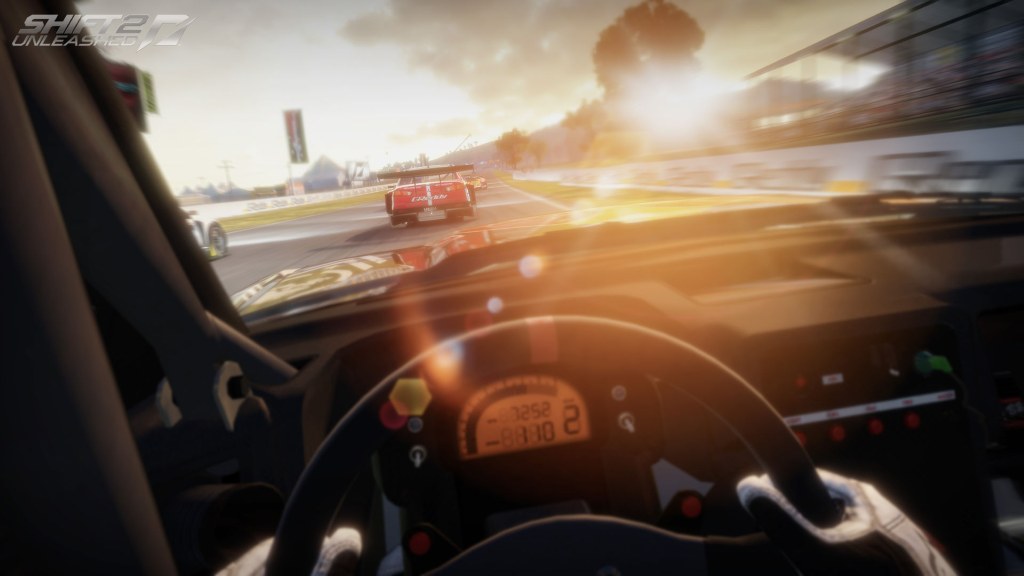
Shift 2: Unleashed, March 2011. The second and last simulator entry. They added a helmet camera where the driver's head turns into the corner, and dragged Autolog over from Hot Pursuit. PC score 84, Xbox 360 82, with a user score of 6.7. Eurogamer went after the handling: the cars are jumpy and slide easily, "neither the grace of Forza nor the dry realism of Gran Turismo". After this Slightly Mad left to make Project CARS, and the Shift branch was over.
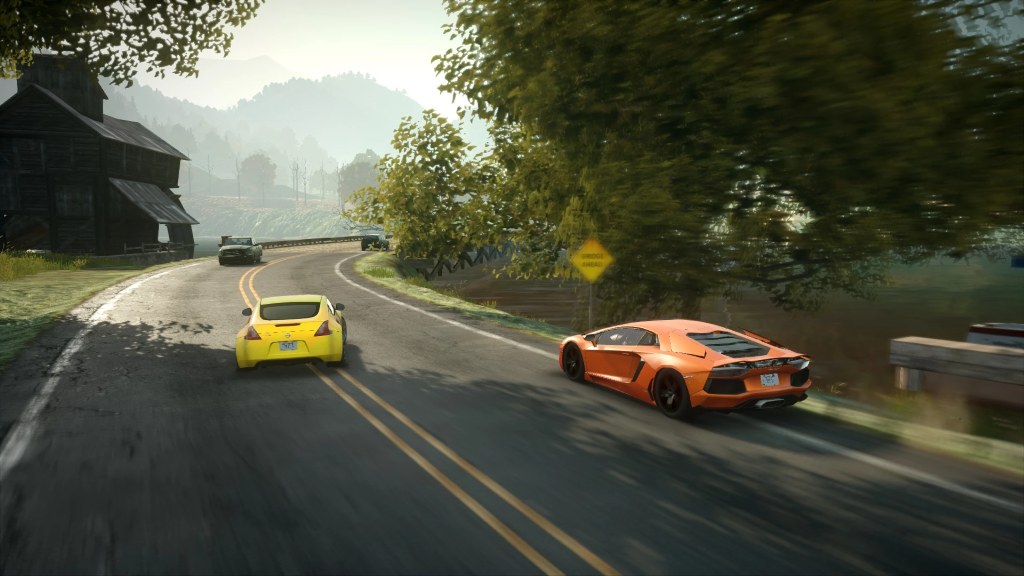
Need for Speed: The Run, November 2011. The last Black Box game and the first race on the Frostbite 2 engine, the same one that carried Battlefield 3. A story about a cross country run from San Francisco to New York for 25 million dollars, with Christina Hendricks in the cutscenes and episodes of running around on foot.
Xbox 360 score 68, PS3 64. GameSpot counted a bit over two hours of actual driving time in the campaign, Eurogamer gave it 5 and named as its main technical sin not the monotony but the "horrifyingly low frame rate" on the patched PS3 version. Edge handed out 3 out of 10. EA did not name sales figures, and in the 2012 annual report Need for Speed made the list of franchises that dragged down the publishing division's revenue.
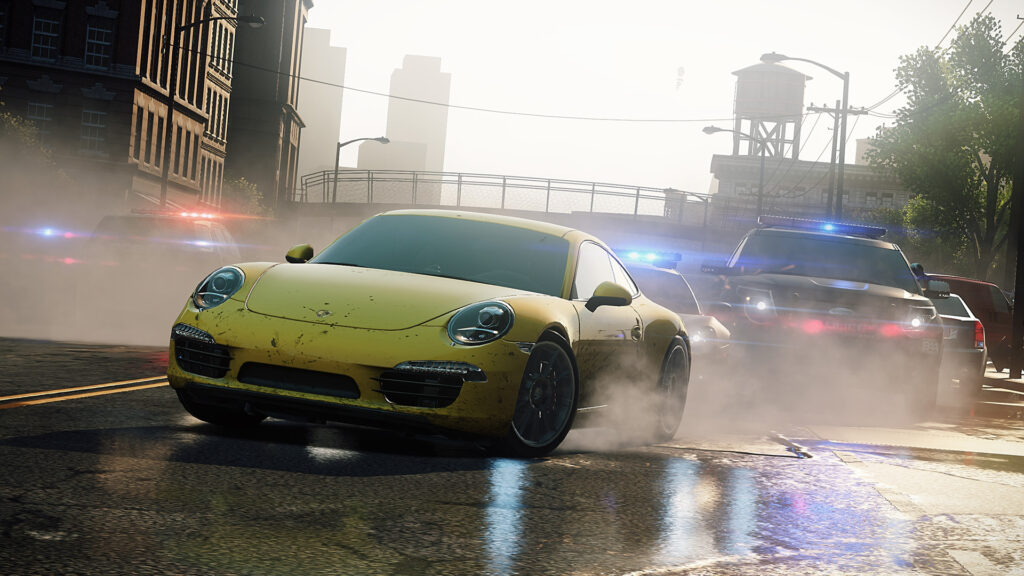
Need for Speed: Most Wanted, October 2012. Criterion took the name of the great 2005 game and made something completely different: the city of Fairhaven, where cars simply sit on the streets, and any one you find is instantly yours. No garage, no dealership, no familiar progression. Second generation Autolog was pulled out of the menu and into the world itself: cameras, gates and billboards compete with your friends on their own.
Xbox 360 score 84, Wii U 86, PC 78, but the user score is 6.4, and that gap is the whole story. Eurogamer, giving it 8, explained why: the found car system is wonderful if you are exploring the garage, and annoying if you have grown attached to one specific car. EA again published no official sales.
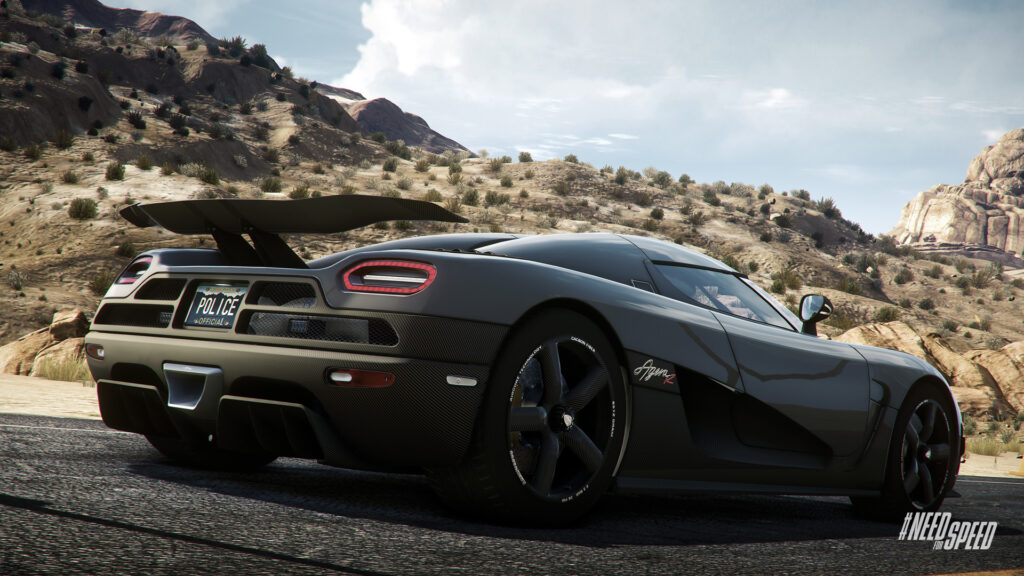
Need for Speed Rivals, November 2013. The first entry on Frostbite 3, a PlayStation 4 launch title, made by the new Swedish studio Ghost Games with help from Criterion. The hook was called AllDrive and it erased the line between single player and online: your run could collide with someone else's at any moment. PS4 score 80, PC 76, user score 6.3.
And then came the story PC players still remember. The game was locked to thirty frames per second on every platform, computers included, and it was a deliberate decision. Executive producer Marcus Nilsson explained it three months before release: in AllDrive anything can be happening on screen, the frame budget is calculated for the worst case, so "we prioritized gameplay". Digital Foundry later measured honest 1080p and a stable thirty frames on consoles, but with uneven frame pacing that made the picture feel worse than it was.
On PC the cap could be lifted with console commands, except the physics sped up along with the frames: cars started driving absurdly, because part of the game's systems is hard wired to thirty simulation steps per second. No official patch ever came out, and EA limited itself to a promise to aim at sixty frames in future games. The problem was solved in a human way only in 2023, and not by EA but by an enthusiast with a mod. The Rivals online services were switched off on 7 October 2025, the offline game remains.
What changed from the previous era. The series moved out of Vancouver for good: Black Box was renamed Quicklime in July 2012 and closed in April 2013, Criterion first got both franchises in full and then a year later shrank to fifteen people, and Need for Speed went to a new studio in Gothenburg. In 2014 EA skipped a year without a new entry for the first time since the early 2000s, to give the team time.
How the series lost America
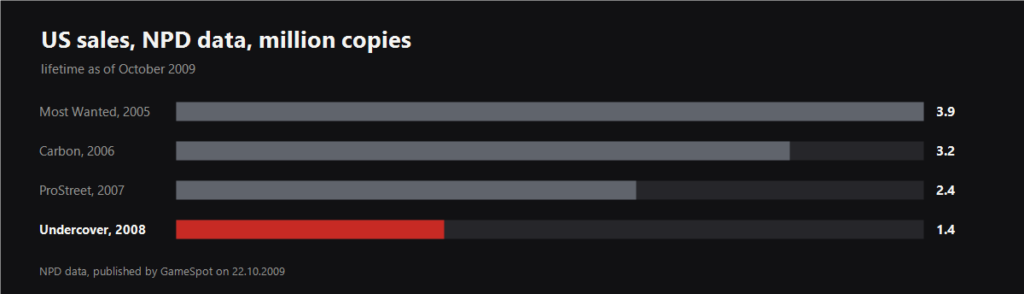
Scores are one thing, money is another. According to NPD data that GameSpot published in 2009 alongside EA's statement about a hundred million copies of the series, the American market slipped away from it four years in a row. Most Wanted in 2005 sold 3.9 million copies in the United States, Carbon 3.2 million, ProStreet 2.4 million, Undercover 1.4 million. Each following entry lost roughly a million buyers, and that was with a release every year.
There will be no numbers after that, and that is part of the story too: starting with the reboot era EA stopped disclosing sales of individual Need for Speed games entirely. Everything you see online about millions of copies of Heat or Unbound is analyst estimates, not publisher data.
2015-2022: the reboot, loot boxes and Criterion's return

Need for Speed, November 2015. A reboot with no subtitle, Ghost Games, Frostbite engine. It came out on consoles on 3 November 2015 and on PC only on 15 March 2016: the version was held back for an unlocked frame rate and stable online. The world is permanently night, the city of Ventura Bay is modeled on Los Angeles, and here is the main thing: the game required a constant network connection and had no pause at all. Scores: PC 68, PS4 66, with a user score of 6.1. IGN gave it 6.3 and went after the story, the length, the rubber banding AI and that missing pause. EA published no sales.
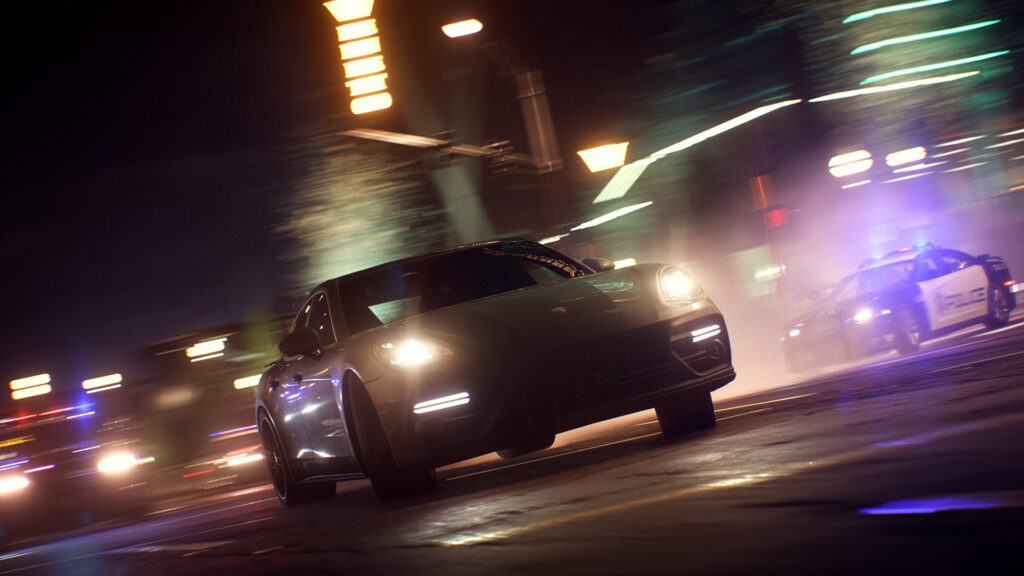
Need for Speed Payback, November 2017. The entry that became a textbook case of how not to do it. Progression moved to collectible speed cards tied to a specific car and not transferable to another one, and cosmetics hid inside "shipments", which is to say loot boxes. Police chases in the free world were gone, they were triggered by the script. Metacritic PS4 61 with a user score of 4.0, and that twenty one point gap says more than the scores themselves. PCWorld titled its review "pouring loot boxes onto a burning tire" and called the game a decent arcade racer undermined at every step by predatory monetization.
Ten days after release, right in the middle of the Battlefront II scandal, EA raised race payouts, adjusted card drops and cut the parts refresh timer in the tuning shop from thirty minutes to ten. But the cards and the shipments stayed, and the non transferable progression between cars, the main complaint, was never fixed.
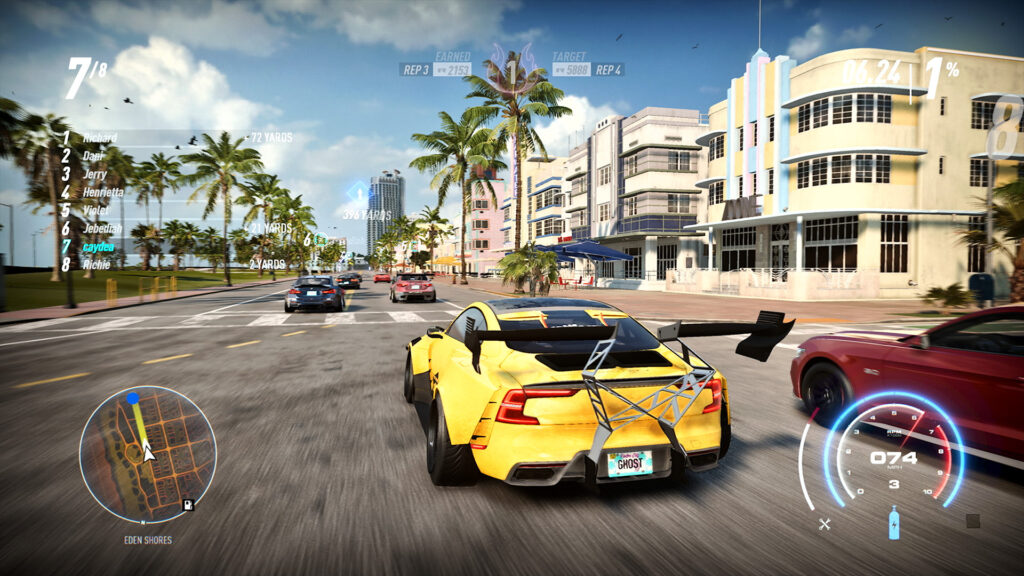
Need for Speed Heat, November 2019. The last Ghost Games title and the fan favorite of this period. Legal races for money by day, illegal ones for reputation and police attention by night, switching between them at any moment. No loot boxes at all, progression unlocks for reputation. 127 cars, and Ferrari came back after being absent in Payback. Metacritic Xbox One 74, PS4 72, user score 6.4. GameSpot wrote that the series was back on the right track, but the shared complaint was one thing: it got better, and there is not much that is new.
EA again named no sales. On the earnings call for the third quarter of fiscal 2020, chief financial officer Blake Jorgensen limited himself to saying that Need for Speed was "about what we expected", against an internal model of three to four million copies. The 2.3 million figure that circulates online is an analyst estimate, not EA data.
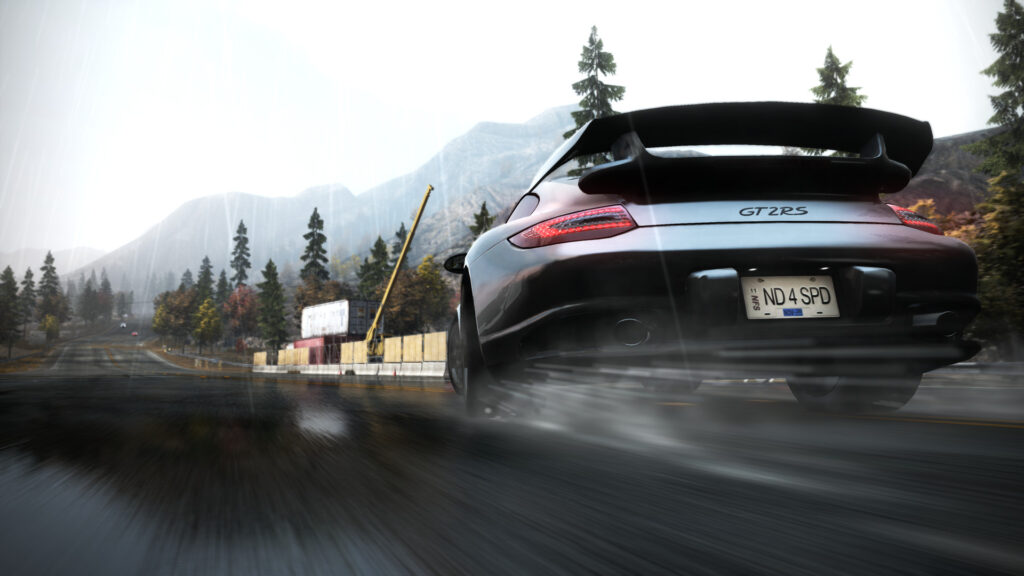
Hot Pursuit Remastered, November 2020. A re release of the 2010 game, ported by Stellar Entertainment under Criterion's supervision. All three add ons are baked into the career, cross platform multiplayer was added, 60 frames on consoles. The scores are 11 to 14 points below the original: PS4 75 against 89 for the PS3 version ten years earlier. The reviewers' main complaint: this is a careful port rather than a remaster, the visuals were barely touched.
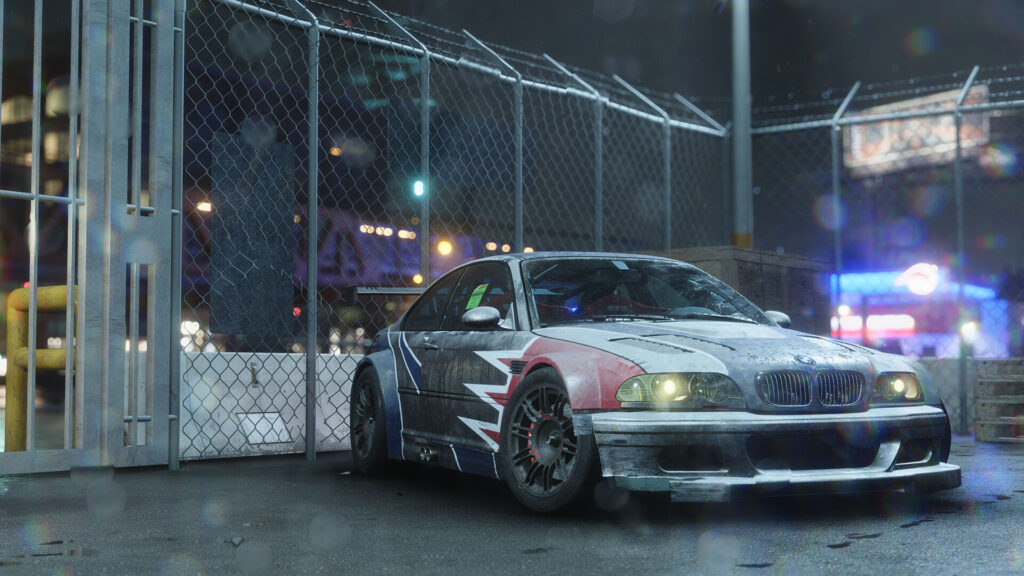
Need for Speed Unbound, December 2022. Criterion took the series back and did something nobody expected from NFS: it drew cartoon effects on top of a realistic image, graffiti wings, smoke and sparks as two dimensional animation. It came out only on the current generation, PS5, Xbox Series and PC. Metacritic PS5 77, PC 73, user score 5.9, and the complaints were mostly about progression speed and car prices.
What followed was a rare live service run for the series: nine free volume updates through November 2024. Audi returned in the sixth, the seventh was about drift and drag in the spirit of Underground, the eighth about pursuits, and in the ninth and last one motorcycles appeared in Need for Speed for the first time. In Britain Unbound opened at retail 64 percent below Heat, and that is the only reliable figure about its sales.
What changed from the previous era. The series finally stopped being annual: four games in eight years instead of eight. And for the first time in its history EA stopped naming sales figures at all, which is a diagnosis in itself.
February 2025 and July 2026: how the series was put on pause
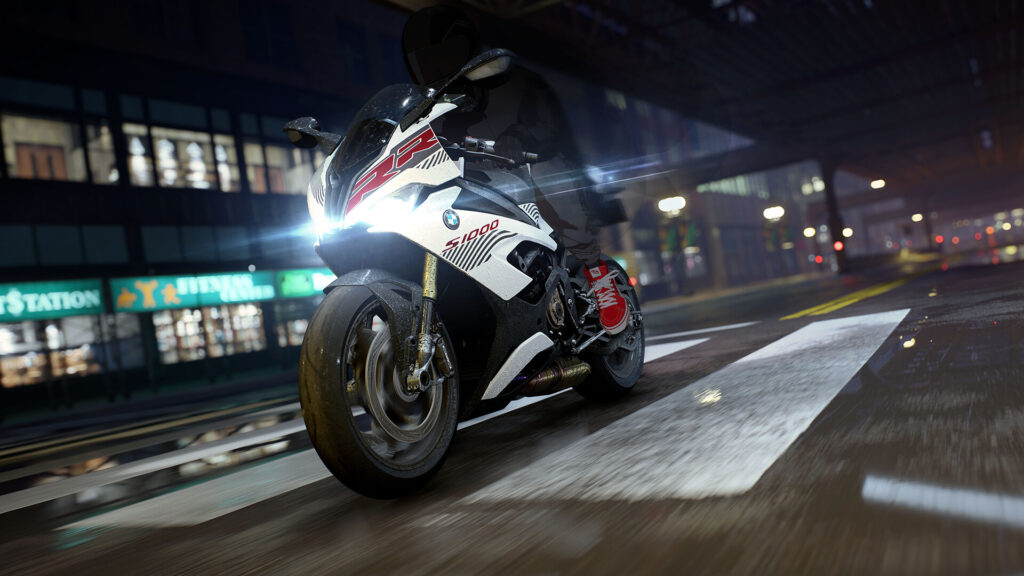
On 3 February 2025 EA confirmed to the press that the Need for Speed team at Criterion was moving over to their Battlefield colleagues. The wording from Vince Zampella, who runs that group of studios, was soft: the company had spent a year listening to the community, understands better what people want from the series, and "plans to bring the franchise back in new and interesting ways". Support for Unbound ended the same day.
In August 2025 Criterion changed its name on the site: it is now Criterion, a Battlefield Studio. And in July 2026, at the studio's thirtieth anniversary, an IGN journalist asked Rebecka Coutaz whether the team's new remit includes anything besides Battlefield.
We are solely focused on Battlefield.
Formally this is a statement about Criterion's remit, not about closing the series: EA has never once said the words "Need for Speed is cancelled". But there is no studio to make it right now, no timeline, and no announcement. The accurate wording sounds boring and honest: an indefinite pause with no assigned developer.
The irony is that the only living part of the series today is the mobile No Limits from 2015. It gets updated every month: in 2026 updates landed in March, April, June, July and on 2 September. Big console Need for Speed is silent, and the phone one keeps driving.
What is left of Need for Speed
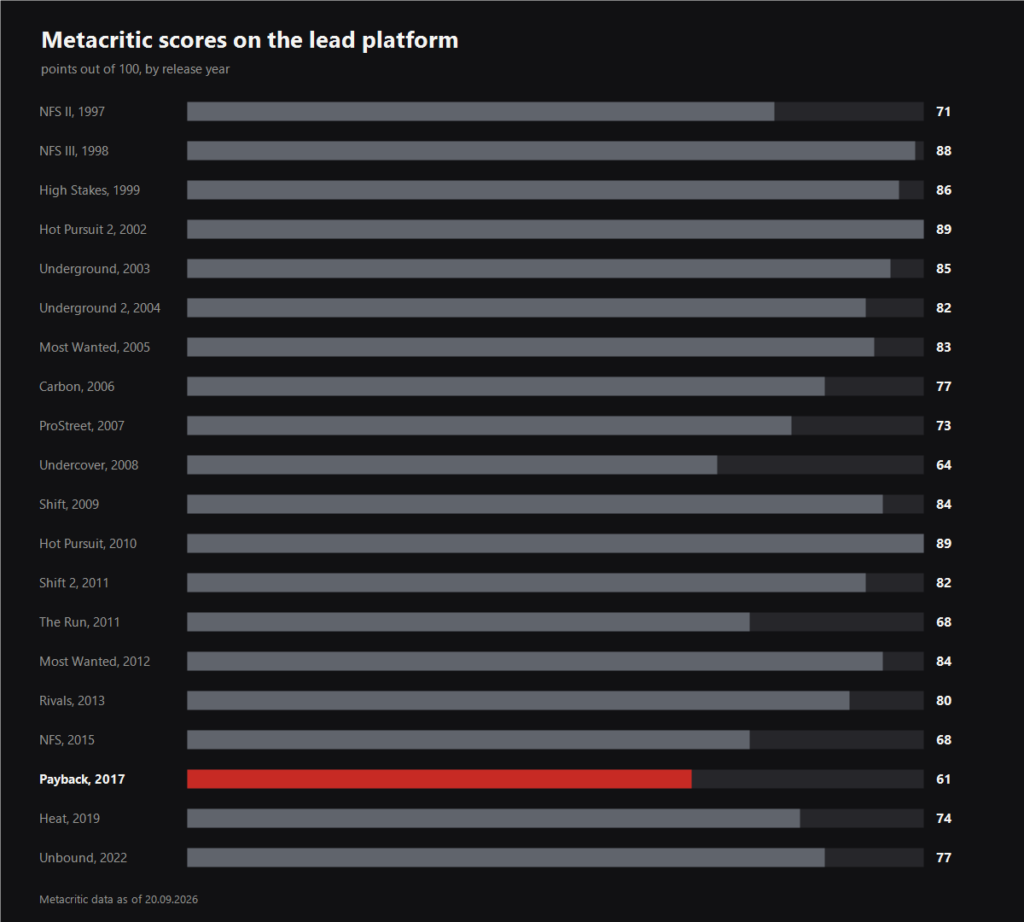
Lay the scores out in a row and you see not a decline but a swing. The series climbed to 89 twice, in 2002 and 2010, and fell into the low sixties twice, in 2008 and 2017. And both of those falls are explained not by the genre and not by competitors, but by publisher decisions: the annual conveyor belt in the first case and the cards with loot boxes in the second.
One more pattern: every time the series was pulled out of a hole, the same studio did it. Hot Pursuit in 2010 and Most Wanted in 2012 were made by Criterion, and Criterion is exactly who has now been moved onto Battlefield in full.
- What to play today. Hot Pursuit Remastered runs on everything, Switch included, and it is that same 2010 game with cross platform multiplayer. Heat remains the best pick if you want tuning and a city.
- What you can no longer have. World was shut down in 2015, the Rivals online services were switched off on 7 October 2025, and EA pulled some of the older entries from sale along with their servers.
- What is alive. Mobile No Limits, eleven years old this year, gets an update every month.
- What to expect. Officially the series is not closed, EA promised to bring it back "in new and interesting ways". There is no studio, no timeline and no announcement.
In this whole story the year that stings most for me is 2010. Back then the series proved it needed neither an annual release, nor a plot with live actors, nor a store in the main menu: good roads, cops and a table with your friends' times were enough. Sixteen years later the studio that did it is polishing gunshot sounds in a shooter, and that is probably the sharpest illustration of what happened to the racing genre at the big publishers.
Sources
Rebecka Coutaz's words and the context of Criterion's thirtieth anniversary: the IGN piece of 7 July 2026 by Phil Iwaniuk. Both phrases stand separately in our text, as they do in the original: some outlets glued them into a single quote. EA's statement about moving the team to Battlefield in February 2025 and the promise to bring the series back: Video Games Chronicle citing Eurogamer.
Scores for every entry: the game pages on Metacritic as of 20 September 2026, with the platform named in the text for each game. Review quotes: GameSpot, IGN, Eurogamer, Edge, Next Generation, PCWorld, from the reviews of the relevant years.
Sales figures are official only. Underground and Underground 2, Carbon, ProStreet, Undercover: EA filings with the US Securities and Exchange Commission, Form 8-K for 2004, 2005, 2007, 2008 and 2009. Most Wanted, 16 million copies, and the American sales per NPD: GameSpot of 22 October 2009, which also carries EA's statement about a hundred million copies of the series. Shift: EA's quarterly report of November 2009.
John Riccitiello on the annual cycle and ProStreet: GamesIndustry.biz of 18 June 2008. The thirty frame decision in Rivals: Marcus Nilsson's interview with Eurogamer of 23 August 2013, plus the Digital Foundry frame rate analysis. The closure of Need for Speed World on 14 July 2015 and the Rivals server shutdown on 7 October 2025: EA announcements. No Limits updates in 2026: the game's news page on the EA site. Screenshots: official game pages on Steam for the 2008-2011 titles, official EA promo screenshots for the 1994-2007 titles from the NFS Wiki archive, the official Need for Speed World site in the Wayback Machine.