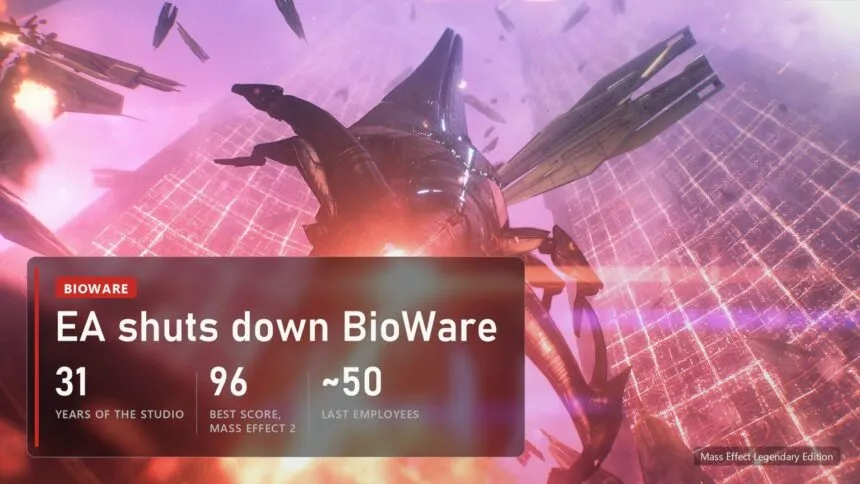
Electronic Arts is shutting down BioWare. Bloomberg broke the news on 21 October 2026, and a few hours later the studio confirmed it in one line: "BioWare is closing and early development on the next Mass Effect project is ending." The Edmonton office, where it all started in 1995, closes with it. According to Bloomberg, about fifty people were left at BioWare by this week.
- 21 October 2026: about 400 jobs cut at EA, roughly 50 of them at BioWare
- 1995-1998: six founders, three doctors and a Baldur's Gate that scored 91
- 2000-2005: Baldur's Gate II at 95, Neverwinter Nights and KOTOR
- 2005-2007: Bono's money, a $620 million EA deal and the first Mass Effect
- 2009-2011: Dragon Age: Origins, a record 96 for Mass Effect 2 and a rushed Dragon Age II
- 2011-2012: The Old Republic, the Mass Effect 3 ending and the founders walk away
- 2014: Dragon Age: Inquisition and the studio's only Game of the Year
- 2017-2021: Mass Effect: Andromeda at 71 and Anthem at 59
- 2024-2026: The Veilguard, 1.5 million players, half of what EA planned
- Every BioWare game and its score, from Baldur's Gate II's 95 to Anthem's 59
- What happens to the BioWare games you already own
In 31 years this team made Baldur's Gate, Knights of the Old Republic, the Mass Effect trilogy and Dragon Age, and in 2010 it shipped Mass Effect 2 with a 96 on Metacritic, the highest score it ever got. Below is what happened today, and then the whole story: how three doctors and their friends in Edmonton became the most important RPG studio in the world, and how it shrank to one small team by 2026.
21 October 2026: about 400 jobs cut at EA, roughly 50 of them at BioWare
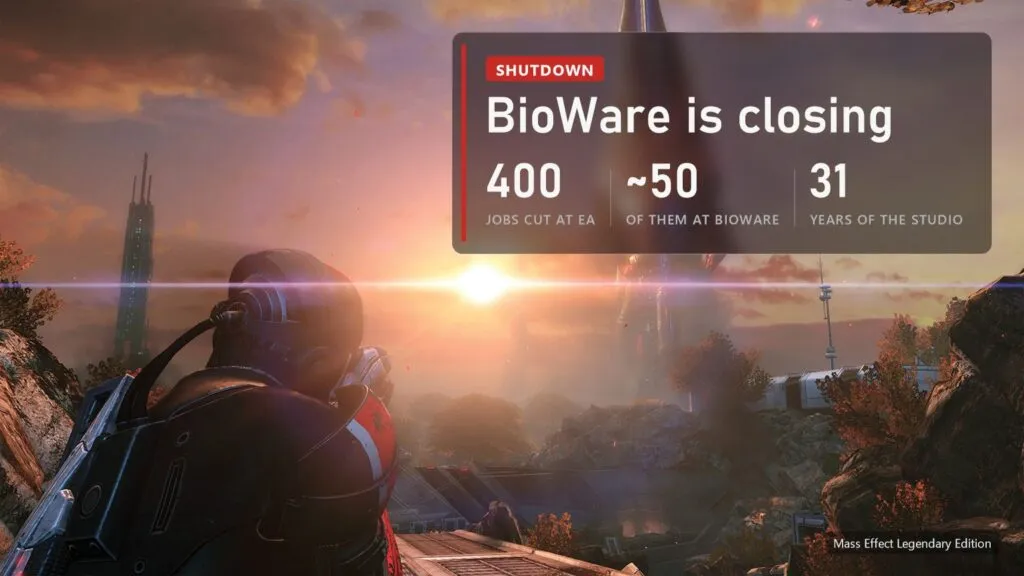
The decision went out in an internal letter signed by Cam Weber, EA's Chief Studios Officer, and David Tinson, its Chief Operating Officer. Gematsu published it in full. The BioWare part is short. A small team at the studio had been in early development on Mass Effect, and EA is now closing the studio and its Edmonton workspace. The letter calls BioWare "a legendary studio that helped define the role-playing genre" and says the decision wasn't taken lightly, which is the kind of thing these letters always say.
- Jobs: about 400 across EA, roughly 3% of its staff. About 50 of them at BioWare, Bloomberg reports, citing a person familiar with the plans.
- Mass Effect: the next game was teased in December 2020, and GameSpot says it had been in development since at least February 2022. It was still early, and it is now cancelled.
- The series: EA hasn't said what happens to Mass Effect or Dragon Age. It owns both, and whether it sells them or hands them to another studio is an open question.
- The rest of the letter: The Sims' Project Lotus is paused (Bloomberg and Kotaku say cancelled), the skate. team gets smaller, and Respawn and DICE are building a new shooter together, which Variety says is Star Wars: Battlefront III. Battlefield, Apex Legends, Iron Man and the next Star Wars Jedi carry on.
The money matters here. On 29 September 2025 EA agreed to be bought by a consortium of Saudi Arabia's PIF, Silver Lake and Affinity Partners for $55 billion. The deal closed on 4 August 2026 and EA left the stock market. Kotaku and VGC put the debt the buyout left on EA at around $18 billion, and the new owners promised about $700 million a year in savings. A studio whose last game came in at half of what EA expected was an easy line on that spreadsheet.
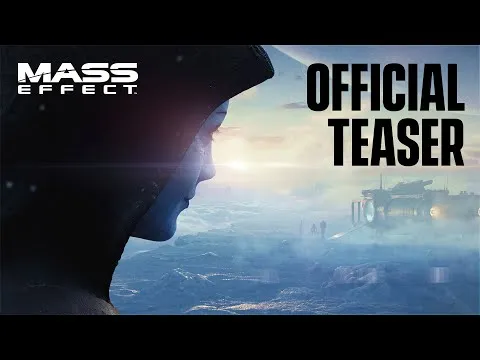 The video loads from YouTube (Google) when you press play. Privacy policy
That's the December 2020 teaser for the next Mass Effect. It turned out to be the only one we ever got.
1995-1998: six founders, three doctors and a Baldur's Gate that scored 91
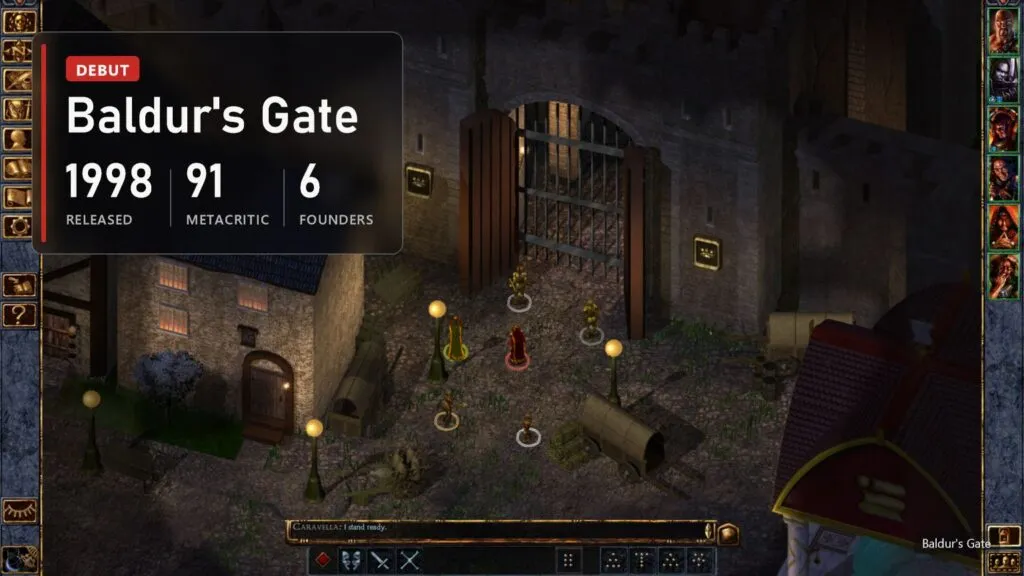
Six people founded BioWare in Edmonton in 1995. In GamesRadar's oral history Trent Oster lists them: himself, his brother Brent, Marcel Zeschuk, Marcel's cousin Greg Zeschuk, and two doctors, Ray Muzyka and Augustine Yip. Greg had a medical degree too, and Muzyka put in time as an emergency room physician. Yip went back to medicine near the end of Baldur's Gate. The others stayed in games.
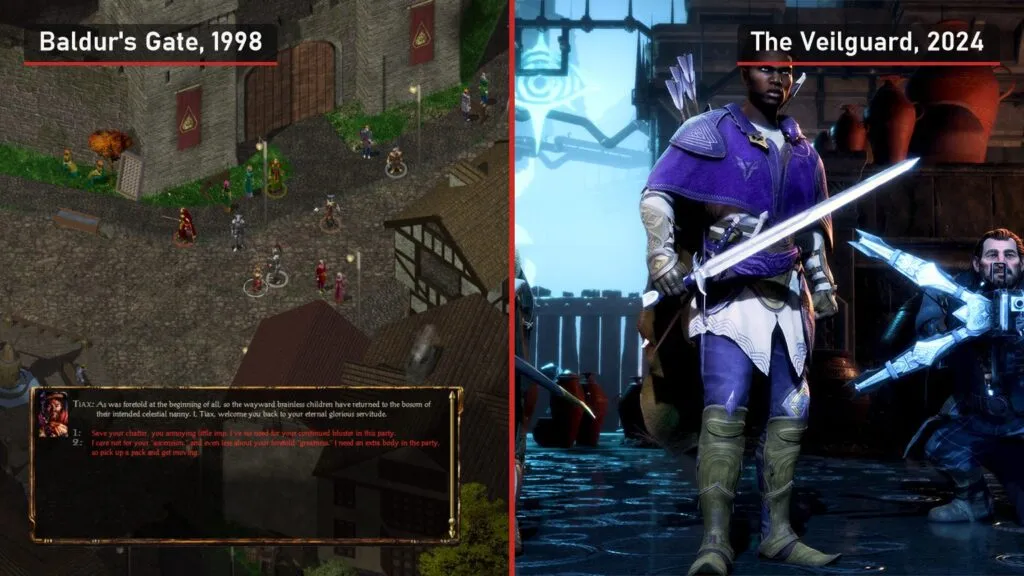
The first game was Shattered Steel, a mech shooter for MS-DOS that Interplay put out in autumn 1996. Nobody remembers it fondly, but it got the team a publisher. Next came Baldur's Gate. The tech the team had been building for a strategy game called Battleground: Infinity turned into the Infinity Engine, and on 21 December 1998 Interplay released a Dungeons & Dragons RPG where you could pause mid-fight and your companions argued with each other. The developers told GamesRadar it sold nearly as much as Diablo.
2000-2005: Baldur's Gate II at 95, Neverwinter Nights and KOTOR
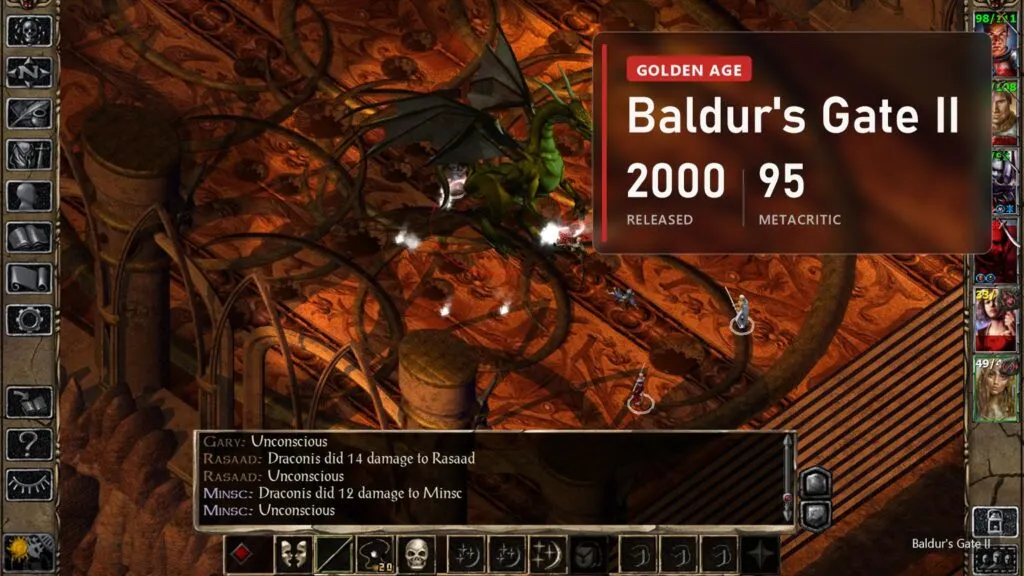
What followed is a run that's hard to imagine from one studio now. MDK2, a third-person shooter, in May 2000 (83). Baldur's Gate II: Shadows of Amn in September of the same year, at 95, and for a lot of people still the best Infinity Engine game ever made. Neverwinter Nights in June 2002 with a toolset that players used for years to build their own campaigns (91). Then other people's universes: Star Wars, and a martial arts world of BioWare's own.
- Neverwinter Nights, 16 June 2002, published by Infogrames, 91.
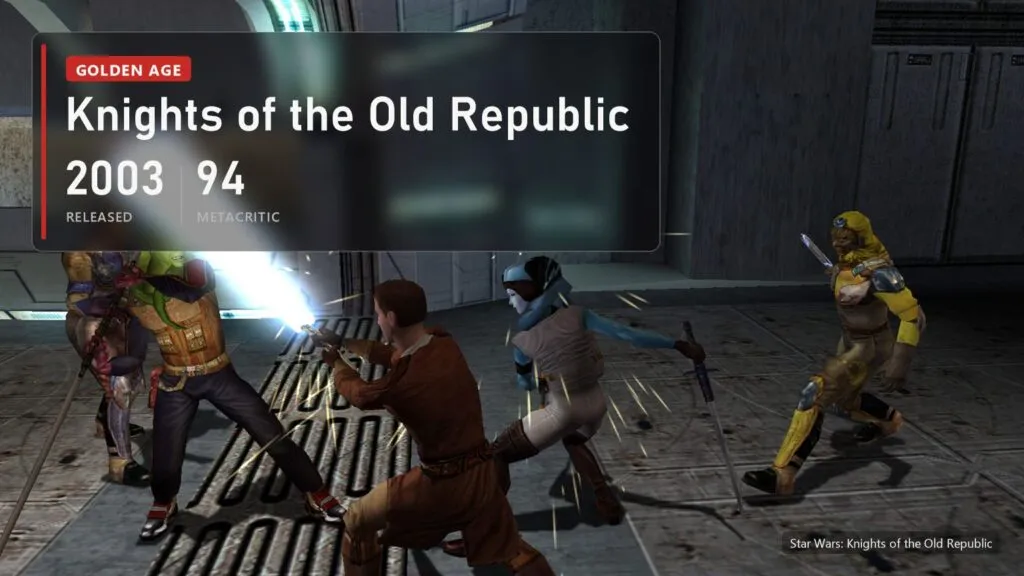
- Star Wars: Knights of the Old Republic, 17 July 2003 on Xbox, published by LucasArts, 94. People still ask friends not to google the name Revan.
- Jade Empire, 12 April 2005 on Xbox, published by Microsoft, 89. Kung fu instead of D&D, and the studio's first big RPG in a world it made itself.
Compared with before: in the five years from Baldur's Gate to Jade Empire BioWare shipped six games, and five of them scored 89 or higher. In the early 2000s "a BioWare game" was close to a quality stamp.
2005-2007: Bono's money, a $620 million EA deal and the first Mass Effect
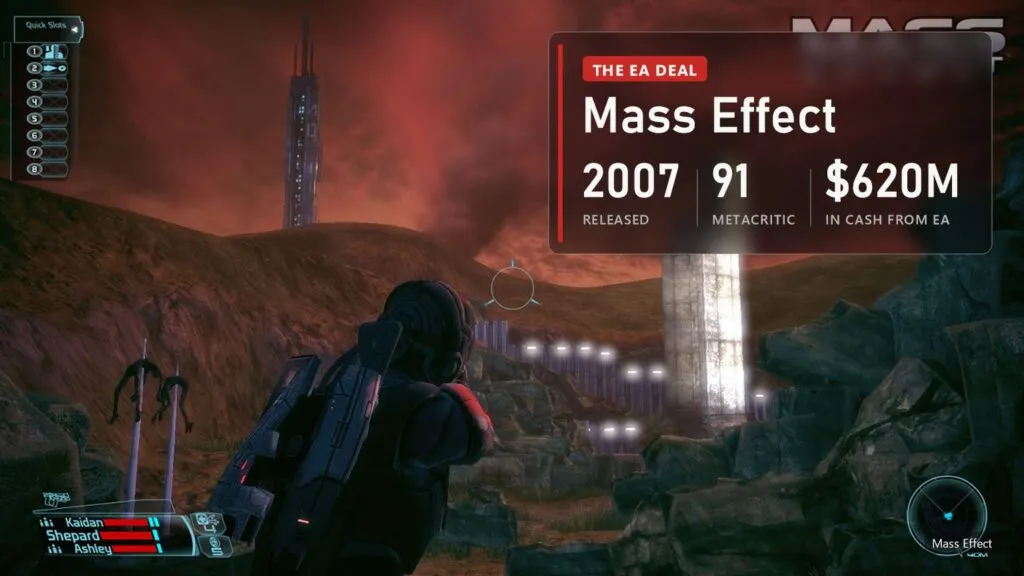
In November 2005 BioWare and Pandemic Studios came together under VG Holding, backed by Elevation Partners, the fund Bono of U2 co-founded. The two studios got more than $300 million between them. That setup lasted less than two years. On 11 October 2007 EA announced it was buying VG Holding: up to $620 million in cash to shareholders plus up to $155 million in equity for employees, by EA's own release. The Wall Street Journal put the whole deal at $860 million.
Five weeks later, on 20 November 2007, Mass Effect came out. Microsoft was still the publisher, it was an Xbox 360 exclusive, and it scored 91. A space opera with a dialogue wheel, where you decided whether Commander Shepard was a hero or the one who shoots first, plus a promise that your choices would carry into the sequels. At the time that sounded like science fiction in its own right.
2009-2011: Dragon Age: Origins, a record 96 for Mass Effect 2 and a rushed Dragon Age II
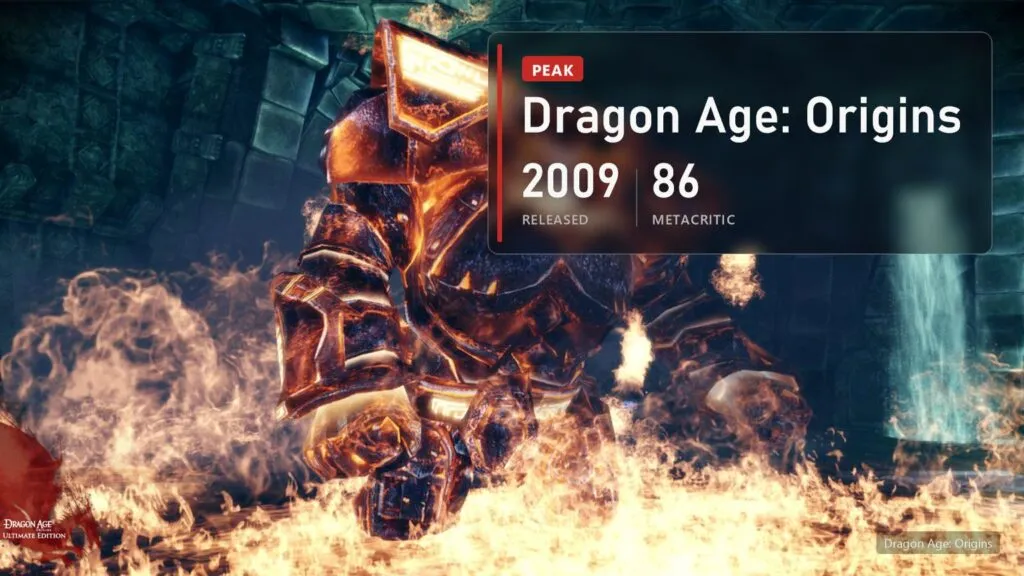
Dragon Age: Origins arrived on 3 November 2009, Baldur's Gate's spiritual successor without the D&D licence: dark fantasy, the Blight, companions with opinions and a Morrigan who approves of roughly nothing you do. It scored 86 on PC. Three months later, on 26 January 2010, BioWare released Mass Effect 2.
 The video loads from YouTube (Google) when you press play. Privacy policy
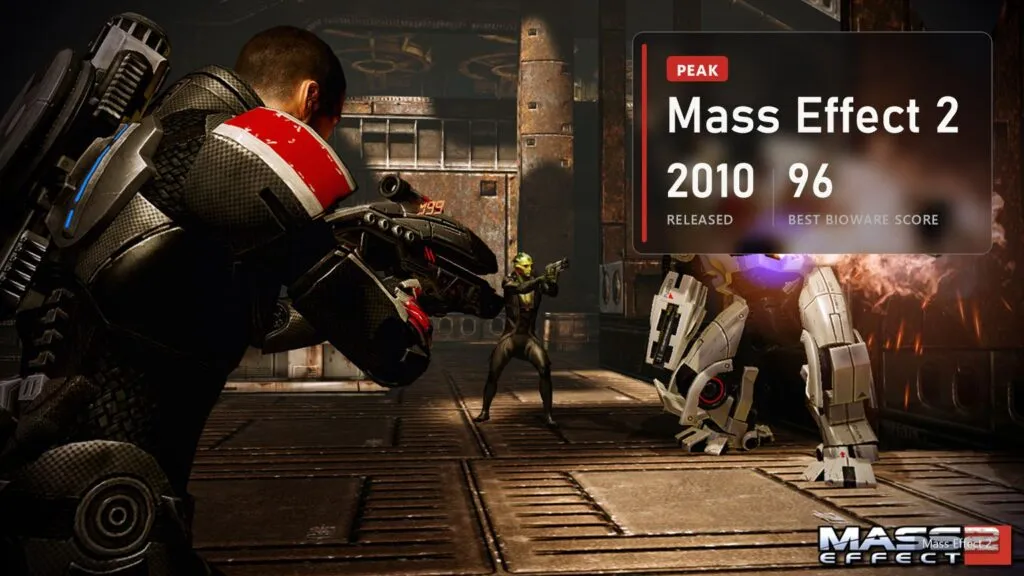
I'm not going to argue about Mass Effect 2. A 96, the best score BioWare ever had, and a suicide mission at the end where everyone can live or everyone can die, depending on how you spent the previous thirty hours. That was the top. The cracks start right after it.
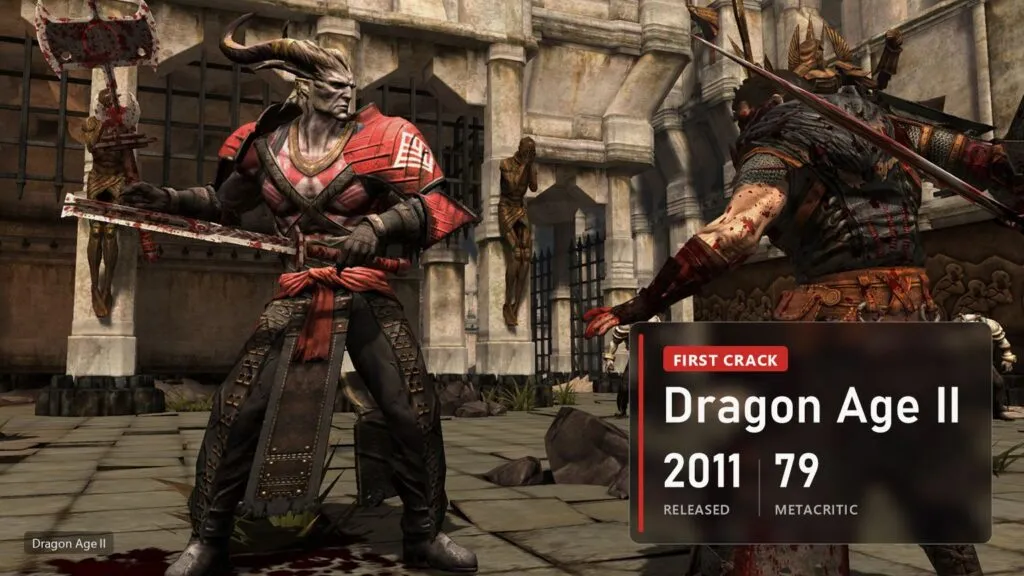
Dragon Age II came out on 8 March 2011, barely a year and a half after Origins, and you could tell. One city, Kirkwall, the same caves with the walls repainted, combat sped up for consoles. It scored 79, the first big BioWare game under 80. Hawke's story still has defenders, and I'm one of them, if only for Varric.
Compared with before: it took thirteen months to go from Mass Effect 2's 96 to Dragon Age II's 79.
2011-2012: The Old Republic, the Mass Effect 3 ending and the founders walk away
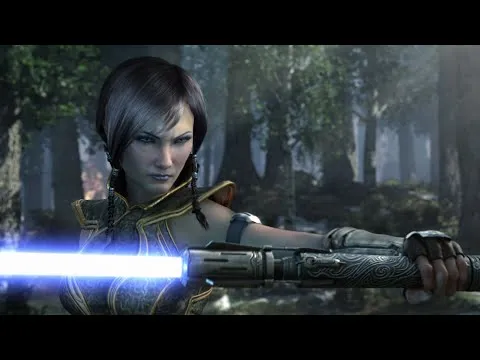 The video loads from YouTube (Google) when you press play. Privacy policy
Star Wars: The Old Republic launched on 20 December 2011, an online game from BioWare Austin (85). It was meant to take on World of Warcraft, with every line of dialogue voiced, and by autumn 2012 it had gone free-to-play with an optional subscription. It's still running, though since June 2023 it's been handled by Broadsword, not BioWare.
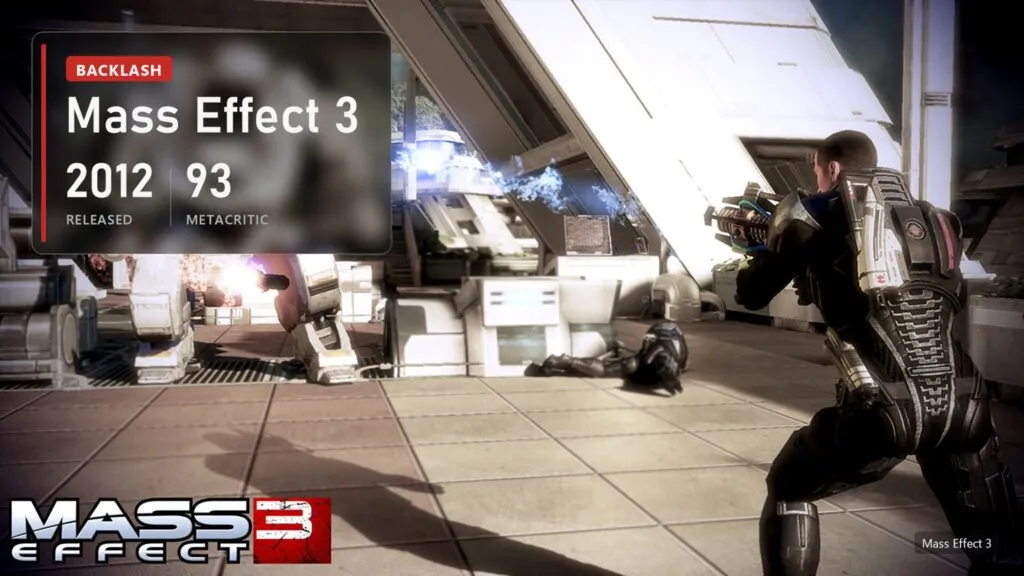
Mass Effect 3 came out on 6 March 2012 and scored 93. Then players reached the ending. Five years of being told every choice mattered ended in a pick between three coloured endings, and the backlash was one of the loudest the industry had seen. BioWare put out the free Extended Cut that summer to expand the endings, but the reputation as the studio where your choices count had its first real dent.
On 18 September 2012 Ray Muzyka and Greg Zeschuk announced they were leaving games altogether. Muzyka went into investing, Zeschuk into beer, to the point of hosting a show about it. The founders closed their own chapter after seventeen years, fourteen years before EA closed the book.
2014: Dragon Age: Inquisition and the studio's only Game of the Year
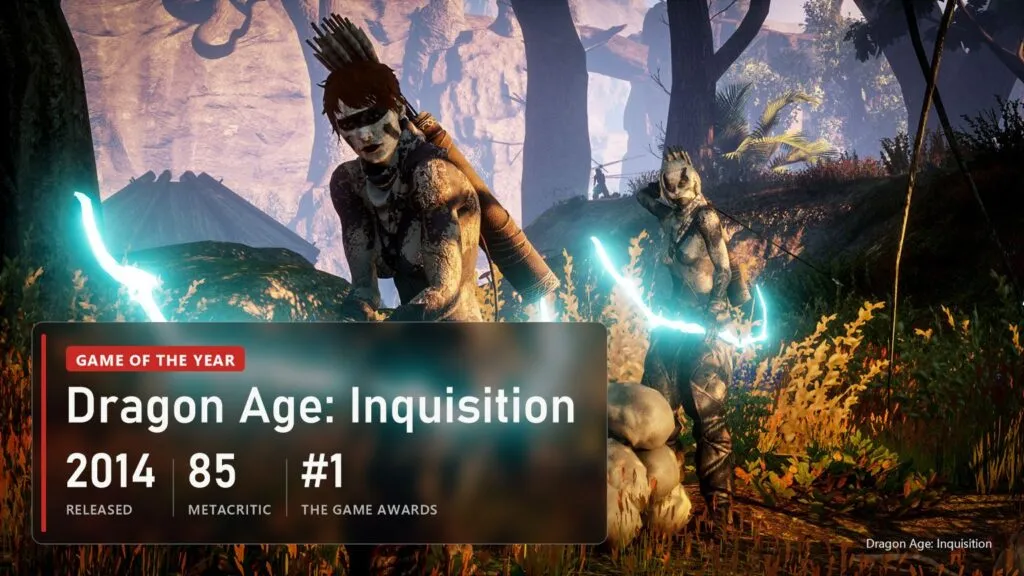
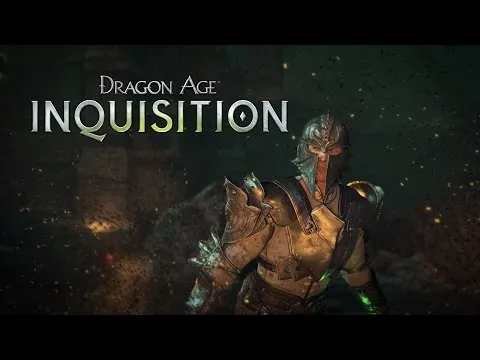
After Dragon Age II and the Mass Effect 3 storm, BioWare needed a win, and it got one. Dragon Age: Inquisition came out on 18 November 2014, scored 85, and on 5 December won Game of the Year and Best RPG at the very first The Game Awards. Huge open zones, a castle of your own in Skyhold and, to be fair, far too much elfroot picking in the Hinterlands. Plenty of people quit right there and never found out the game gets much better after it.
 The video loads from YouTube (Google) when you press play. Privacy policy
2017-2021: Mass Effect: Andromeda at 71 and Anthem at 59
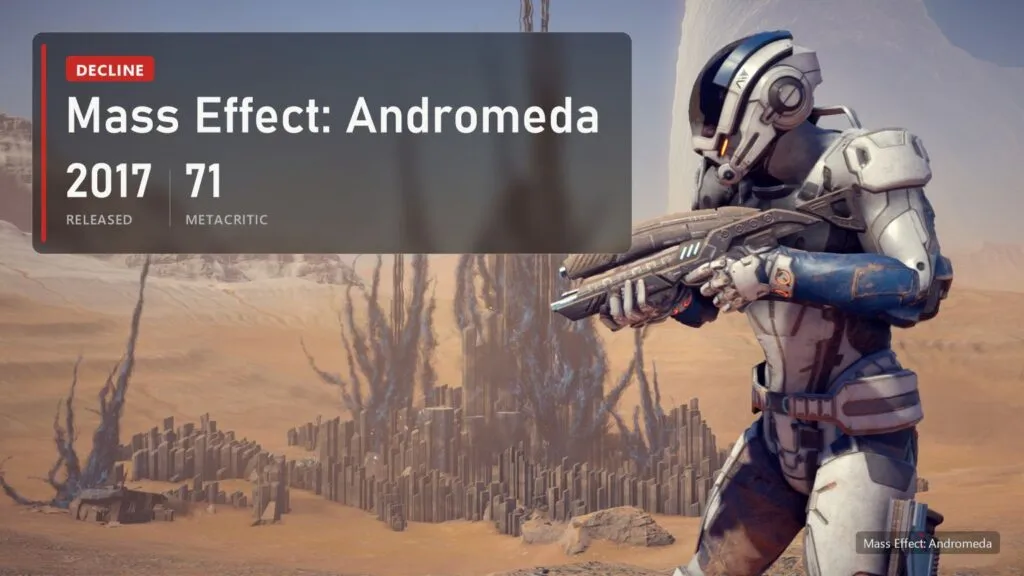
Mass Effect: Andromeda was made by the Montreal team and came out on 21 March 2017 with a 71. A lot of people never got to the story, because the internet was busy with the facial animation: "my face is tired" was a meme before the game was out in every region. The story DLC was dropped, and the Montreal studio was folded into EA Motive that same year.
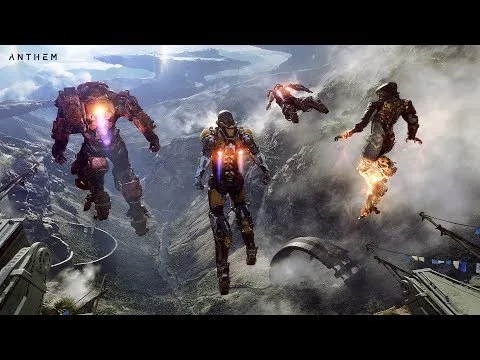
EA's big bet back then wasn't Andromeda anyway. It was Anthem, an online shooter in flying exosuits from the main team in Edmonton. The E3 2017 reveal made it look like BioWare was about to make its own Destiny.
 The video loads from YouTube (Google) when you press play. Privacy policy
Anthem launched on 22 February 2019 (EA subscribers got it a week earlier) and scored 59, the lowest in BioWare's history. On 2 April 2019 Jason Schreier published "How BioWare's Anthem Went Wrong" at Kotaku. Developers described years of changing direction, flight being cut and brought back, and a studio counting on "BioWare magic" to pull it together at the end. The magic didn't show up. The Anthem Next rework was stopped on 24 February 2021, the servers went dark on 12 January 2026, and today Anthem can't be played at all.
In December 2020 BioWare lost Casey Hudson, its general manager, and Mark Darrah, who had run Dragon Age. The bright spot of that period was Mass Effect Legendary Edition on 14 May 2021, a remaster of the trilogy. Lovely, but it was a look back, not forward.
2024-2026: The Veilguard, 1.5 million players, half of what EA planned
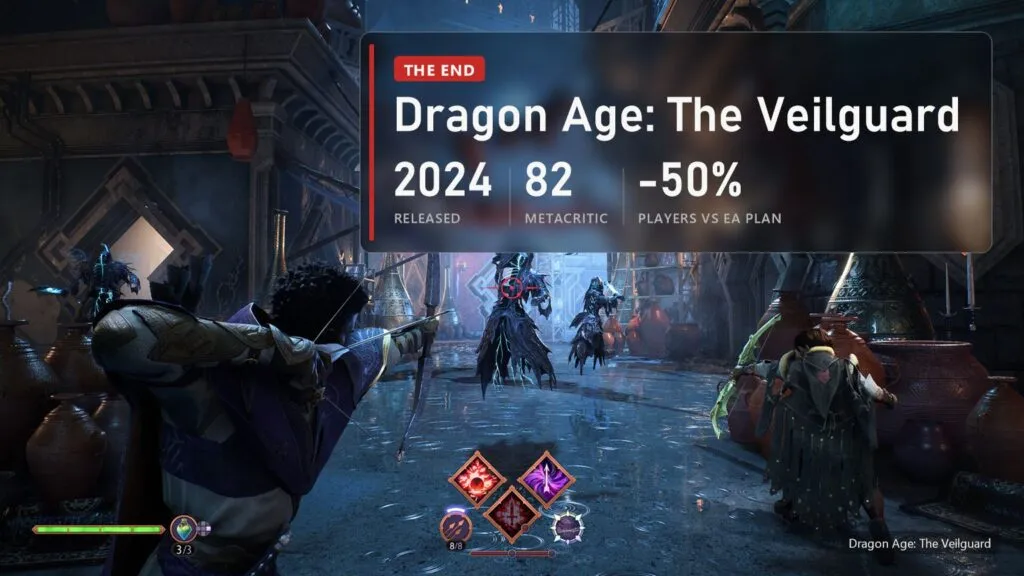
The next Dragon Age took the best part of a decade, and along the way it became an online game and then a single-player one again. Dragon Age: The Veilguard came out on 31 October 2024 and scored 82, which is perfectly decent. The problem was elsewhere. On 22 January 2025 EA said the game had engaged about 1.5 million players in the quarter, nearly 50% below what it expected.
 The video loads from YouTube (Google) when you press play. Privacy policy
Things moved fast after that. On 29 January 2025 general manager Gary McKay wrote on the BioWare blog that for the next Mass Effect "we don't require support from the full studio": a small core team under Mike Gamble would stay, and everyone else would move to other EA teams. The Veilguard's director, Corinne Busche, left the same month. Bloomberg reported that BioWare went from more than 200 people to fewer than 100 in two years, and by October 2026, by the same reporting, about fifty were left. They're the ones who got the 21 October letter.
Every BioWare game and its score, from Baldur's Gate II's 95 to Anthem's 59
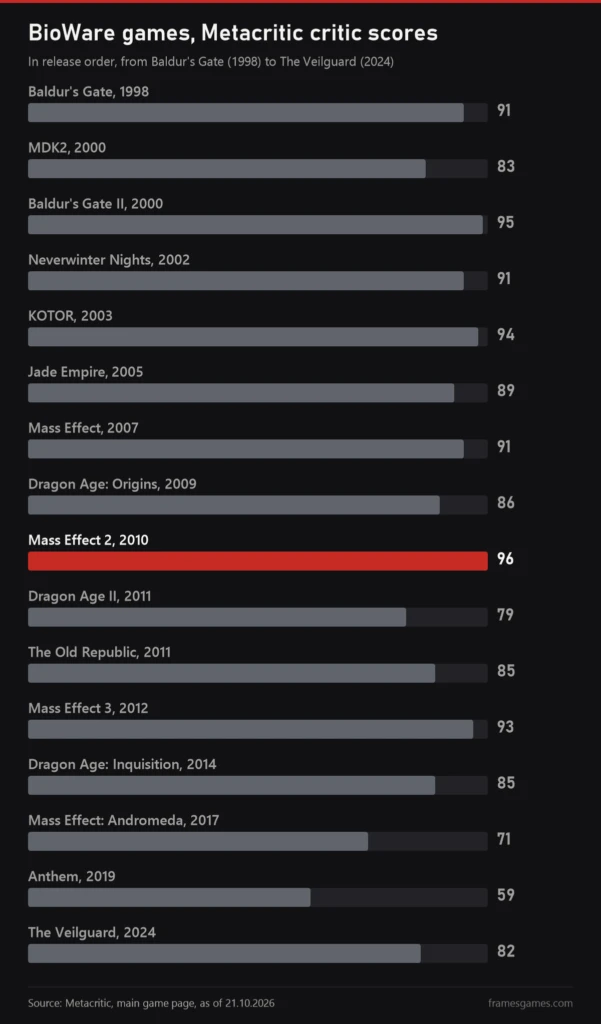
The chart says it in one picture: fifteen years with almost no misses, the peak in 2010 and a slide after 2014. By score alone The Veilguard's 82 even looks like a recovery, but EA was counting players, not points. Scores come from Metacritic, and for multi-platform games it's the game's main page.
| Year | Game | Launch platforms | Publisher | Metacritic |
|---|---|---|---|---|
| 1998 | Baldur's Gate | PC | Interplay | 91 |
| 2000 | MDK2 | PC, Dreamcast | Interplay | 83 |
| 2000 | Baldur's Gate II: Shadows of Amn | PC | Interplay | 95 |
| 2002 | Neverwinter Nights | PC | Infogrames | 91 |
| 2003 | Star Wars: Knights of the Old Republic | Xbox, later PC | LucasArts | 94 |
| 2005 | Jade Empire | Xbox | Microsoft | 89 |
| 2007 | Mass Effect | Xbox 360 | Microsoft | 91 |
| 2009 | Dragon Age: Origins | PC, PS3, Xbox 360 | EA | 86 |
| 2010 | Mass Effect 2 | PC, Xbox 360 | EA | 96 |
| 2011 | Dragon Age II | PC, PS3, Xbox 360 | EA | 79 |
| 2011 | Star Wars: The Old Republic | PC | EA | 85 |
| 2012 | Mass Effect 3 | PC, PS3, Xbox 360 | EA | 93 |
| 2014 | Dragon Age: Inquisition | PC, PS3, PS4, Xbox 360, Xbox One | EA | 85 |
| 2017 | Mass Effect: Andromeda | PC, PS4, Xbox One | EA | 71 |
| 2019 | Anthem | PC, PS4, Xbox One | EA | 59 |
| 2024 | Dragon Age: The Veilguard | PC, PS5, Xbox Series X|S | EA | 82 |
What happens to the BioWare games you already own
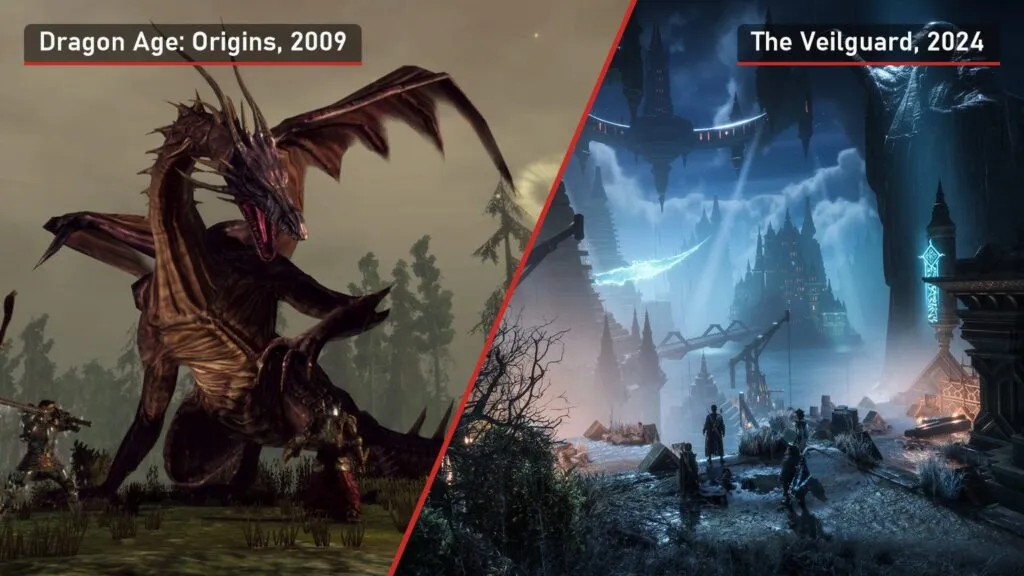
EA owns the games, not BioWare, so closing the studio doesn't pull anything from stores by itself. As of 21 October Steam still sells Mass Effect Legendary Edition, Dragon Age: Origins, Inquisition and The Veilguard, and Baldur's Gate, Neverwinter Nights and Knights of the Old Republic have lived on in other companies' re-releases for years. The Old Republic has been run by Broadsword since 2023, and EA's letter doesn't mention it. If you always meant to play the Mass Effect trilogy, now is as good a time as any. Just don't hold out for a sequel.
What BioWare leaves behind, in short:
- 31 years, from Edmonton in 1995 to the same Edmonton in 2026.
- A best score of 96 for Mass Effect 2 and a worst of 59 for Anthem.
- Two big universes of its own, Mass Effect and Dragon Age, both now without the studio that made them.
- The next Mass Effect cancelled early, and no word on either series.
If you'd rather read about a big RPG series that's alive and well, we have the history of The Witcher.
Sources
Gematsu, 21.10.2026: BioWare's statement and the full letter from Cam Weber and David Tinson. Bloomberg, 21.10.2026: 400 jobs and about 50 at BioWare. GameSpot and Kotaku, 21.10.2026. Variety: Battlefront III. VGC: debt after the buyout. EA, 29.09.2025 and EA, 04.08.2026: the sale of the company. GamesRadar, oral history of BioWare: founders, Shattered Steel, Baldur's Gate. NBC News, 2012: Muzyka and Zeschuk leave. Simpson Thacher, 2005: the Elevation Partners deal. EA press release, 11.10.2007 and VentureBeat citing the WSJ: the VG Holding purchase. Game Informer: The Game Awards 2014 winners. Kotaku, 02.04.2019: how Anthem was made. Gematsu, 2020: Hudson and Darrah leave. EA, 22.01.2025: 1.5 million Veilguard players. BioWare blog, 29.01.2025 and VGC, 01.02.2025: the studio shrinks. VGC, 2023: The Old Republic moves to Broadsword. Gamereactor: Anthem server shutdown. Scores: game pages on Metacritic, 21.10.2026. Screenshots: the games' Steam pages. Video: official Mass Effect, Dragon Age, Anthem and Star Wars: The Old Republic channels.