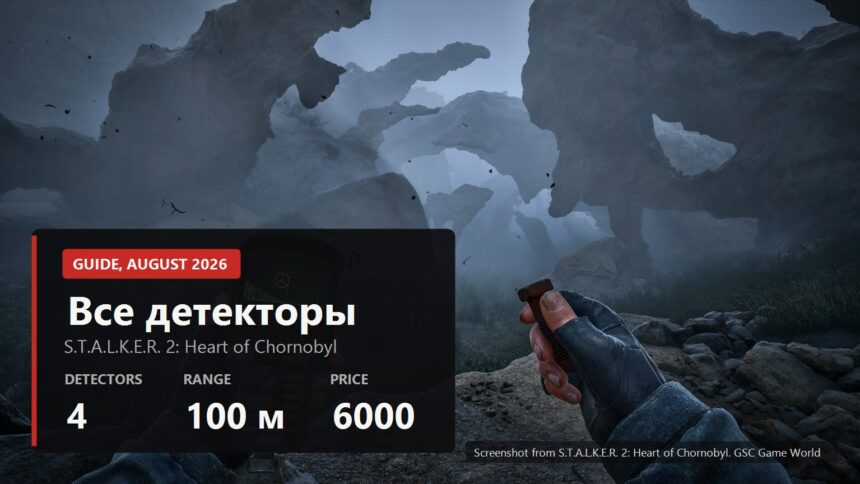
The game has four detectors, and the ladder is not as straight as the prices suggest. The one with the longest reach costs less than the one that reaches half as far, and the most useful of the lot cannot be bought at all. All four are below with numbers, upsides, downsides and a plain answer about which one belongs in your hand at which point.
One more detail that saves your nerves: a detector beeps at an anomaly and blinks at an artifact. Two different signals, and until you can tell them apart the device feels like it is lying to you.
All four in one table
| Look | Detector | Range | What it shows | Price | Where to get it |
|---|---|---|---|---|---|
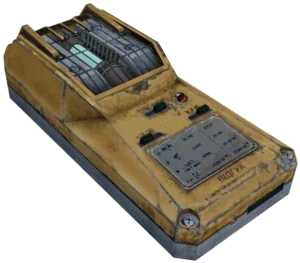 | Echo reads VIDHUK on the casing | short | A lamp and a beep, faster as you close in | starting kit | Handed to you at the start of the game |
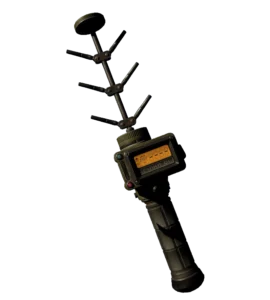 | Hilka reads HILKA on the casing | up to 100 m | The distance to the artifact as a number on the display | around 4,000 | Budmo! side mission at the Garbage. Sold by the Barkeep in Rostok, Pythagoras at STC Malachite, Hawaiian at Yaniv Station |
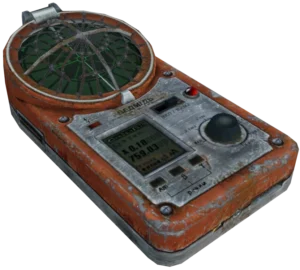 | Bear reads VEDMID on the casing | half the Hilka, about 50 m | A round radar with direction and rough distance | around 6,000 | Reward for the side mission A Sign of Hope at Noontide base on Wild Island. Sold by Hawaiian at Yaniv |
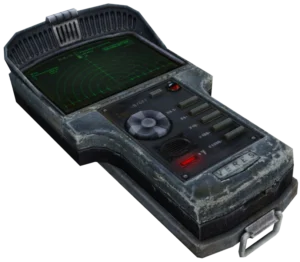 | Veles reads VELES on the casing | close to the Bear | The artifact as a dot on the radar, with nearby anomalies as well | not for sale | Story mission In Search of Past Glory |
The table leads to one conclusion: range and precision live in different devices in this game. The Hilka is the first to tell you an artifact exists at all, but you will hunt for it on foot. The Bear and the Veles stay quiet until you are close, and then they show you exactly where to walk.
Echo: you start with it and you suffer with it
A yellow box with VIDHUK stamped on the side. It shows nothing at all, it blinks a lamp and beeps, faster the closer the artifact sits. Everything else you work out yourself while walking in circles.
- Upside. You already have it, it costs nothing and weighs little.
- Downside. No distance, no direction. In a field with three anomalies packed together you simply pace around until the beeping speeds up.
- Downside. The shortest reach of the four, so an artifact twenty metres away can pass you by unnoticed.
Replace it at the first opportunity. This is not about comfort: with the Echo a single artifact costs you five times the time, and time in the Zone means ammunition, bandages and food.
Hilka: finds it first, then leaves you to it
A rod with a folding antenna array and a small orange screen, HILKA on the casing. It gives you one number: how many metres to the artifact. It reaches a hundred metres, the longest range in the game.
- Upside. A hundred metres means you find artifacts you would never have known about with the other three.
- Upside. Around two thousand coupons cheaper than the Bear.
- Downside. The number tells you distance only. You find the direction with your feet: step aside, look again, did it go up or down.
- Downside. In a dense anomaly field that pacing becomes dangerous by itself.
The Hilka works best as a scout. Walk the location, see that something is within range, and only then pull out the more precise device.
Bear: direction instead of guesswork
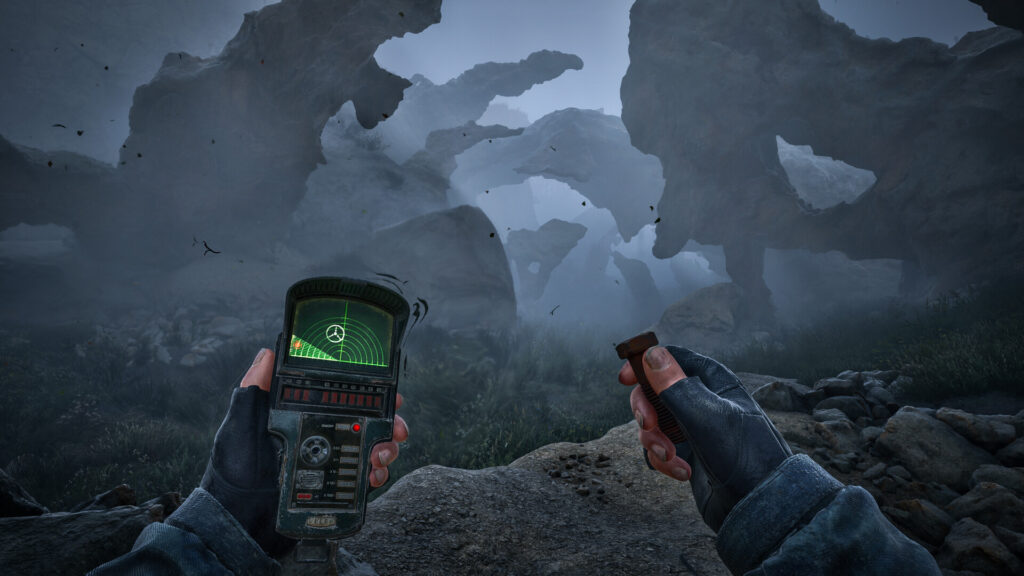
An orange body with a round radar under a caged dome, VEDMID on the casing. The radar draws a direction to the artifact and gives a rough sense of distance. Range is half the Hilka, roughly fifty metres.
- Upside. You finally walk towards the artifact instead of around it.
- Upside. Traders sell it, so it is not tied to story progress.
- Downside. Half the reach. You have to comb a location more tightly or you miss half the loot.
- Downside. Six thousand coupons early on is a choice between a detector and decent armour.
If you want one device and no thinking, take the Bear. It fixes the worst of the Echo and the price is bearable.
Veles: shows the artifact and the anomaly
A heavy box with a green screen, VELES on the casing. The radar carries the artifact as a dot and the anomalies around it as well. That second half is what changes everything: you see not only where to go but what not to walk through.
- Upside. The exact spot of the artifact, no pacing and no guessing.
- Upside. Anomalies on the radar. That is not convenience, that is not stepping blind into a frying pan.
- Downside. You cannot buy it. It comes from the story mission In Search of Past Glory, so until then you live without it.
- Downside. Range sits near the Bear, none of the Hilka reach.
Once the Veles is in the backpack the other three can be sold. I found no reason to go back to any of them.
What to carry and when
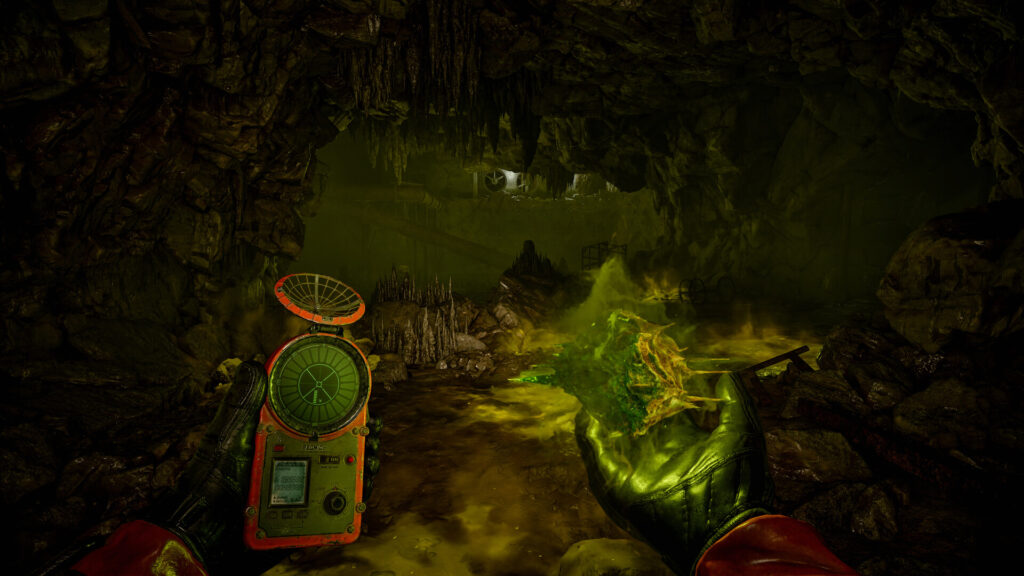
The plan is simple and fits into three stages.
Until you have real money you live with the Echo, because there is no choice. As soon as four thousand coupons pile up, buy the Hilka: it is cheaper than the Bear and immediately tells you where searching makes sense at all. After that, if you play for money and pull artifacts by the handful, add the Bear and carry both, the Hilka to scout and the Bear to close in. Once the story mission In Search of Past Glory is done all of that stops mattering, because the Veles does the work of both and draws anomalies on top.
There is one fork worth thinking about. If your money is needed for armour rather than instruments, skip the Bear entirely. The Hilka plus patience gets you to the Veles just as well, and six thousand coupons is half a decent suit.

Sources
Range, prices, traders and how each detector is obtained: Patch Crazy, GameSpot, Prima Games, Destructoid, GameRant. How each display works: Destructoid and GameRant, cross checked against each other. Detector renders come from the S.T.A.L.K.E.R. wiki; rights to the images belong to GSC Game World. Platforms checked against the Steam store page and the PlayStation 5 release announcement.