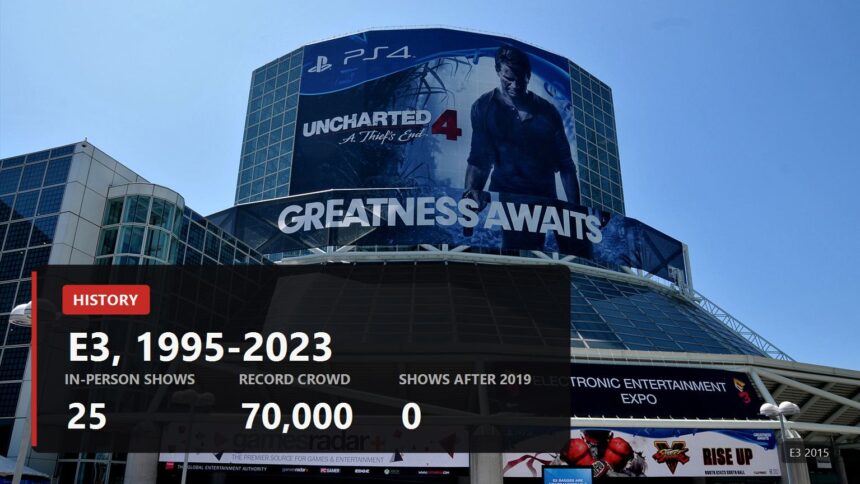
For twenty five years E3 was the biggest games show on the planet. Every spring or early summer, almost always in Los Angeles, it decided what the world would be playing for the next couple of years. This is where Sony wrecked the price of the Sega Saturn with a single phrase, where grown adults reportedly teared up at a Zelda trailer, and where the words "five hundred ninety nine US dollars" were spoken, after which the internet did not calm down for about a decade.
- 1991-1999. A tent in the rain, a one-word speech and 50,000 people
- 2000-2006. The golden age: a record 70,000 people and a $599 price tag
- 2007-2008. The show cut down to a twelfth of its size
- 2009-2016. A second wind: 41,000 people and a dream conference
- 2017-2019. Open to everyone: 15,000 tickets at $250
- 2020-2023. Four years of dying, and 12 December 2023
- How people fought their way into E3, and why it mattered so much
- E3's whole history in numbers, and its funniest moments
Then on 12 December 2023 the organisers announced that E3 was over. For good. Below is its whole story era by era, with attendance figures, the biggest and the most ridiculous moments, and why developers and journalists fought so hard to get in. For a long time an E3 badge was something close to a medal.
1991-1999. A tent in the rain, a one-word speech and 50,000 people
Before E3, games were shown at CES, the consumer electronics show in Las Vegas, and they got whatever space was left over. Sega of America boss Tom Kalinske later recalled 1991: the games companies were put in a tent, and to reach it you had to walk past the porn vendors. It was pouring that year too, and rain leaked straight onto the new Genesis units. Sega walked away from CES, and the others followed.
In 1994 the industry set up its own association, the IDSA (renamed the ESA in 2003), partly to run a single age rating system. The idea of a dedicated show came from Pat Ferrell, the founder of GamePro magazine, and according to MCV the start-up money was lent by Sega and Nintendo, $300,000 each. The CES organisers tried to keep games for a few months, then gave in.
The first E3 ran from 11 to 13 May 1995 at the Los Angeles Convention Center. The organisers had no idea whether anyone would turn up, and depending on whose count you trust, somewhere between 40,000 and 50,000 people did. It immediately produced a scene people would retell for twenty years.
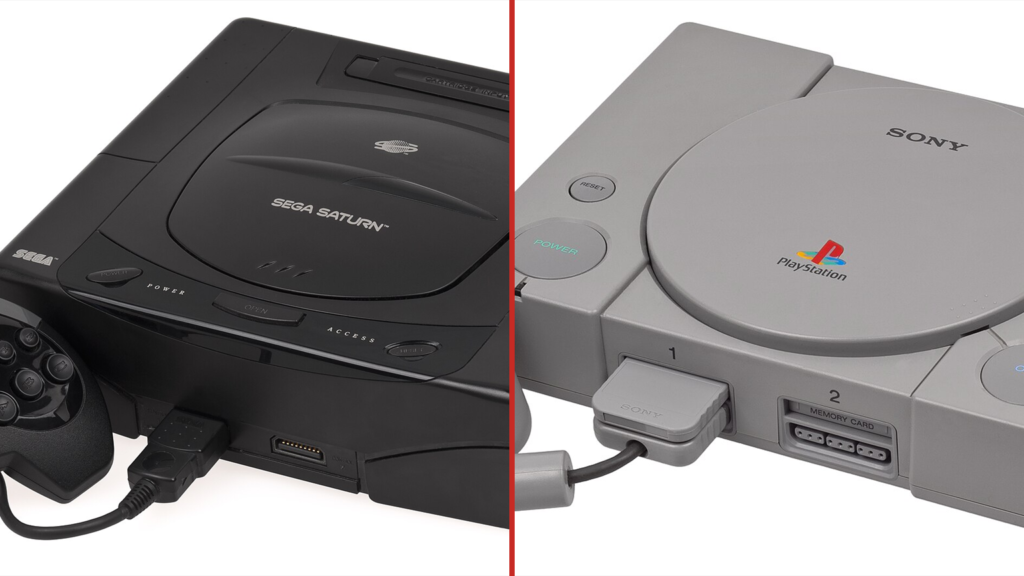
Kalinske took the stage and announced that the Sega Saturn cost $399 with Virtua Fighter and was on sale that very day: 30,000 consoles had been quietly shipped to Toys "R" Us, Babbage's, Electronics Boutique and Software Etc. The official launch had been set for 2 September. Every other retailer took it personally, and KB Toys refused to stock the Saturn at all.
A few hours later Steve Race, head of Sony's American arm, walked onto Sony's stage, said "Two ninety-nine" into the microphone and walked off. That was the entire speech. The PlayStation was a hundred dollars cheaper, the room applauded, and out of that minute grew the tradition people watched E3 for from then on: a punch at the competition delivered live from the stage.
- 1996, Los Angeles, 57,795 people. Nintendo's booth had a playable prototype of Super Mario 64. An attempt to hold E3 Tokyo that autumn fell apart when Sony and Sega pulled out, leaving Nintendo as the only major publisher.
- 1997 and 1998, Atlanta, 37,000 and 41,300 people. Talks with Los Angeles failed and the show was moved across the country. The industry lived on the West Coast, the trip was long, attendance dropped, and the organisers later admitted the move was a mistake.
- 1999, back in Los Angeles, 55,000 people. E3 stayed in the city from then on.
A recent detail: in July 2026 the Video Game History Foundation opened a free E3 archive. It holds almost 12 hours of Anthony Parisi's camcorder footage from the first four shows, Race's speech included, and more than a thousand pages of the organisers' internal paperwork. Former show director Mary Dolaher remembers a power cut on day one, limo drivers getting into a fight and Marines rappelling down the side of the building.
2000-2006. The golden age: a record 70,000 people and a $599 price tag
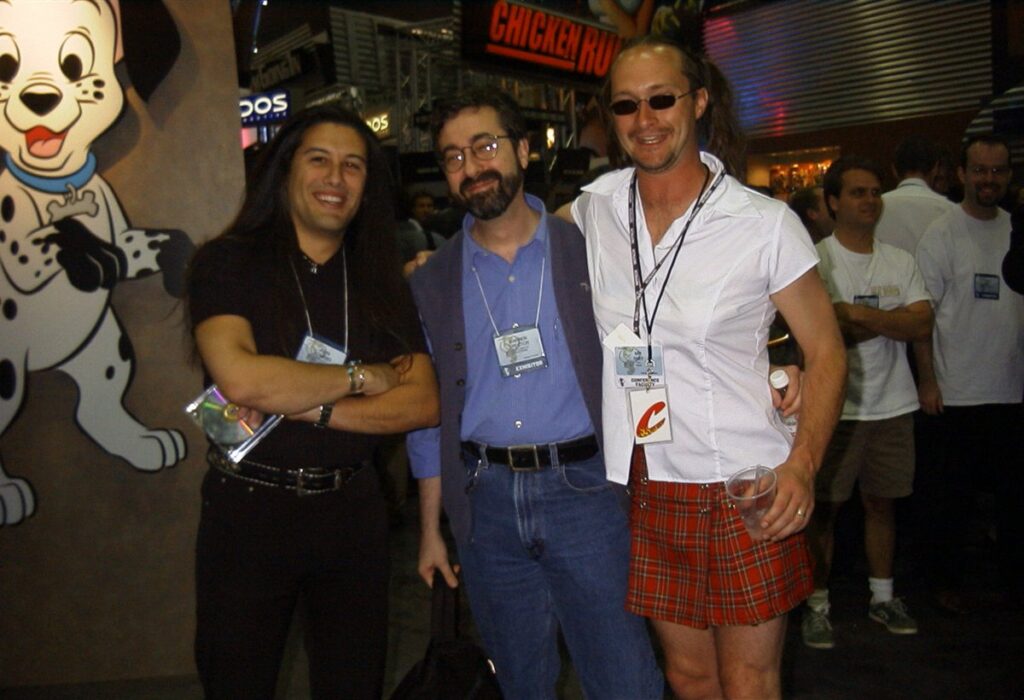
In the early 2000s E3 became the most important day of the year for the whole industry. At E3 2000 Konami showed the Metal Gear Solid 2 trailer, and nobody talked about anything else: nothing on PlayStation 2 looked like that at the time. A year later Microsoft barged in with the first Xbox and Halo, with Nintendo and the GameCube across the hall.
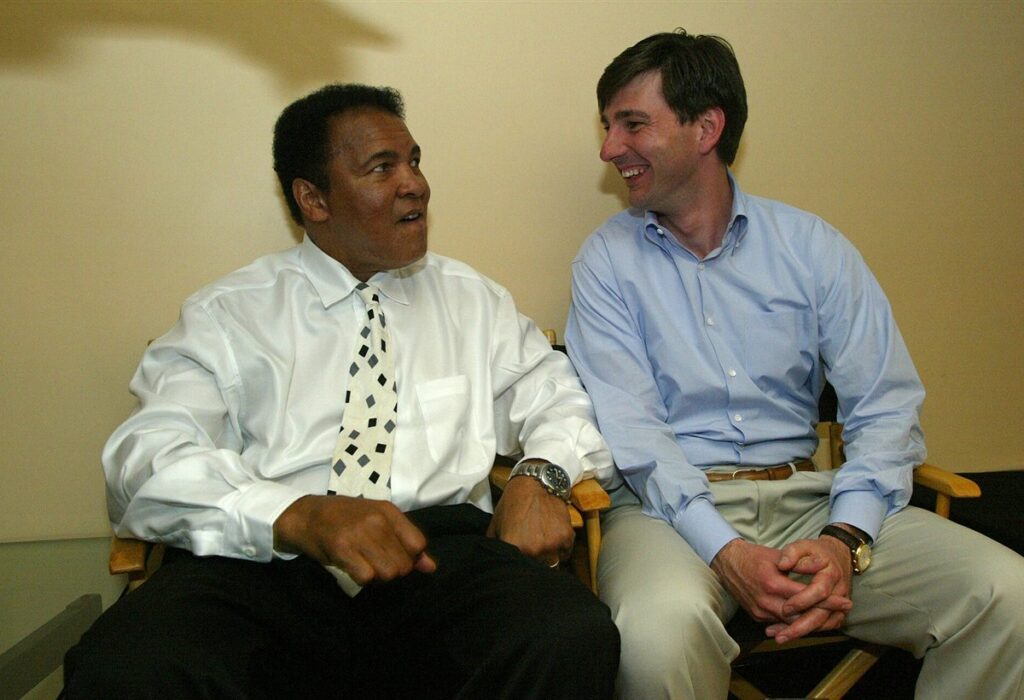
2004 brought two moments Nintendo fans can recite by heart. Reggie Fils-Aimé, new at Nintendo of America, opened with "I'm about kickin' ass, I'm about takin' names, and we're about making games". At the end they rolled the trailer for a new Zelda and Shigeru Miyamoto ran onto the stage with a sword and shield. That was how Twilight Princess was unveiled, and if the people who were there are to be believed, part of the room cried.
In 2005 the show set its record, 70,000 people. It also hosted the first big scandal over "honest" footage: Sony presented Killzone 2 for PlayStation 3 as if it were running live. It later turned out to be a target render, and Guerrilla's executive producer admitted the studio had rendered little more than a triangle by then.
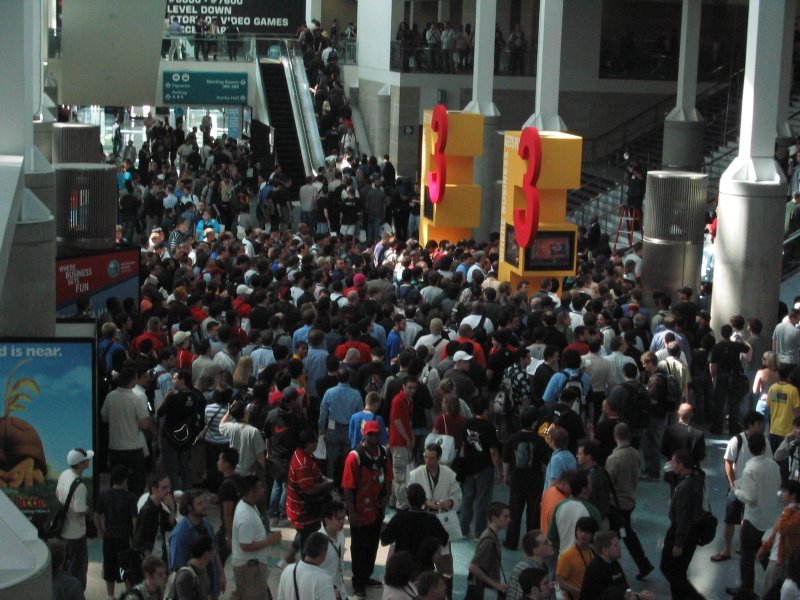
E3 2006 was both the peak and the beginning of the end. Booths for the big publishers cost between $5 million and $10 million. That same year the ESA introduced a $5,000 fine for exhibitors whose booth models were dressed too provocatively: a first offence got a verbal warning, a second one cost money.
Sony's 2006 press conference went down in history as a whole. Kaz Hirai waited for a demo to load and yelled "Riiiidge Racer" into the room. The producer of Genji: Days of the Blade explained that its battles were based on famous battles that actually took place in ancient Japan, and a giant enemy crab promptly appeared on screen. Then came the PlayStation 3 price: $499 for the 20GB model and $599 for the 60GB one.
In the same building Nintendo showed the Wii, and the queue for its booth became a legend of its own: people stood in line for four hours, and at some points six, to swing a remote in Wii Sports. The wait for PlayStation 3 at the same time was about half an hour.
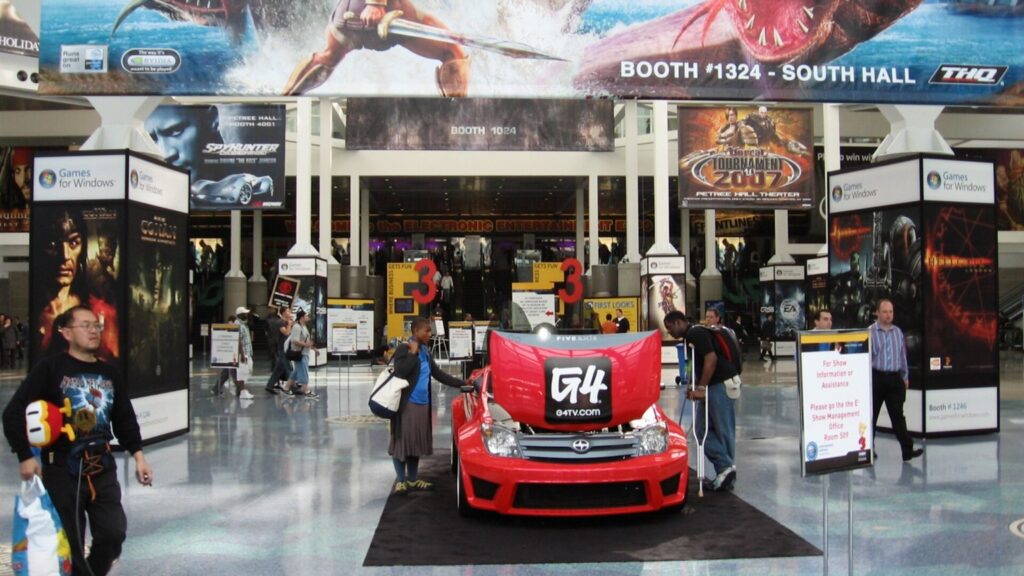
Compared with the previous era: 50,000 people in 1995 and 70,000 in 2005, 1.4 times as many. The show had grown to the ceiling, and there was nowhere left to grow.
2007-2008. The show cut down to a twelfth of its size
After 2006 the exhibitors went to the ESA with complaints. Booths cost millions, and the halls that were officially industry-only were packed with outsiders, so the audience that mattered got lost in the crowd.
The ESA's answer was drastic. The show was renamed the E3 Media and Business Summit, moved to July, and in 2007 taken out of the convention center to Santa Monica, into a hangar at the local airport. About 10,000 people were let in. In 2008 E3 went back to the Los Angeles Convention Center, but with even fewer visitors, roughly 5,000.
Analyst Michael Pachter warned plainly at the time that without outside attention and without the public, E3 would simply go extinct. Activision left the ESA altogether in 2008, with CEO Bobby Kotick saying the company had outgrown the show.
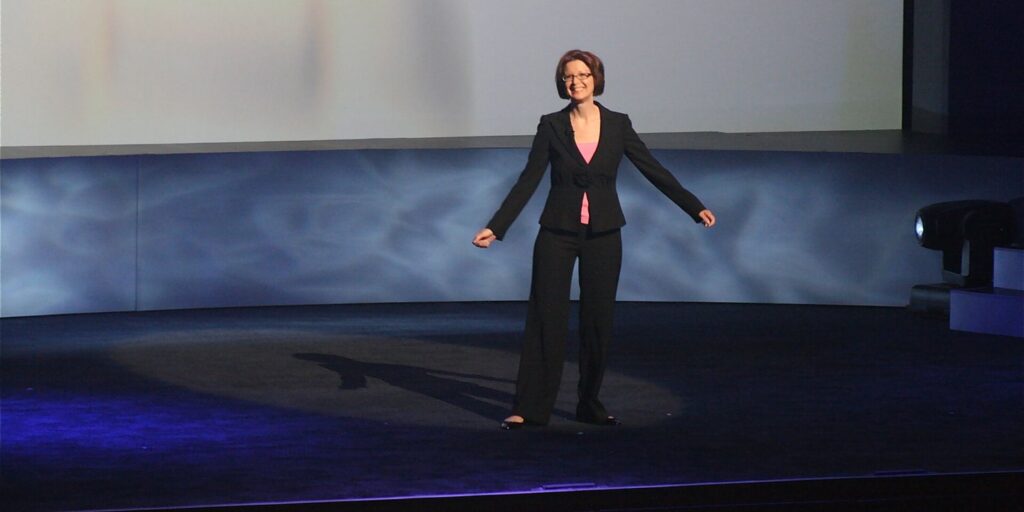
The most memorable scene of the shrunken era was the finale of Nintendo's 2008 press conference. A professional drummer played a long, passionate air solo with a Wii Remote, a Nunchuk and a Wii Fit board to show off Wii Music, while the speakers produced something on the level of a toy drum kit. That conference is still named among the worst in the show's history.
Compared with the previous era: 60,000 people in 2006 and about 5,000 in 2008, a twelfth of the crowd.
2009-2016. A second wind: 41,000 people and a dream conference
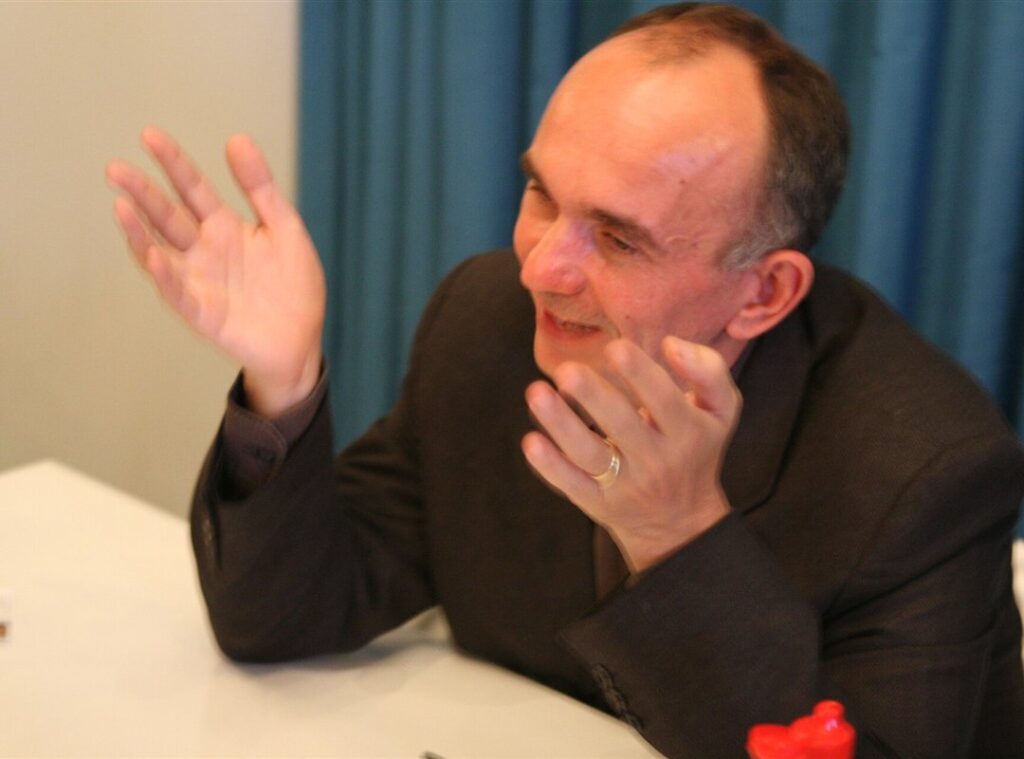
The experiment was judged a failure, and in 2009 E3 returned to its old scale: June, Los Angeles, 41,000 attendees. Microsoft brought Paul McCartney and Ringo Starr on stage for The Beatles: Rock Band, and Peter Molyneux showed Milo, a virtual boy for Project Natal, the future Kinect. Milo never came out, but that day it felt like the future had arrived.
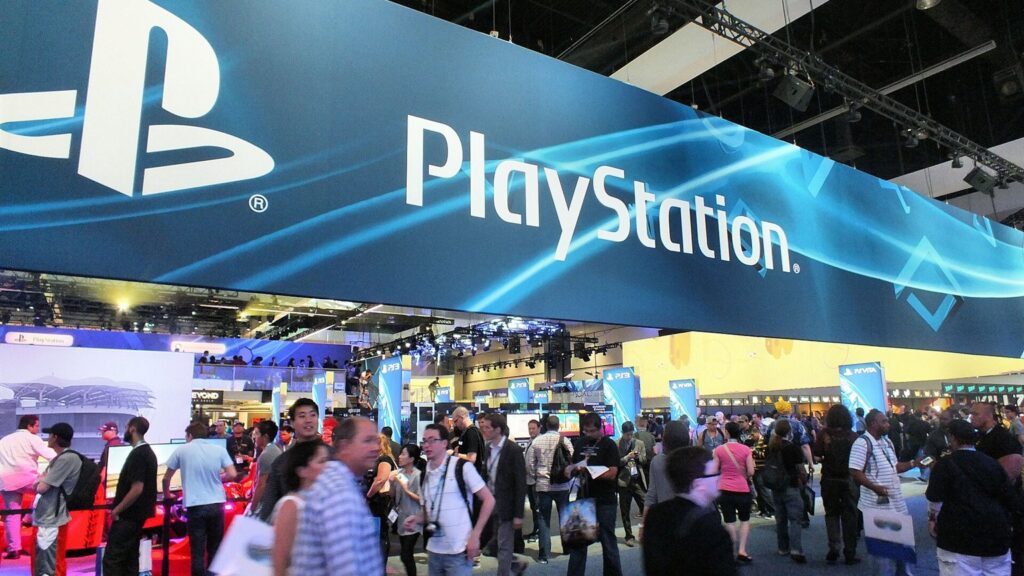
E3 2013 turned into open console war. Microsoft showed the Xbox One at $499, with restrictions on used games and a mandatory online check. Sony followed, announced the PS4 at $399, promised nothing would change for used discs, and got the loudest applause of the night.
Sony finished the job with a 21-second video. Shuhei Yoshida explains how to share games on PS4 and simply hands a copy of Killzone Shadow Fall to Adam Boyes. That is it. Boyes later said he came up with it on the plane to the show. On 19 June 2013 Microsoft dropped its restrictions.
By then Nintendo had stopped holding traditional press conferences in favour of pre-recorded Nintendo Directs. In 2014 it livened them up with sketches from the Robot Chicken team: Reggie Fils-Aimé and Nintendo president Satoru Iwata had a puppet fight, then settled it in Super Smash Bros., where Iwata won by putting a Mario figurine on the GamePad.
Plenty of people still call E3 2015 the best ever, and that comes down to one Sony conference. In a single evening it showed The Last Guardian, a game everyone had written off, announced the Final Fantasy VII remake and launched the Shenmue III Kickstarter live on stage. Yu Suzuki asked for $2 million, and more than $600,000 came in within the first hour.
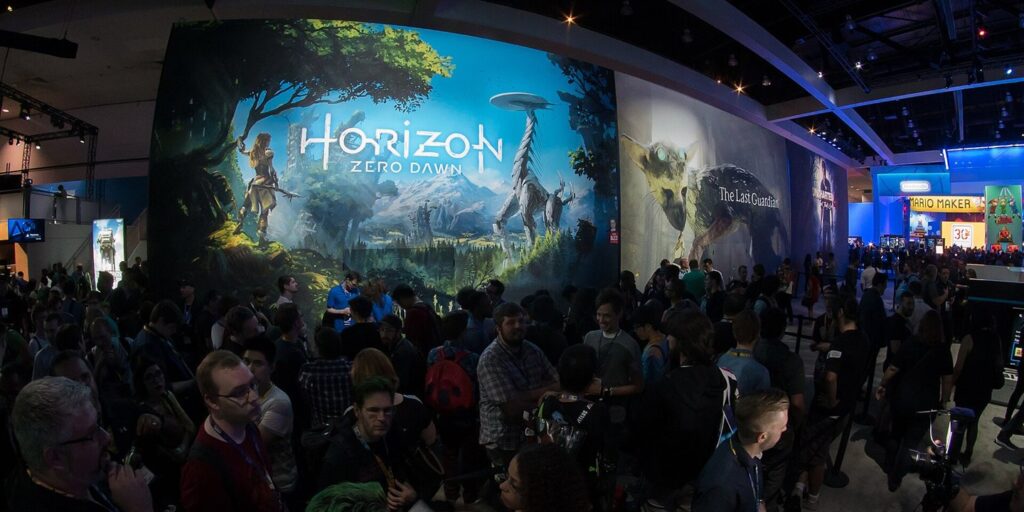
In 2016 the first cracks showed. Electronic Arts left the show floor and ran its own EA Play nearby, Activision Blizzard had no booth, and Disney Interactive and Wargaming stayed away too. Publishers had learned to talk to players directly through their own streams, and paying millions for a booth at a show closed to the public no longer made sense.
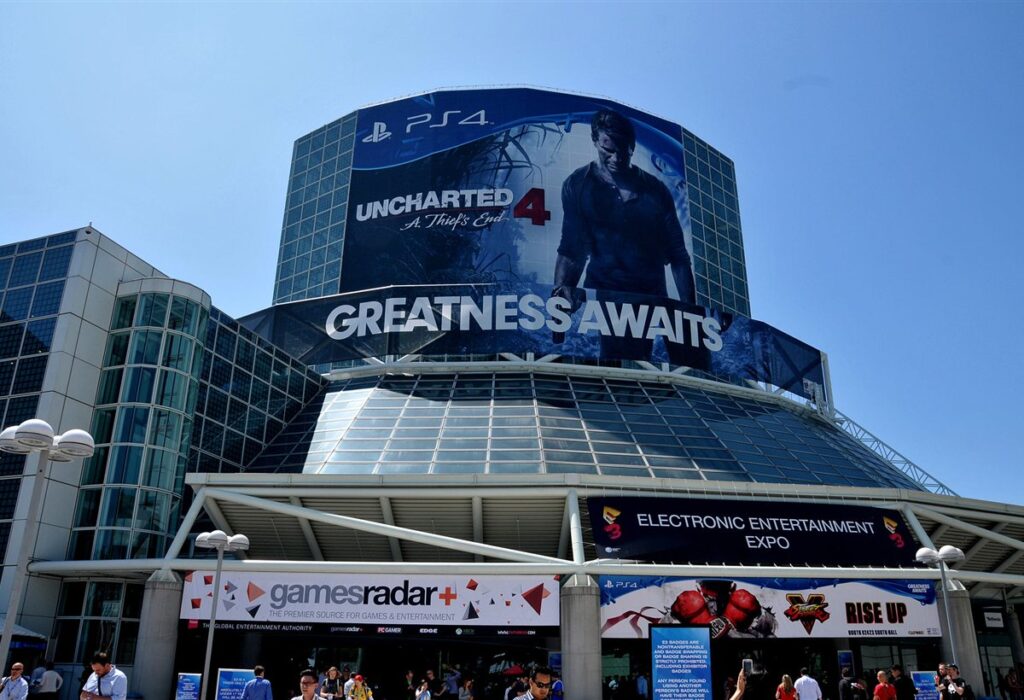
That year Nintendo gave its entire booth to a single game, The Legend of Zelda: Breath of the Wild, and nearly every major outlet named it game of the show. And at Sony's conference Hideo Kojima walked on stage and showed the first Death Stranding trailer.
Compared with the previous era: about 5,000 people in 2008 and 41,000 in 2009, eight times as many.
2017-2019. Open to everyone: 15,000 tickets at $250
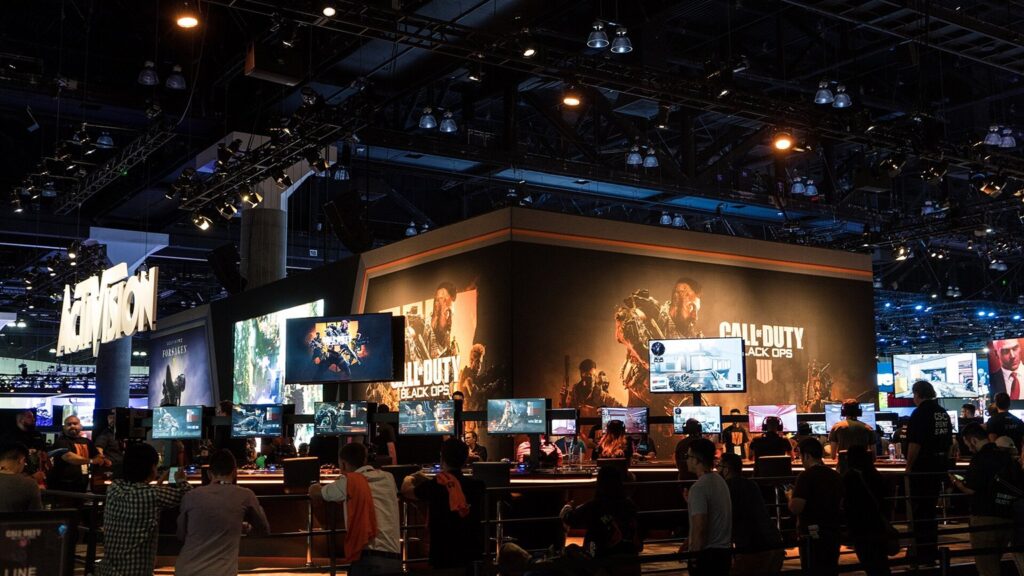
In 2017 the ESA sold tickets to ordinary players for the first time. Fifteen thousand passes, the first thousand at $150 and the rest at $250, and they were gone by mid-May. In total 68,400 people came, the halls were bursting, and the organisers got complaints about the crush.
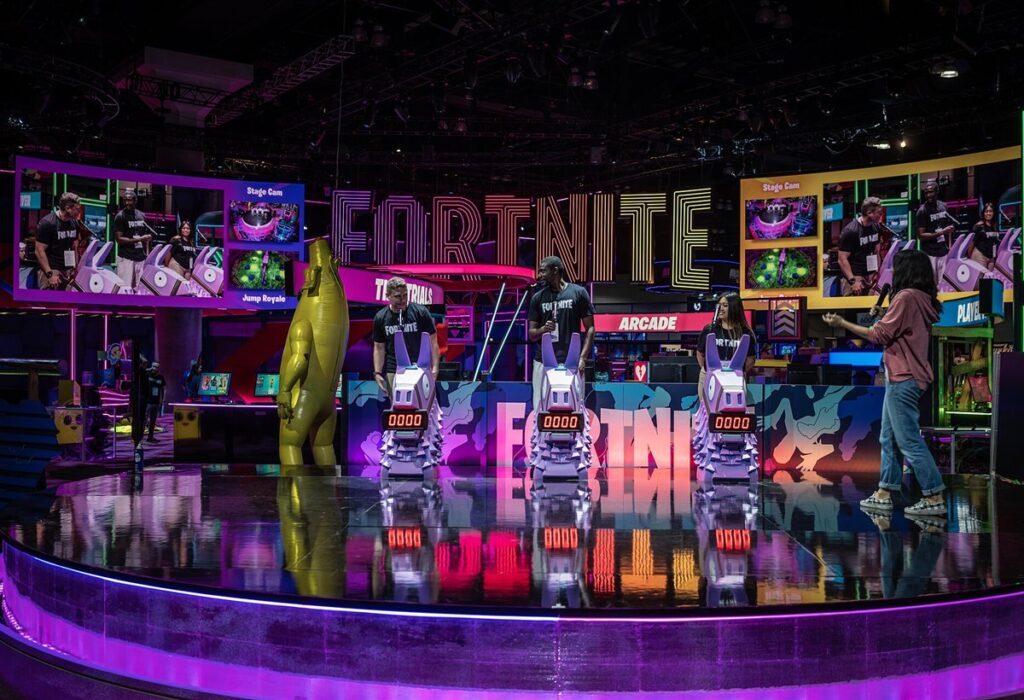
In 2018 the show drew 69,200 people, more than at any point since 2005. Industry attendees got morning hours without the public.
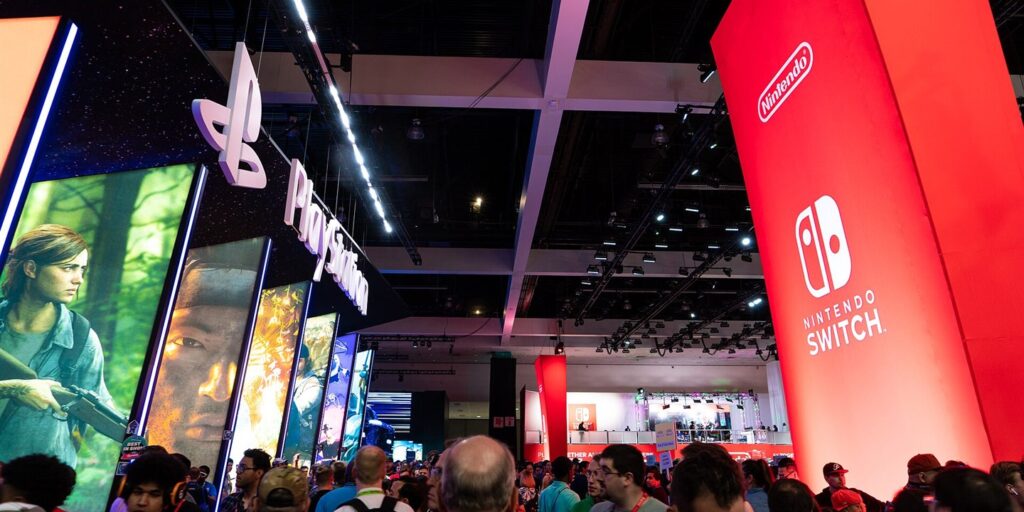
But in 2019 Sony stayed away for the first time in the show's history. Shawn Layden put it simply: a trade show in June is no longer useful, retailers buy earlier, and news now spreads across the internet in minutes. When the maker of the best-selling console does not turn up, the show is no longer the main event.
Still, the last in-person E3 got a lovely farewell scene. At the Xbox briefing Keanu Reeves came on stage to announce his role in Cyberpunk 2077. YouTuber Peter Sark shouted "You're breathtaking!" from the audience, Reeves said it right back to him and then added that everyone there was breathtaking. CD Projekt Red later gave Sark a collector's edition of the game.
There was an ugly story too. In August 2019 journalist Sophia Narwitz found a public link on the E3 website called "Registered Media List": a spreadsheet with the names, phone numbers, emails and home addresses of more than 2,000 journalists, content creators and analysts. Similar data for roughly 6,000 attendees of earlier shows turned up later, and some of the people on the list went on to receive threats. For a show already losing trust, the timing could not have been worse.
Compared with the previous era: 50,300 people in 2016 and 68,400 in 2017, 1.4 times as many. It was the last growth in E3's history.
2020-2023. Four years of dying, and 12 December 2023
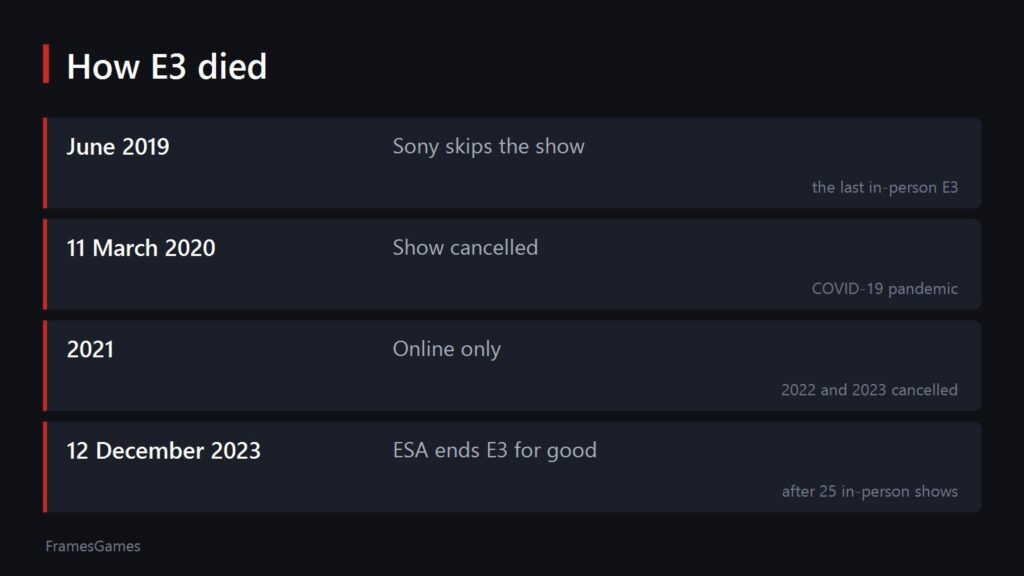
First Geoff Keighley, one of the best-known hosts of games shows, said he would not take part in E3 2020. On 11 March 2020 the show was cancelled because of the COVID-19 pandemic, and that summer Keighley ran Summer Game Fest online, which is what eventually took E3's place.
E3 2021 happened online only, from 12 to 15 June. Reactions were mixed: publishers ran presentations that could just as well have aired without any E3 around them. In 2022 the show was cancelled on 31 March, with no online replacement.
For 2023 the ESA brought in the organiser ReedPop and planned separate business days and fan days. It did not help: Nintendo, Microsoft, Ubisoft, Sega and Tencent all declined. On 30 March 2023 E3 was cancelled, citing a lack of sustained interest. By then, what was really sustained was the lack of it.
On 12 December 2023 the ESA announced that E3 would no longer be held. The explanation fit in one thought: the industry now has new ways to reach fans and partners. In February 2025 the ESA announced an industry conference called IICON and described it as E3's spiritual successor, but it is a very different kind of event.
Compared with the previous era: 66,100 people at the last in-person E3 in 2019, and zero after that.
How people fought their way into E3, and why it mattered so much
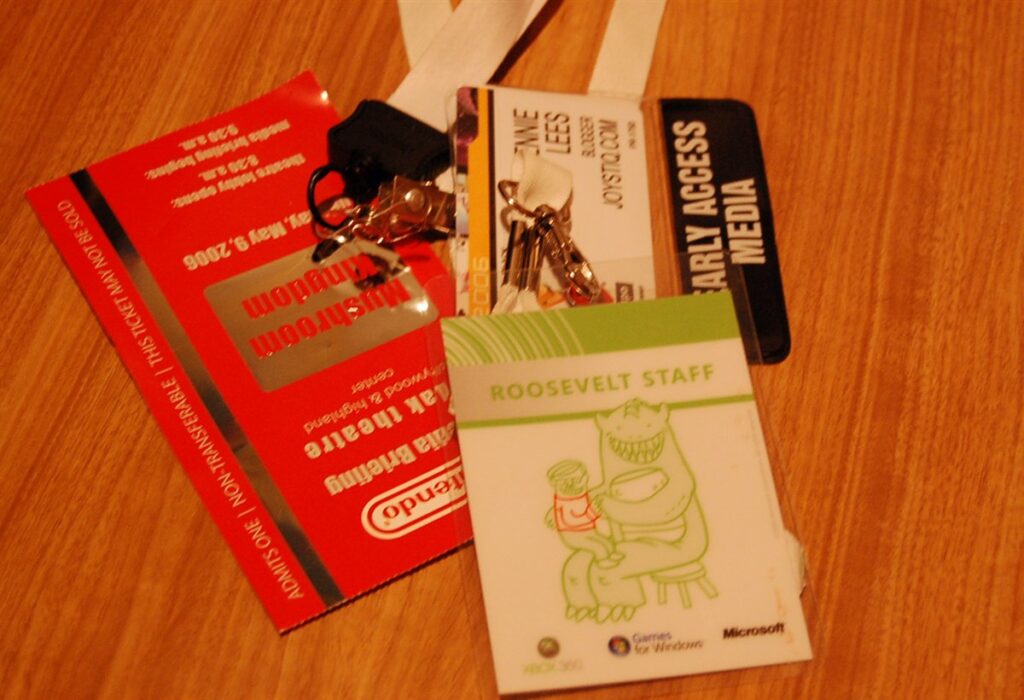
Until 2017 E3 was closed. To get a badge you had to prove that you worked in the games industry or wrote about it, and a name badge round your neck meant roughly what a backstage pass means at a concert. Ordinary players watched the streams, and every spring forum threads popped up asking how on earth to get in.
People did get in, and plenty of them. Even for the first show in 1995 there are accounts of people getting inside without proper credentials. Fake badges became such a problem that the ESA stopped posting press badges altogether: an approved journalist got an email with a barcode and printed the badge at a kiosk on site. In 1999 the sponsorship of the badge lanyards alone sold for $25,000.
- For a developer, a badge meant meetings. In three days you could show your game to publishers, retail buyers and half the world's press without leaving one building.
- For a journalist, a badge meant a year of material. Interviews, closed-door demos and first impressions of the games everyone would ask about until release.
- Getting your hands on something new cost hours. The Wii queue in 2006 reached six hours, and people stood in it voluntarily.
- Fans got a foot in the door in 2015. Exhibitors handed out about 5,000 tickets to their fans, and in 2017 the public was let in officially.
That is exactly why E3's death hit people as hard as it did. What disappeared was not just a show but the one place where the whole industry sat under one roof once a year and looked in the same direction. Summer showcases are now scattered across different companies' streams, and each of them is competing with itself.
E3's whole history in numbers, and its funniest moments
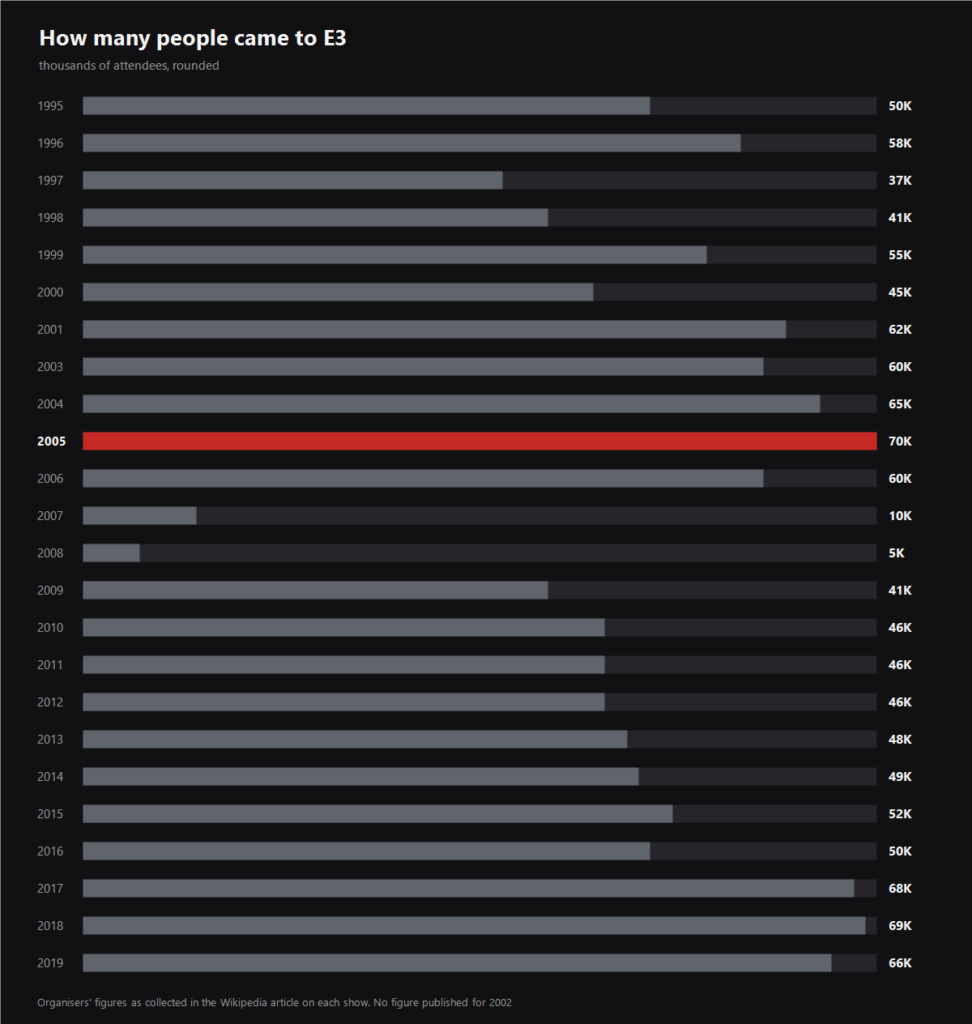
The chart shows the show's whole life: growth to 70,000 people in 2005, a collapse to 5,000 in 2008, a long plateau around 45,000 to 50,000, and a last surge once the public was let in. The run of eras in one line: 1.4 times up, a twelfth of the size, eight times up, 1.4 times up, and zero.
Attendance figures sometimes differ between sources, particularly for 1995 and 2009. The chart uses the figures from the article on each individual show, and the text above gives the range where the gap is large.
- 1995. Steve Race says "Two ninety-nine" and leaves the stage. The shortest speech in the show's history, and the most expensive one for Sega.
- 2004. Reggie Fils-Aimé introduces himself as a man who is about kicking ass. The line became a meme for years.
- 2005. The Killzone 2 trailer, for which the studio, by its own account, had rendered little more than a triangle.
- 2006. "Riiiidge Racer", a giant enemy crab from the battles of ancient Japan, and $599 for a PlayStation 3. One conference, three memes.
- 2008. A drum solo on a Wii Remote that sounded like a toy drum kit.
- 2013. 21 seconds of Yoshida handing a disc to Boyes, after which Microsoft had to rewrite the rules for Xbox One.
- 2014. Reggie and Iwata's puppet fight by the Robot Chicken team.
- 2019. "You're breathtaking!" from the audience, and Keanu Reeves saying it right back. The kindest moment in the show's history.
I genuinely miss E3, and not out of nostalgia for console prices. Every June the whole industry spent three days in one city trying to outdo each other, and that produced the best and the silliest minutes in gaming history. Summer Game Fest puts on good streams, but nobody has yelled "Riiiidge Racer" live on air since.
Sources
Dates, venues, attendance, the history of the IDSA and ESA, the cut-down shows of 2007 and 2008, the public opening, the data leak and the cancellations of 2020 to 2023: the Wikipedia article on E3 and the articles on each show, checked on 13 September 2026.
The CES tent, the rain on the Genesis and the Sega and Nintendo money for the first show: History Lesson at MCV/DEVELOP. The Sega Saturn launch at E3 1995, the retailers and KB Toys: the Sega Saturn article. The E3 archive, Anthony Parisi's footage and Mary Dolaher's memories: Video Game History Foundation.
Sony's 2006 conference: Push Square, video from the /noclip archive, captured from the original broadcast feed. Nintendo in 2004: GameSpot and Zelda Dungeon. Killzone 2: Game Informer. Fines for provocative outfits: NBC News. The Wii queues: Fox News.
Nintendo in 2008: SVG. The Beatles at E3 2009: The Beatles Bible. E3 2013 and the Xbox One reversal: Engadget, Engadget and the Push Square interview. Robot Chicken in 2014: Nintendo Life. Sony in 2015: Time and CBC. Publishers leaving in 2016: Fortune.
2017 tickets: GameSpot. Keanu Reeves: GamesRadar+. The data leak: TechCrunch. Badges and fake passes: Game Developer. Summer Game Fest: VGC. The end of E3: Digital Trends.
Photos are from Wikimedia Commons. The Sega Saturn and PlayStation shots were taken by Evan-Amos and released into the public domain, and the E3 2000 photo is also in the public domain. E3 2004 with Muhammad Ali: Microsoft, CC BY-SA 4.0. The 2005 crowd: Logan Ingalls, CC BY 2.0. The convention center in 2006: Samm, CC BY-SA 2.0. Peter Molyneux in 2007: Gamerscore Blog, CC BY-SA 2.0. Nintendo's 2008 briefing: DSCUBED, CC BY 3.0. The PlayStation booth in 2013: EMR, CC BY 2.0. The convention center in 2015: Toglenn, CC BY-SA 3.0. The 2015 queue: dalvenjah, CC BY-SA 2.0. The show floors in 2018 and 2019: Sergey Galyonkin, CC BY-SA 2.0. Badges: Jennie from Edinburgh, CC BY-SA 2.0.