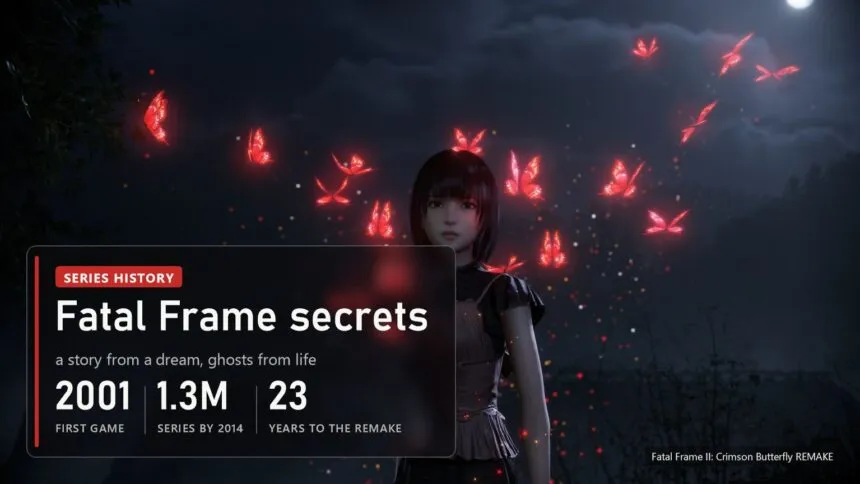
This is Fatal Frame from the inside: the Japanese horror series where your only weapon against ghosts is a camera. In Europe it's Project Zero, in Japan simply Zero. From the 2001 original to the Crimson Butterfly remake released in March 2026, here's what the creators themselves have said: where the camera came from, why the series' director wouldn't let his team visit a priest, and how the second game's story came to him in a single night's dream. Plus a proper look at that famous "based on a true story" line.
- Where things stand: the Crimson Butterfly remake is out, no new game yet
- Zero, 2001: a game started "from zero", and the producer was against the camera
- Crimson Butterfly, 2003: the story came to Shibata in one night's dream
- The Tormented, 2005: a doll, an old woman in a wheelchair and the last PS2 game
- The Nintendo years: a ping-pong table, Suda51 and "nobody will publish"
- Maiden of Black Water, 2014: ghosts need humidity
- The 2026 remake: a "reboot", and salt in the director's bag
- The films: Spielberg, Christophe Gans and the only adaptation, from Japan
- Every Fatal Frame game: year, platform and score
- Where to start with Fatal Frame today
Makoto Shibata, director of every main entry, talks about ghosts without irony. In 2013 he wrote on the PlayStation Blog that he tends to "see" things himself now and then in real life. And in a 2021 interview with Dengeki Online he explained why he acted out the ghosts' movements himself: he was the only one on the team who had ever seen one.
Where things stand: the Crimson Butterfly remake is out, no new game yet
 The video loads from YouTube (Google) when you press play. Privacy policy
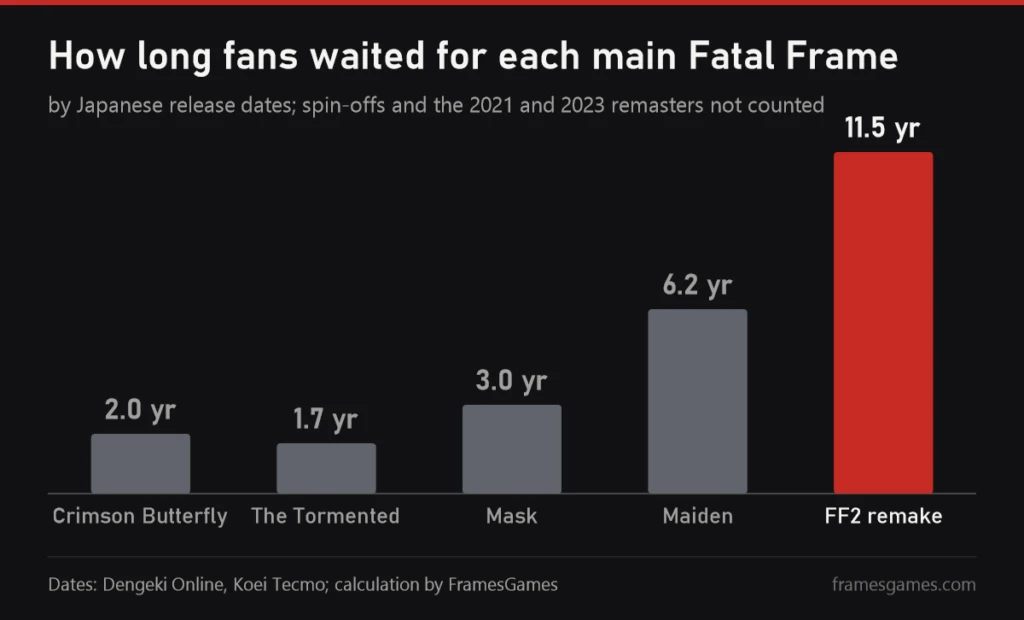
The remake of the second game was announced at a Nintendo Direct on September 12, 2025 and released on March 12, 2026 on PS5, Xbox Series, Switch 2 and PC. Team NINJA made it inside Koei Tecmo, with two directors: Shibata on story and setting, Hidehiko Nakajima on gameplay. The PC version sits at 80 on Metacritic, PS5 at 74, and Steam reviews are 88% positive. Critics split: TheSixthAxis called it possibly the best in the series, while Game Informer gave it 6/10 for slow camera combat and predictable jump scares.
- Koei Tecmo hasn't released sales. Its reports only list the game as "released", and an October 5, 2026 overview files it among mid-tier projects. In Japan it sold about 18,500 physical copies in its first week, according to Famitsu.
- No new entry. Shibata told Anime News Network in February 2026 there was "nothing specific we can share regarding a new entry". The series wasn't in Koei Tecmo's Tokyo Game Show 2026 lineup.
- A first-game remake is possible, but not now. Shibata told 4Gamer why they picked the second game: the first has few locations and a short story, so remaking it would mean expanding it a lot.
- A swap with Silent Hill f. The remake got Hinako's school uniform and fox mask for free, and Silent Hill f got a "Crimson Butterfly" costume styled after Mio. We covered Silent Hill in the first article of this series.
Zero, 2001: a game started "from zero", and the producer was against the camera
 The video loads from YouTube (Google) when you press play. Privacy policy
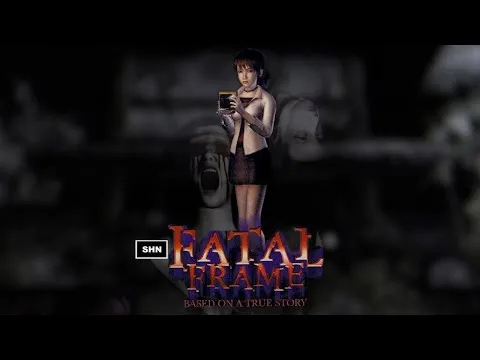
The first game launched on PS2 on December 13, 2001 in Japan, in early 2002 in North America and late that summer in Europe. It came from the team behind the Kagero trap series, and they had one goal: the scariest game possible. The working code was Project 0, because the team was starting a new game from zero, producer Keisuke Kikuchi said in Hyper PlayStation 2. Later he added a second meaning: the character 零 can also be read as "rei", spirit. Europe simply kept the working title, Project Zero.
- The camera came later. According to Shibata, at first ghosts couldn't be defeated at all: you scared them off with a flashlight and ran. Paper talismans and sacred arrows were tried too. Kikuchi recalled in 2008 that when he first heard the camera idea he was against it, because it seemed too passive.
- Ghosts from dreams. Asked how to depict the spirits, Shibata said he'd recreate the ones he'd seen in his dreams. The ghost effects strained the PS2 so much that some had to be cut.
- No purification allowed. The team deliberately skipped a visit to a priest, and Shibata's reasoning was simple: purify yourself and it stops being scary. Oddly, the paper charm on his desk kept being found torn off, and some staff worked with amulets around their necks.
- Why a winter release. Kikuchi: winter has the longest nights, and the game is best played in a warm room, listening hard.
Now, "based on a true story". The game was never marketed that way in Japan. Tecmo's US office came up with it: an April 10, 2002 press release talked about a mansion outside Tokyo where seven people were supposedly murdered. IGN put it more carefully in October 2002: the house was only "loosely based on the legend of a real house outside of Tokyo". No Japanese source ever named a real house, and there's no real Himuro Mansion. It was marketing built on an urban legend, and it worked.
Not that it sold much in the West. Eurogamer checked UK chart data in 2003 and found the PS2 version had sold "a whopping... 12,000 copies", partly because shops barely stocked it. The Xbox version, Eurogamer added, got the "proper" ending and a much harder mode.
Crimson Butterfly, 2003: the story came to Shibata in one night's dream
 The video loads from YouTube (Google) when you press play. Privacy policy
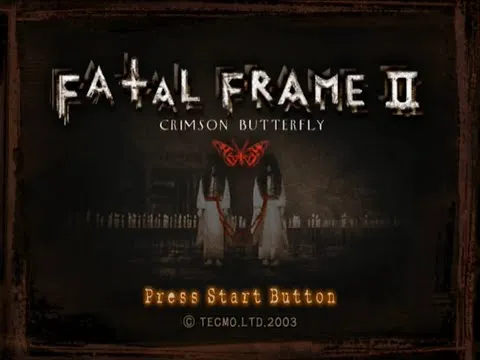
The sequel came out in Japan on November 27, 2003 and in the US that December. On the PlayStation Blog in 2013 Shibata wrote: "The storyline is based on a dream I had after the initial project concluded", and the dream came with an ending and even a title. Talking with singer Tsukiko Amano for Famitsu in 2012 he added a detail: in the dream he couldn't turn right because he couldn't see the right side of the map, so he asked the team to hold off on that part of the level.
- The singer was found alphabetically. Shibata went to a big CD store in Shinjuku, to the indie section, and started going through artists from the first letter. The first single he picked up was Amano's. Kikuchi didn't believe it could be that lucky and demanded proof.
- Slow or fast? In 2002 Shibata said an interviewer who could see spirits praised the realism but noted that real ghosts move a little faster. In 2021 he told the same story the other way round: real ones are slower, which is why the second game's ghosts became slow. Pick your version.
- Holding hands was planned back then. Narrow Japanese houses, uneven floors and steep stairs got in the way. The promo art of the twins running hand in hand was drawn before the idea was dropped. The remake finally does it.
- The Xbox Director's Cut added a first-person view, a mode where one hit kills you, and a new ending.
The original sits at 81 on Metacritic and the Xbox version at 84, still the series' best scores.
The Tormented, 2005: a doll, an old woman in a wheelchair and the last PS2 game
 The video loads from YouTube (Google) when you press play. Privacy policy
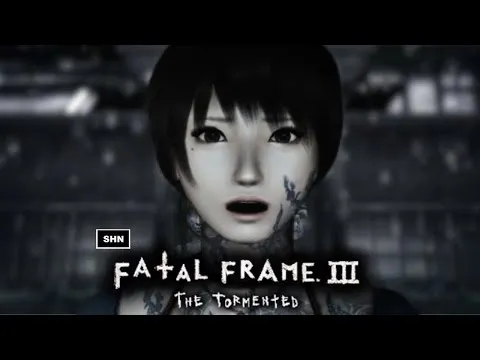
The third game was meant as a culmination and the team's last PS2 game, with the PS3 on the way. Its main mechanic, dream photos that later show up in waking life, came from Shibata's own childhood. He described it on the PlayStation Blog in 2013: kids took turns going into an abandoned house to bring something out. He grabbed a talking doll that spoke in a distorted voice, then heard a creak as an old woman rolled into the room in a broken wheelchair.
Kikuchi recalled in 2021 that staff again asked to be purified, and Shibata again said no. Shibata admitted he wanted to capture everyday fear, at night in bed or in the shower, and found it very hard. The game scored 78 and came to the US in November 2005.
The Nintendo years: a ping-pong table, Suda51 and "nobody will publish"
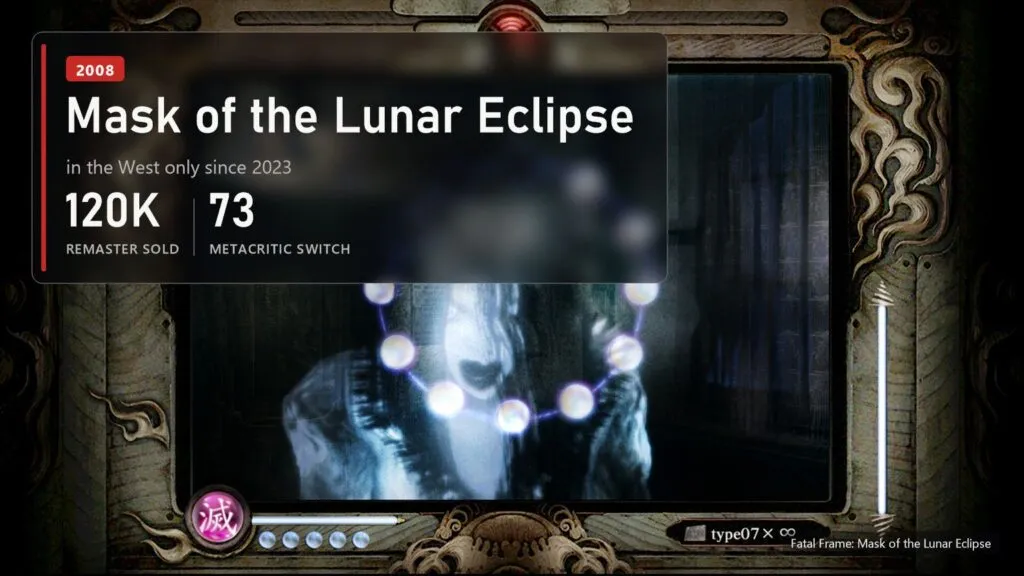
The fourth game, Mask of the Lunar Eclipse, began when Kikuchi saw the Wii remote and went to Nintendo himself. Three companies made it: Tecmo, Nintendo and Grasshopper Manufacture. Kikuchi told Dengeki that he and Shibata worked in Grasshopper's office with their computers set up on a ping-pong table. At their first meeting Goichi Suda, Suda51, told Shibata the camera in Zero was too far away and he'd bring it closer. Nintendo's producer, Shibata says, asked them to make it scarier.
- Japan only. It came out on July 31, 2008, and Nintendo cancelled a European release planned for May 2009. A Tecmo representative told Cubed3: "No. Nobody will publish this title in any territory." No official reason was ever given.
- A fan translation arrived on January 19, 2010; the game only reached the West officially with the 2023 remaster, which sold 120,000 copies according to Koei Tecmo.
- Spirit Camera on 3DS, 2012. An Iwata Asks session reveals that Satoru Iwata turned down the first pitch, feeling horror suited a home console better. Recognizing ordinary household objects didn't work, so a paper AR booklet went in the box.
- Nintendo holds rights. Kikuchi said in 2020 that Nintendo handles publishing rights for the second and fourth games. The 2012 Wii remake of the second game never came out in North America at all.
Maiden of Black Water, 2014: ghosts need humidity
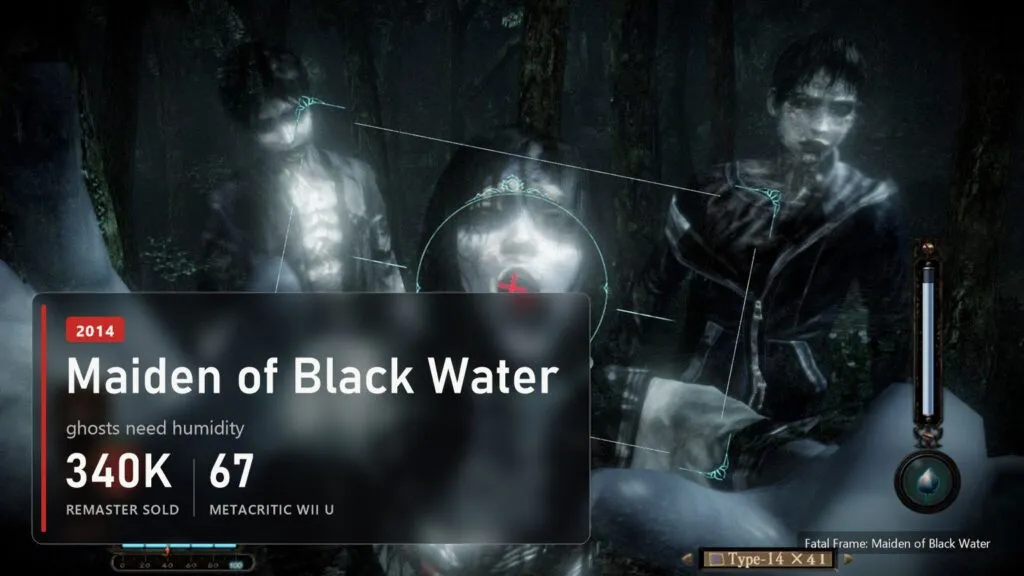
The fifth game launched on Wii U in Japan in September 2014. Why there's water everywhere, Shibata explained to Siliconera in 2015: in summer 2008 he was in Los Angeles and felt you'd never meet a ghost there, it was too dry. "I think there needs to be a level of moisture in the air in order for ghosts to appear." Water is always on screen, even in the menu.
Mt. Hikami was assembled from real mystical places in Japan, at Nintendo's suggestion. In the same interview Shibata described Osorezan in Aomori: children's voices in the woods, a woman sobbing nearby, and him collapsing, unable to move. "That voice was something I should never have heard." In 2015 the game reached North America only as a download, and the swimsuits and lingerie from the Japanese version were swapped for Zelda and Samus costumes. Who made that call has never been stated.
The 2021 remaster sold 340,000 copies across platforms, one of the few official figures the series has. And one surprising line from Kikuchi that year: "Story wise, the FATAL FRAME series was meant to end after the first installment."
The 2026 remake: a "reboot", and salt in the director's bag
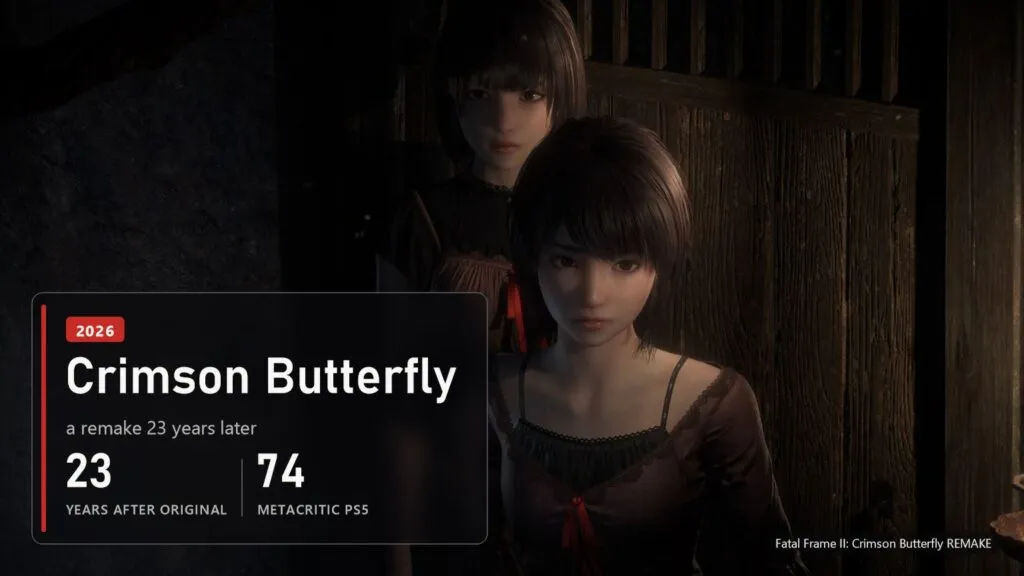
Speaking to Xbox Wire on launch day, Shibata called the remake "a reboot of the Japanese horror series" and said he recognizes ghosts more by sound than by sight. Asked what he'd do if he met a spirit, Nakajima answered: "I actually carry salt in my bag, so I'd probably throw that." Salt is a traditional ward in Japan, so he wasn't joking about cooking.
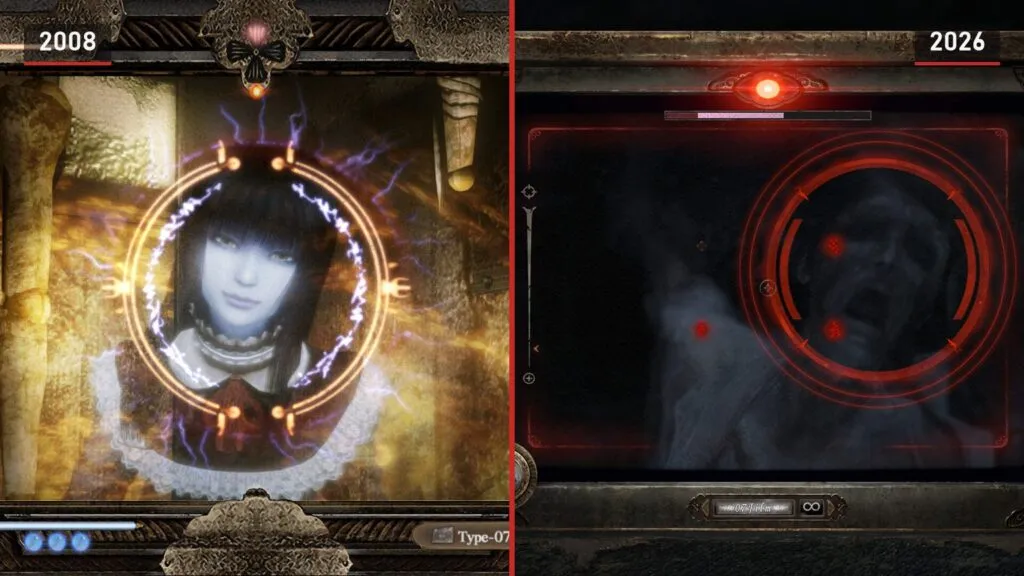
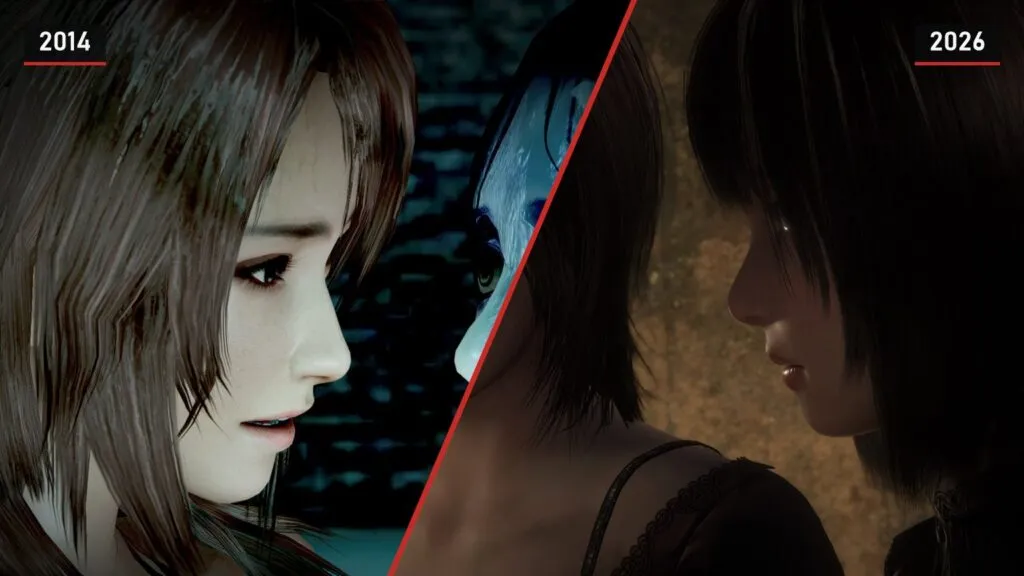
Shibata also told 4Gamer that the first game, with its slow charge-up shot, imitated an old camera with a long exposure, and that he used to believe clunky controls made things scarier. The remake moves away from that, and the twins finally hold hands, just as planned in 2003.
The films: Spielberg, Christophe Gans and the only adaptation, from Japan
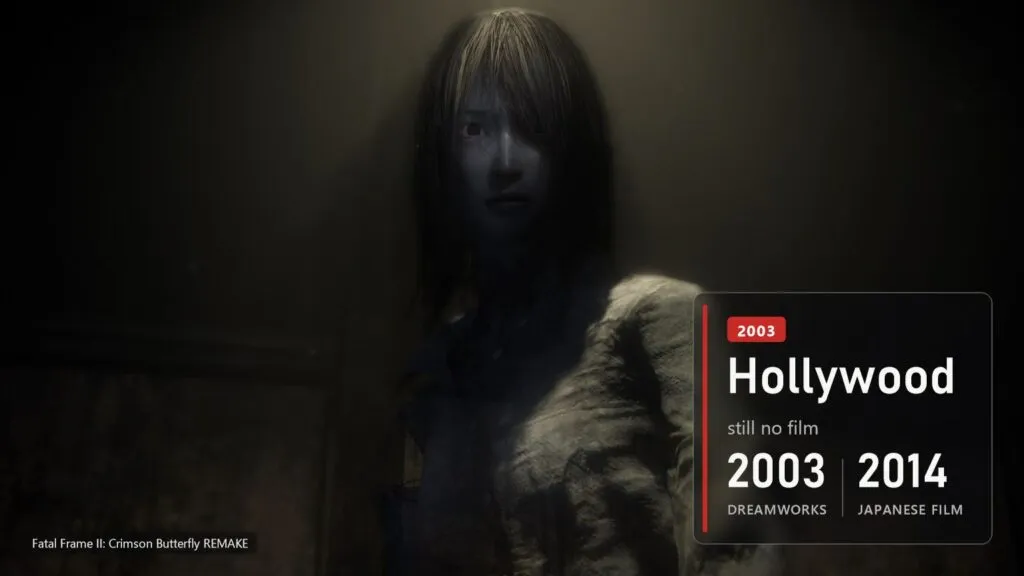
In 2003 DreamWorks hired screenwriters, and GameSpot reported Steven Spielberg working with producer John Rogers on the script. It never got made. In 2022 Christophe Gans, who directed Silent Hill, said a script was ready and had been written under Tecmo's supervision, but there's been no news since. The only adaptation to actually reach screens is Japanese: Mari Asato's 2014 film based on a novel by Eiji Otsuka, and only loosely tied to the games.
Every Fatal Frame game: year, platform and score
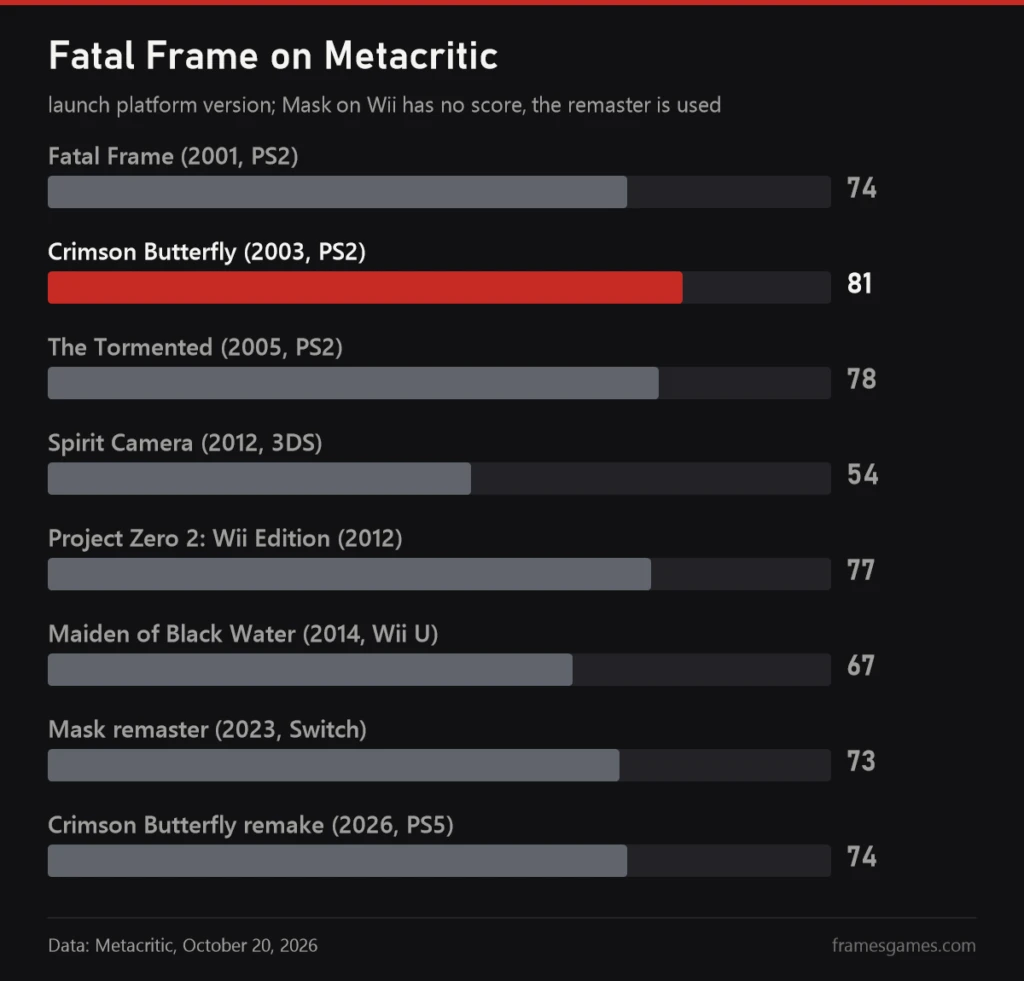
| Year (Japan) | Game | Launch platform | Metacritic |
|---|---|---|---|
| 2001 | Fatal Frame (Project Zero, Zero) | PS2, later Xbox | 74 (PS2), 77 (Xbox) |
| 2003 | Fatal Frame II: Crimson Butterfly | PS2, later Xbox | 81 (PS2), 84 (Xbox) |
| 2005 | Fatal Frame III: The Tormented | PS2 | 78 |
| 2008 | Mask of the Lunar Eclipse | Wii, Japan only | none |
| 2012 | Spirit Camera: The Cursed Memoir | 3DS | 54 |
| 2012 | Project Zero 2: Wii Edition (remake) | Wii, not in North America | 77 |
| 2014 | Maiden of Black Water | Wii U | 67 |
| 2021 | Maiden of Black Water (remaster) | PC, PS4, PS5, Xbox, Switch | 73 (Switch) |
| 2023 | Mask of the Lunar Eclipse (remaster) | PC, PS4, PS5, Xbox, Switch | 73 (Switch) |
| 2026 | Fatal Frame II: Crimson Butterfly REMAKE | PC, PS5, Xbox Series, Switch 2 | 80 (PC), 74 (PS5) |
Where to start with Fatal Frame today
On Steam the Crimson Butterfly remake is $49.99, the Mask of the Lunar Eclipse remaster $49.99 and Maiden of Black Water $39.99. The first three PS2 games aren't sold digitally. I'd start with the remake: it's the story that made people fall for the series, and it doesn't require the first game. Then Mask of the Lunar Eclipse if you want rural Japanese dread, or Maiden of Black Water if you like short separate chapters. For Halloween, the series has nothing better.
Is Fatal Frame really based on a true story?
No. Tecmo's US office came up with the tagline in 2002, drawing on an urban legend about a house outside Tokyo. The game was never marketed that way in Japan, and there's no real Himuro Mansion.
Why is it called Fatal Frame, Project Zero and Zero?
Zero is the Japanese title and comes from the working code Project 0: the team was starting from zero, and the character 零 can also be read as "spirit". Europe kept the working title Project Zero; North America got Fatal Frame.
What order should I play Fatal Frame in?
The games barely connect, apart from references in the third. The easiest start is the 2026 Crimson Butterfly remake, then Mask of the Lunar Eclipse and Maiden of Black Water. The PS2 originals aren't sold digitally.
Will there be a new Fatal Frame or a remake of the first game?
Nothing is announced. Makoto Shibata said in February 2026 there was nothing to share about a new entry, and that a first-game remake would only work if the game were greatly expanded.
Sources
The remake and the future: Koei Tecmo America press releases of September 12 and November 11, 2025; PlayStation Blog, November 11, 2025; Xbox Wire, March 12, 2026 (Makoto Shibata and Hidehiko Nakajima); 4Gamer, November 7, 2025; Anime News Network, February 13, 2026; Koei Tecmo reports for 2026 and the October 5, 2026 overview; Famitsu via Gematsu (Japanese sales); Gematsu and Koei Tecmo America (Silent Hill f crossover); Game Informer and TheSixthAxis reviews; RPG Site (TGS 2026 lineup).
Development: Keisuke Kikuchi and Makoto Shibata interviews in Hyper PlayStation 2 (2001) and Weekly The PlayStation 2 (December 21, 2001) on Tecmo's site via the Web Archive; Nintendo Creator's Voice, 2008; Dengeki Online, September 1, 2021; the Tecmo press release of April 10, 2002, reprinted; IGN, October 23, 2002; Eurogamer, May 2, 2003; PlayStation Blog, May 1 and 2 and October 1, 2013; Famitsu, June 21, 2012 (Shibata and Tsukiko Amano); GameSpy, August 25, 2004; Cubed3, March 6, 2009; Nintendo Life, 2010 and 2015; Iwata Asks on Spirit Camera; Eurogamer, April 5, 2020; Siliconera, November 3, 2015; Famitsu, August 12, 2021; Siliconera, January 31, 2022, and Famitsu, April 2023 (remaster sales).
Films: IGN, April 23, 2003; GameSpot, October 1, 2003; Bloody Disgusting, June 8, 2022; Cinema Today and eiga.com (the 2014 Japanese film, series sales). Scores: Metacritic as of October 20, 2026. Prices: Steam, US, October 20, 2026. Images: official screenshots from Steam (Maiden of Black Water, Mask of the Lunar Eclipse, Crimson Butterfly remake) and the Microsoft Store (remake). Videos: the official Team NINJA Studio channel, gameplay of the first three games from SHN Survival Horror Network and World-of-Longplays.