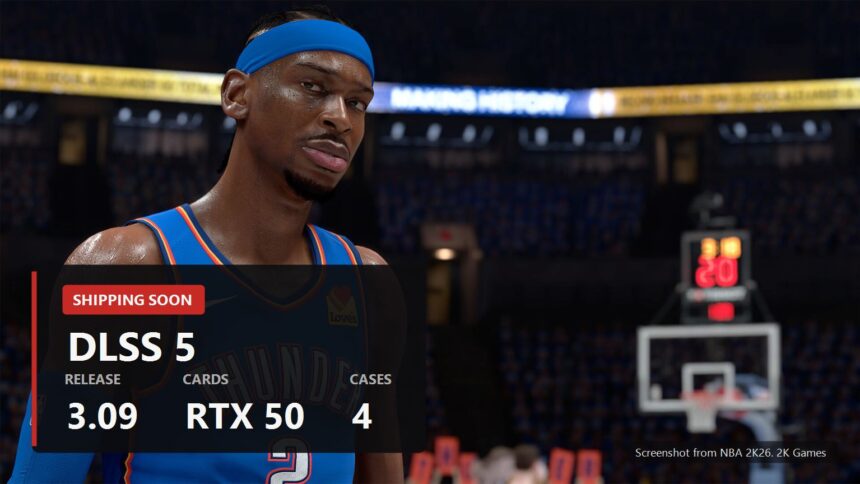
NVIDIA has given a date: DLSS 5 arrives on 3 September, the first game is NBA 2K27, and it will run on RTX 50 cards, laptops built around them, and GeForce NOW. The official name the company uses in its materials is 3D-guided Neural Rendering.
Here is the funny part. Two days remain until the official release, and the library leaked back on 29 August, and in that time it has been made to run in so many places that the list deserves its own article. Below is every case we could confirm, from games with no DLSS at all to Mario going through a capture card.
What actually ships on 3 September
The official part first, because the noise around the leak has all but drowned it out.
- When. 3 September 2026, nine in the evening Pacific time.
- Where. NBA 2K27, the very game whose build the library escaped from.
- On what. RTX 50 only, laptop chips included, plus GeForce NOW. The 40 series and older are not on the list.
- What is promised. Light passing through players' ears, light catching hair, natural lighting on skin, with the facial geometry scanned from real athletes left intact.
NVIDIA has published few numbers so far: an RTX 5060 hitting 258 fps at 1080p on high, an RTX 5090 reaching 370 fps at 4K ultra in Performance mode. That is basketball, a scene with no open world and no heavy geometry, so I would not carry those figures over to anything else.
The reception meanwhile runs from mixed to hostile. Early examples from Resident Evil Requiem and Starfield were called uncanny misfires, and the idea of painting photorealism over an artist's intent is not to everyone's taste. How the technology works and why modders get the results they do we covered separately.
Case one: PC games, with and without DLSS
The biggest bucket. Over the weekend the count passed a dozen games and it is still climbing.
Where a game already has DLSS it is straightforward, the add-on hooks the existing calls. That is how Control, Cyberpunk 2077, Skyrim and Final Fantasy VII Rebirth got going. Where there is no DLSS at all, a workaround through ReShade takes over, and it opened doors nobody planned on: DirectX 9, OpenGL, 32-bit games. Metro 2033 Redux, DOOM 2016 through Vulkan, Fable Anniversary from 2014, Worms Ultimate Mayhem.
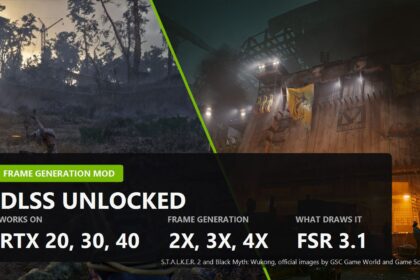
The graphics cards deserve their own note. Officially this is RTX 50 and nothing else, but the community moved the build from FP8 to FP16 and it started running on RTX 20 and RTX 30. The point being that FP8 is accelerated only on Blackwell while everything can do FP16, slower. A developer going by ShortFuse has put out separate builds for older hardware, including one he describes as a speed boost build for the 20 series.
Case two: emulators
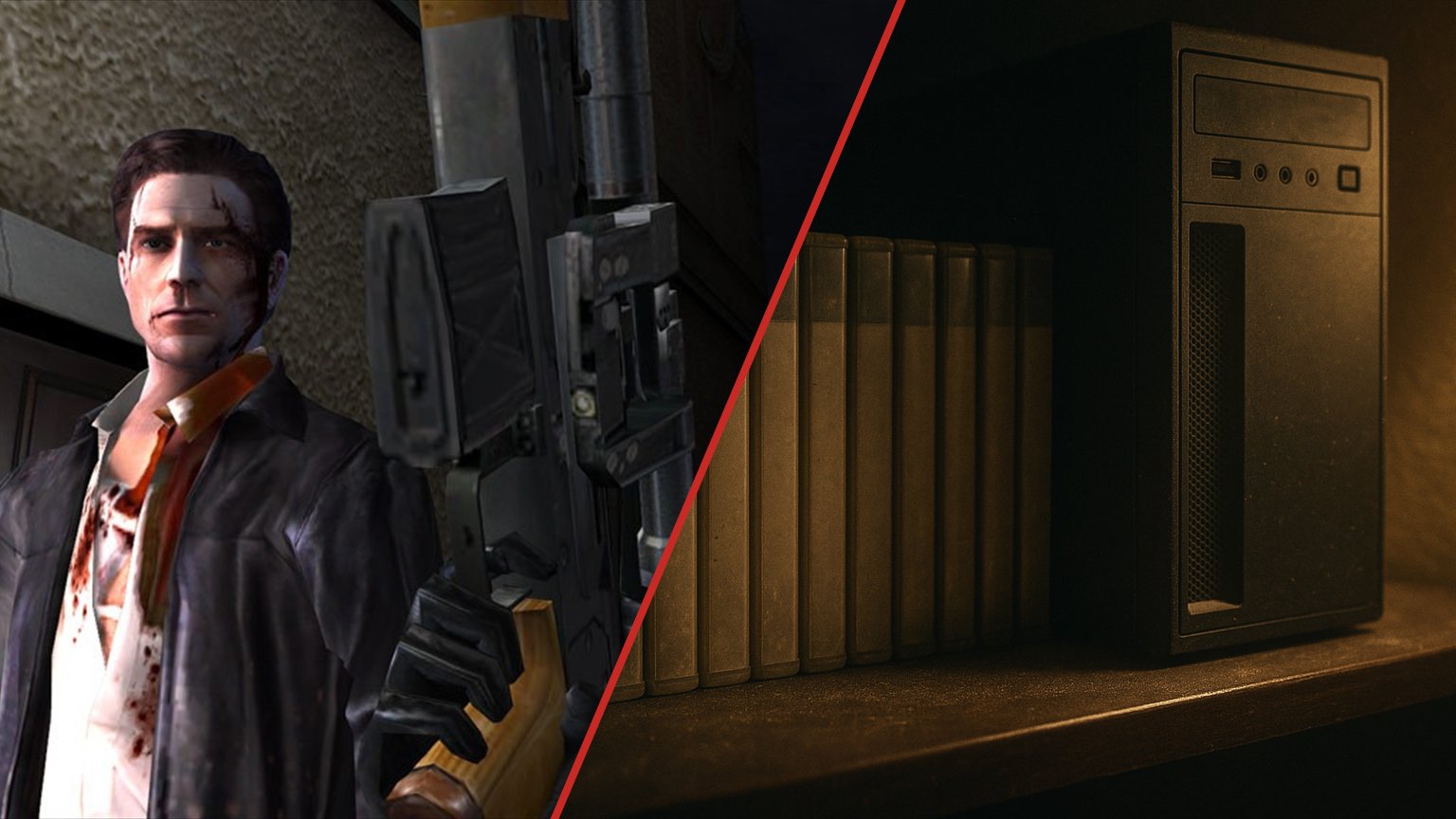
Since the method does not care where the frame came from, emulators were a matter of time. PCSX2 fell on 30 August: an X user going by DystopianSunset showed Manhunt with neural rendering enabled, and a day later the Brazilian streamer HORAPLAY did the same.
Technically there is nothing in the way, PCSX2 is an ordinary DirectX or Vulkan window. In quality terms it is the worst case: a PlayStation 2 frame is stretched by the emulator first, collecting artefacts of that era on the way, and then optical flow tries to guess the motion on top of that. The errors stack rather than cancel.
Case three: Nintendo, and this one needs reading carefully
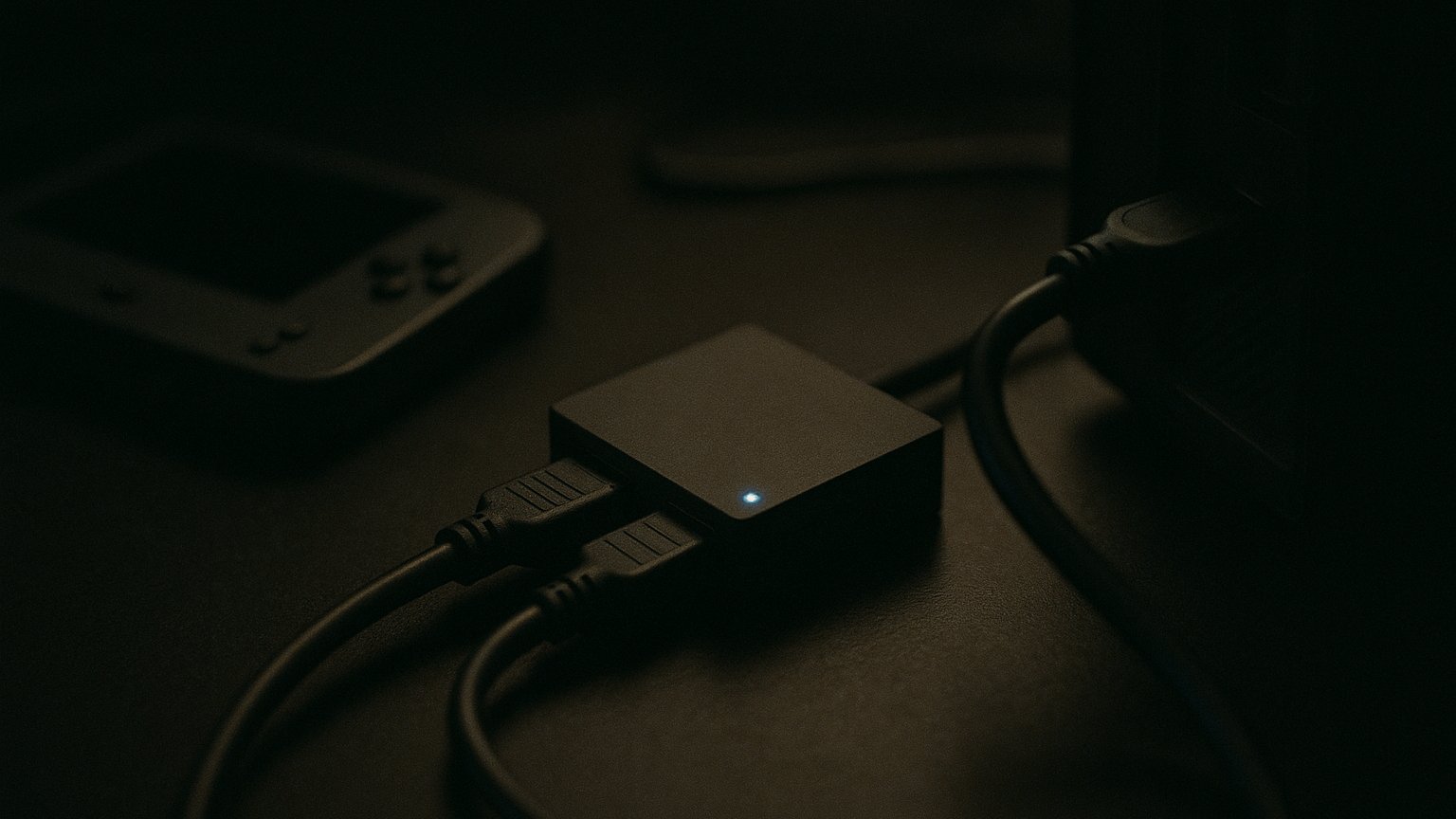
The loudest case of the past few days and the most widely misread. Shots of Super Mario Odyssey with DLSS 5 went round the internet, and half the headlines present it as "DLSS 5 running on Switch". It is not.
A modder going by EDMIRE routes the console's video output through a capture card into a PC, and the neural rendering happens there, on the PC's graphics card. The console computes nothing and has no idea any of this is happening: in one clip he switches to the Switch 2 home screen mid-capture to make the point.
The hard part is that DLSS 5 wants engine data and a capture card only hands over a video signal. He describes it as a scene aware algorithm that converts what comes off the capture card into something DLSS 5 can use. Which means depth and motion here are guessed from the picture even more crudely than in the ReShade case.
The same rig has been run on Mario Kart World, Super Mario 64, Donkey Kong Bananza and Breath of the Wild. What you end up with is a complicated multi layer filter sitting on a video stream, and calling that "DLSS 5 on a console" is not accurate. Official support on Switch 2 is not coming either: that is Ampere, and the leaked files carry no optimisation for it.
Case four: this is not games any more
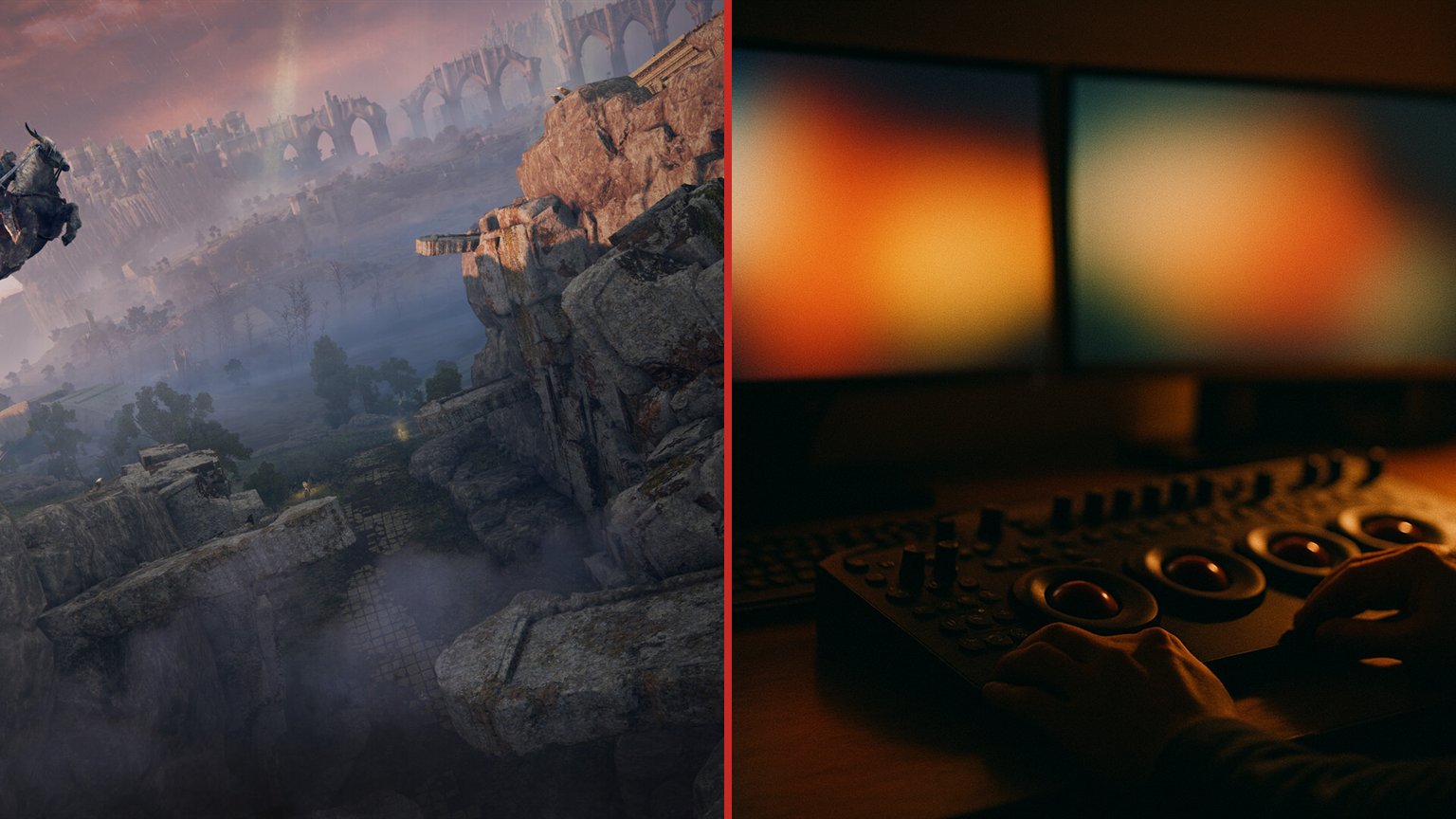
The part of the story barely anyone is covering, and arguably the most interesting. People started bolting the library onto things that have nothing to do with games.
- DaVinci Resolve. An experimental OpenFX filter that applies neural rendering to video at the same resolution.
- ComfyUI. A node for pushing images and video through the same library inside an ordinary processing pipeline.
- Unity. A wrapper for the engine, meaning an attempt to wire the technology in where nobody has official support yet.
- OptiScaler. A fork of the well known tool that already exists to swap upscalers around.
All of these appeared inside four days and sit openly on GitHub. The library itself does not: it is handed round in a closed channel, and that is about the only thing keeping this story from turning into a complete circus.
What changes on the third

For an RTX 50 owner almost none of the above matters: the day after tomorrow they get the same thing officially, tuned by the studio and with no risk of taking the driver down.
For everyone else the question is only now opening up. In four days enthusiasts showed the technology computes on RTX 20 and RTX 30, slower but it computes, runs on APIs twenty years old and asks nothing of the game itself. After that, "supported on 50 series cards only" reads less like a technical limit and more like a decision.
NVIDIA's argument is understandable too: on old hardware it is slow, and a poor implementation damages a technology's reputation more than its absence does. Who is right here will come out of the first independent measurements, and by the look of it those land this week.
Sources
The 3 September date, NBA 2K27 as the first game, RTX 50 and GeForce NOW support, the official 3D-guided Neural Rendering name and the RTX 5060 and RTX 5090 figures: NVIDIA's own announcements and coverage by Tom's Hardware and Engadget on 31 August and 1 September 2026. The absence of support for cards older than the 50 series is confirmed in the same reporting. Running in PC games, the move to FP16 for RTX 20 and RTX 30 and developer ShortFuse's builds: TechPowerUp. Manhunt in PCSX2: posts by the X users DystopianSunset and HORAPLAY on 30 and 31 August. The Nintendo cases, the list of games and the capture card setup: XDA's write-up of 31 August 2026 based on posts by the modder EDMIRE. The DaVinci Resolve, ComfyUI and Unity projects: their GitHub pages. We do not publish links to the leaked library or instructions for installing it.