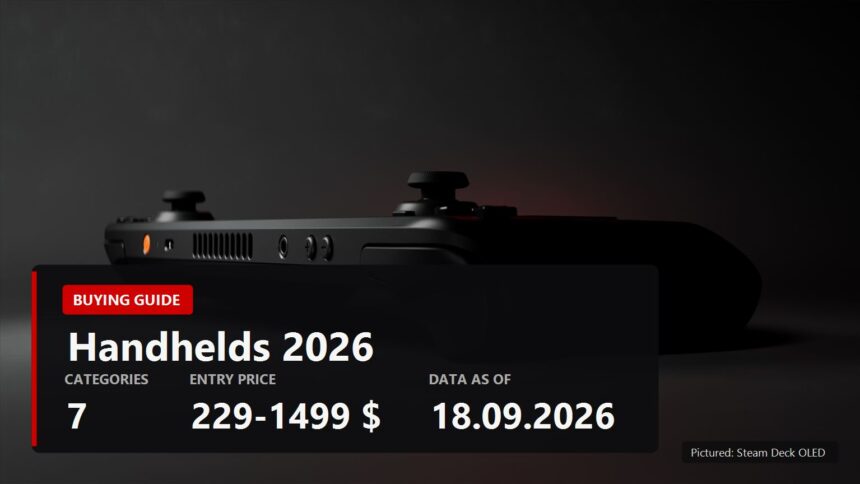
There are so many handhelds in 2026 that choosing one is harder than playing on one. Switch 2 and Steam Deck, Windows handhelds with an Xbox shell on top, SteamOS on other people's hardware, Android consoles, forty-dollar retro machines and devices that render nothing at all and only receive a picture over the network. They all go by the same word, and they solve different problems.
- The main question: what are you going to play
- Five questions that cut away the rest
- Anti-cheat: the one trap that matters most
- The seven categories the market is made of
- Nintendo Switch 2: the only way to play Nintendo
- Steam Deck OLED: the simplest route to a Steam library
- SteamOS on other hardware: the same software in a different shell
- Windows handhelds: any game, any amount of fiddling
- Streaming and cloud: a device that computes nothing
- Android handhelds: emulation and mobile games
- Retro handhelds: from $38
- Cloud and a phone with a controller
- Emulation and the law: one honest paragraph
- Price, weight and battery in three charts
- Six ready-made scenarios
- A family with kids, one device for everyone
- Trains, planes, long trips
- Your own Steam library, no setup
- Online shooters and Game Pass
- You own a PS5 and want to play around the house
- Emulating old consoles
- The smallest budget
- What to avoid when buying
- The short version
This guide is built as an order of decisions rather than a list of hardware. First the five questions that cut away most of the market, then every category with its honest downsides, then six ready-made scenarios: what to buy for a family, what to take on a plane, what to pair with a Steam library, what to run emulation on and what to get on a tight budget.
The main question: what are you going to play
A handheld is not about power, it is about access to a library. There are only three libraries, and they barely overlap.
- Nintendo games. Mario, Zelda, Pokemon, Animal Crossing, Metroid. They only come out on Nintendo hardware, and there is no legal way to run them anywhere else. If you want them, the choice narrows to Switch 2 or Switch.
- Games from Steam and other PC stores. Plenty of options here: Steam Deck, Windows handhelds, SteamOS devices. The difference between them is not which games you can buy, it is how much fiddling you do and how many frames you get.
- Old games through emulation. From NES to PS2 and GameCube, and further on strong hardware. This is where Android consoles and retro machines win, not Windows.
There is a fourth option with no library of its own: cloud and streaming from a PC or console at home. These devices compute nothing themselves, so they cost less and last longer on a charge, but they depend entirely on the quality of your network.
Five questions that cut away the rest
- 1. Is there an online shooter with anti-cheat on your list. This is the one question that can cross off half the market immediately, more on it below.
- 2. Where will you play. In an armchair at home weight does not matter, on a train or a plane every gram and every centimetre does. Heavy Windows handhelds get tiring to hold after an hour.
- 3. How long do you need on one charge. No device with a strong processor delivers three hours of a demanding game today. Either accept ninety minutes, or lower your expectations for image quality, or buy something less powerful.
- 4. Are you willing to tinker. A Windows handheld is a small PC: drivers, power limits, manual tuning for every game. Switch and Steam Deck are closer to turning it on and playing.
- 5. What is the budget with accessories. A memory card, a case and sometimes a charger almost always get added to the price of the device. Switch 2 needs a specific and newly expensive card, retro handhelds ship with a card, and Steam Deck already has a case in the box.
Anti-cheat: the one trap that matters most
SteamOS, the system that runs Steam Deck, is Linux. Windows games run on it through the Proton compatibility layer, and almost every single-player game works. The problem is online games: some anti-cheat systems refuse to let a Linux player in at all, because they cannot police the system kernel.
The GamingOnLinux compatibility list, which tracks this game by game, looked like this on 17 September 2026.
- Working. Counter-Strike 2, Dota 2 and Left 4 Dead 2 natively, Elden Ring, Halo Infinite and Rocket League through Proton.
- Not working. VALORANT and League of Legends with Riot Vanguard, Fortnite and Apex Legends with Easy Anti-Cheat, Destiny 2 with BattlEye, Call of Duty with RICOCHET.
Note what this is not about. It is not about power, and it is not that Easy Anti-Cheat cannot do Linux at all. It can, and support is switched on by the game developer. Epic never did it for Fortnite, and Tim Sweeney explained the reasoning back in 2022: the studio was not confident it could fight cheating across any kernel configuration, including home-built ones.
The practical takeaway. If your list has Fortnite, Apex, Valorant, Destiny 2 or a recent Call of Duty, your handheld has to run Windows. If your list is single-player, or it is CS2 and Dota, Steam Deck works and costs less.
The seven categories the market is made of
Here is the category by category breakdown. Prices are the recommended ones as of 18 September 2026, in US dollars. It has been a nervous year: LPDDR5X memory got up to 89 percent more expensive, and every maker raised prices, some by a hundred dollars, some by double. That is why each section says what a device costs now rather than what it cost at launch.
| Category | Entry price | Who it suits |
|---|---|---|
| Nintendo Switch 2 and Switch | $229 - $499 | Nintendo games, families, kids |
| Steam Deck OLED | $359 refurbished LCD, $789 new | Your own Steam library, no fiddling |
| SteamOS on other hardware | from $594 | Same games, bigger screen, more settings |
| Windows handhelds | $599 - $1,499 and up | Online shooters with anti-cheat, Game Pass, any program |
| Streaming and cloud | $249 | You own a PS5 or a subscription, playing around the house |
| Android handhelds | from $40 | Emulation, mobile games, travel |
| Retro and FPGA | from $40 | Old games only, accuracy above all |
Nintendo Switch 2: the only way to play Nintendo
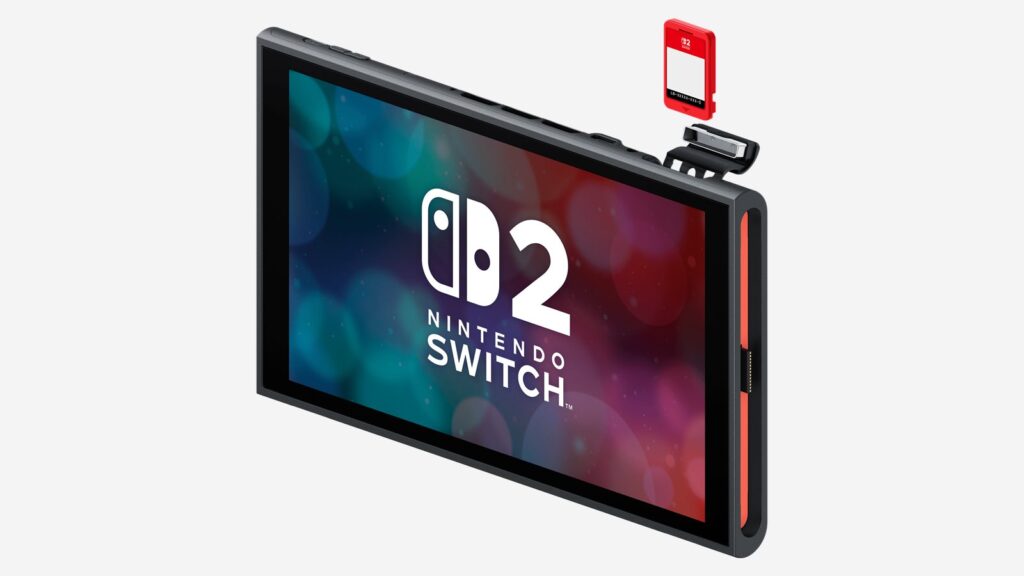
Switch 2 launched in June 2025 and had sold 23.68 million units by 30 June 2026, according to Nintendo's own financial reporting. Since 1 September 2026 the console costs $499.99 instead of $449.99: Nintendo put the increase down to changing market conditions, meaning the same memory shortage that raised prices everywhere.
Technically it is a 7.9-inch LCD at 1920 by 1080 with HDR10 and variable refresh up to 120 Hz, 256 GB of internal storage, and a weight of around 400 grams without controllers and 534 grams with them. Docked it outputs 4K at 60 frames, or 1080p and 1440p at 120. Variable refresh worked in handheld mode from launch, but docked VRR only arrived with firmware 23.0.0 on 10 September 2026, and it has to be switched on by the game developer.
About the battery, honestly: the pack holds 5220 mAh, Nintendo promises 2 to 6.5 hours, and a demanding game lands near the bottom of that range. Nintendo Life measured 2 hours 10 minutes in Mario Kart World at maximum brightness. In autumn 2026 Europe gets a revision with a user-replaceable battery of 5172 mAh at 411 grams: that is a requirement of EU regulation 2023/1542, not an improvement in battery life.
- Pros. Mario, Zelda, Pokemon and Metroid exist nowhere else. Compatibility with almost the entire first Switch library. Detachable controllers, so two-player games out of the box. Nothing to configure. The screen is bigger and twice as sharp as the Switch OLED.
- Cons. Around two hours of battery in demanding games. The panel is LCD, not OLED, and next to a Switch OLED you can tell. It only accepts microSD Express cards, which cost more and rose in price from March 2026. Many third-party games ship as a Game-Key Card, a cartridge with nothing but a key on it.
The older line deserves a separate word, because it gets written off too early. Switch OLED costs $399.99, the standard Switch $339.99, Switch Lite $229.99. By Nintendo's own figures the OLED runs 4.5 to 9 hours, so it lasts longer on a charge than Switch 2 and costs a hundred dollars less. The Lite has no dock and no detachable controllers, but it weighs 275 grams and fits in a jacket pocket. One date matters: in Europe sales of the entire Switch 1 line stop in mid-February 2027, again because of the battery regulation. If an OLED panel and long battery life are what you want, there is not much time left to buy one new.
Steam Deck OLED: the simplest route to a Steam library
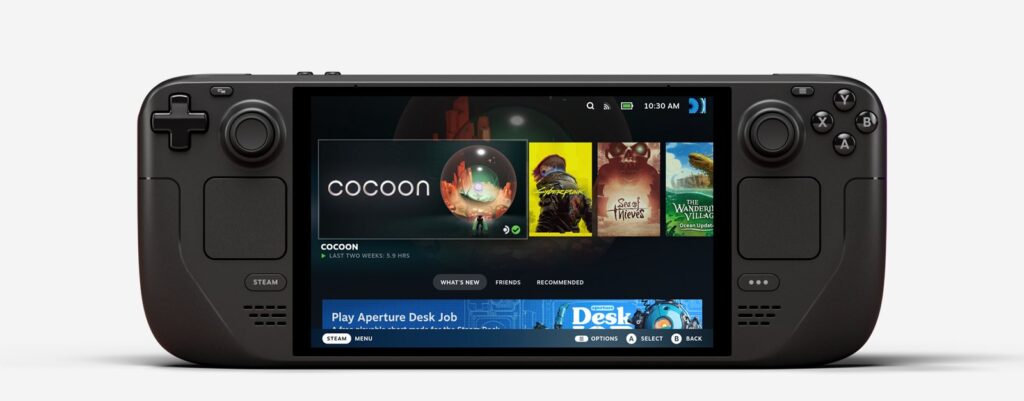
Steam Deck is no longer the cheap option. Since 27 May 2026 the 512 GB model costs $789 or 779 euro and the 1 TB model $949 or 919 euro. Valve put it plainly: the device itself has not changed, the new prices reflect component costs. The LCD model was discontinued in December 2025.
Which leads to the main practical advice for this category: look at refurbished units inside Steam itself. A 512 GB LCD costs $359 there, a 512 GB OLED $629, a 1 TB OLED $759. They are the same devices with Valve's warranty, and they are the only way into a Steam Deck under six hundred dollars.
What the money buys: a 7.4-inch HDR OLED at 90 Hz and up to 1000 nits, a 50 Wh battery and 640 grams of weight. The chip is old, Zen 2, and in recent AAA games the Deck has long been running low settings with an upscaler. The system is the compensation: SteamOS boots and behaves like a console, games carry compatibility badges, settings profiles are saved per game, and since version 3.8 on 18 June 2026 input latency dropped from 5-8 milliseconds to 100-500 microseconds.
- Pros. A finished console out of the box, not a small PC. Compatibility badges remove the guesswork. Sleep mode works the way it should. A case is included. An enormous community, so instructions exist for any problem. Refurbished units are genuinely cheap.
- Cons. 2022 hardware, which hurts in new releases. A 1280 by 800 screen looks small after Switch 2 and the OLED competition. Online games with kernel-level anti-cheat will not start at all. The price stopped being an argument in May 2026. There is no date for Steam Deck 2, and Valve keeps repeating that the next one has to be a real jump, not twenty percent.
SteamOS on other hardware: the same software in a different shell
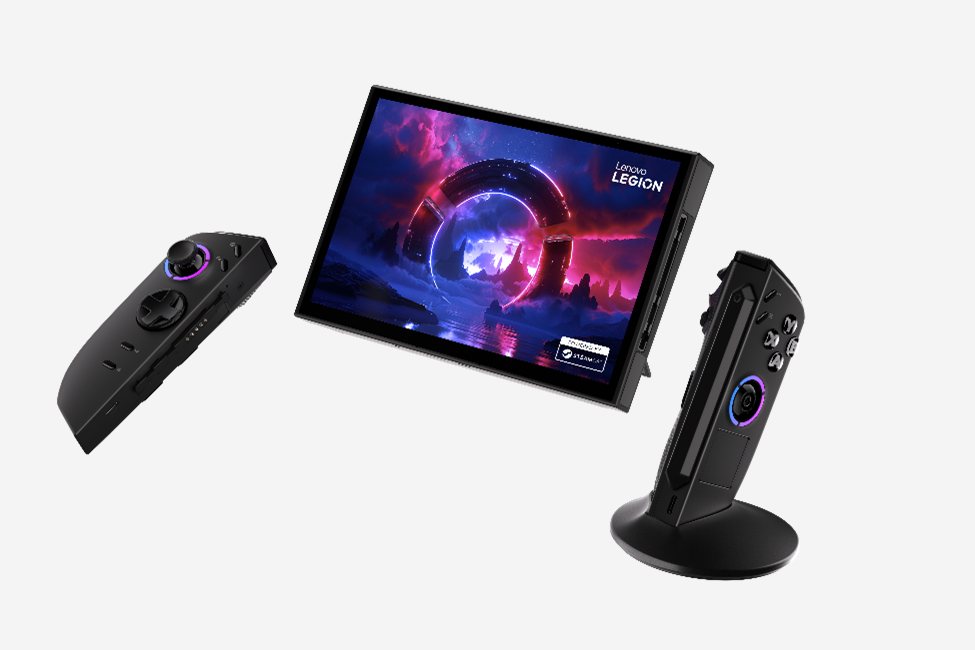
Since 2025 SteamOS has stopped being a one-device system. Valve's support page carries a two-column list: officially "Powered by SteamOS" means Steam Deck, Steam Machine and the Lenovo Legion Go S, while beta support covers Legion Go, ROG Ally, ROG Ally X and, broadly, any AMD-powered handheld or PC.
Lenovo calls the Legion Go S with preinstalled SteamOS the first officially licensed handheld that is not Valve's own. The screen is 8 inches at 1920 by 1200 and 120 Hz, the battery 55.5 Wh, the weight 730 grams. Pricing has split in two: Lenovo's own store now lists only the top configuration with a Ryzen Z1 Extreme, 32 GB and 1 TB at $1,099.99, while retailers carry SteamOS versions from around $594. The reason is the spring spike: in April 2026 Lenovo nearly doubled prices, and for a while the product page simply said the device was temporarily unavailable.
In January 2026 Lenovo showed a SteamOS version of the Legion Go 2: an 8.8-inch OLED at 1920 by 1200 and 144 Hz, up to a Ryzen Z2 Extreme, a 74 Wh battery, 920 grams with controllers, from $1,199, on sale from June. There is a wrinkle worth keeping in mind: Lenovo and the press call this device Powered by SteamOS, yet Valve's own list still does not include it as of 18 September 2026. No major outlet has reviewed the SteamOS version of the Legion Go 2 yet, so the long battery figures the maker quotes cannot be checked.
The third route is installing SteamOS yourself. Valve publishes an installation image for third-party PCs and handhelds with AMD graphics, complete with a normal first-time setup. Valve's wording is direct: the system can be installed on other AMD-powered devices, but support may be able to help only so much, and bugs are to be filed on GitHub. Nvidia graphics are not supported.
Why swap Windows for SteamOS on identical hardware at all is best shown by this year's cleanest example. The Legion Go S exists in two versions with the same Ryzen Z2 Go chip, and in Notebookcheck's testing the SteamOS version is 30 to 45 percent faster in games than the Windows one. Same silicon, the system is the only difference.
- Pros. Valve's console interface and sleep mode on hardware newer than the Deck's. A bigger, brighter screen. On weak chips the frame-rate gain over Windows reaches 45 percent. System updates reach third-party devices too, including fixes for specific models.
- Cons. Anti-cheat stays a problem, exactly as on the Deck. Only Lenovo devices are officially licensed, everything else is a do-it-yourself install with no promise of support. Legion Go S pricing became unpredictable after spring 2026, so you have to hunt retailers. And there are still no reviews of the SteamOS Legion Go 2.
Windows handhelds: any game, any amount of fiddling
This is the only category where absolutely everything runs: Game Pass, the Epic and EA launchers, online shooters with kernel anti-cheat, emulators, any other program. The price is just as clear: Windows on a seven-inch screen is still Windows, and the power limit has to be dialled in by hand for each game.
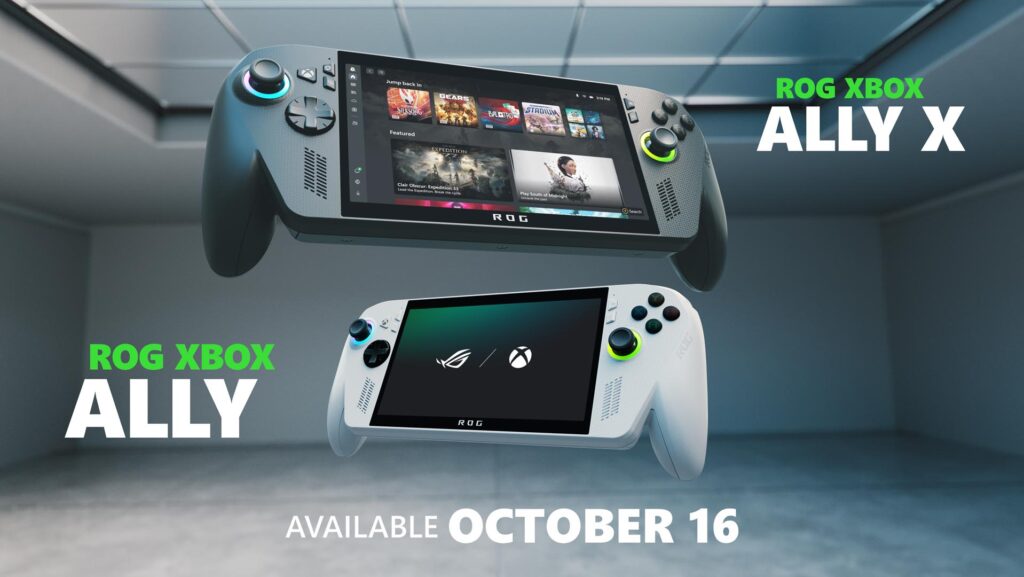
First, the big misunderstanding. The ROG Xbox Ally consoles were built by ASUS, not Microsoft. Xbox said so in its own announcement: together with ASUS we are launching the ROG Xbox Ally and ROG Xbox Ally X. Xbox president Sarah Bond explained the partner route by saying it could be done much quicker and in a much more innovative way than either company managed on its own. Microsoft has no handheld of its own and none has been announced: the internal project was reported sidelined back in May 2025 by Windows Central, and publicly Microsoft has partner hardware, Xbox mode inside Windows, and a next generation codenamed Helix, about which Xbox CEO Asha Sharma has only said a family of devices is in the works.
Microsoft's shell, on the other hand, is now available to everyone. The Xbox full screen experience debuted on the Ally in October 2025, reached ordinary Windows 11 PCs in November, and since April 2026 has simply been called Xbox mode as it rolls out to laptops, desktops and tablets. For handhelds this matters: the interface is console-like, background activity is trimmed, and libraries from different stores land in one list.
Now the models, cheapest first.
- ROG Xbox Ally, $599.99 or 599 euro. A Ryzen Z2 A with only four Zen 2 cores, 16 GB, a 60 Wh battery, 670 grams. Notebookcheck concluded after testing that it is slower than a Steam Deck OLED. Buy it for the Xbox shell and the ability to run anything, not for frames.
- ROG Xbox Ally X, $999.99 or 899 euro. Ryzen AI Z2 Extreme, 24 GB, an 80 Wh battery, 715 grams. Engadget measured about 3.5 hours in Clair Obscur at 1080p on medium, Tom's Hardware saw half the charge gone in an hour and a half at a 17-watt limit. Review complaints: 490 nits instead of the promised 500, and 43 decibels of fan noise in Turbo. The best balance in the category if you are ready to spend a thousand.
- ROG Xbox Ally X20, $1,299.99, on sale from 15 October 2026. The same chip but a 7.4-inch OLED at 120 Hz, 756 grams. There is also a bundle with AR glasses at $2,499.99. As of 18 September this is a pre-order, not a shipping device.
- Lenovo Legion Go 2, from $1,199. An 8.8-inch OLED at 144 Hz, a 74 Wh battery, detachable controllers. It weighs 920 grams, and that is every review's main complaint: after an hour your hands are tired, and few people pack it for a trip. In spring the price reached $1,999.
- MSI Claw 8 EX AI+, $1,499 to $1,799. The only handheld on the new Intel Arc G3 Extreme graphics, an 80 Wh battery, 786 grams. Engadget measured it 50 to 75 percent faster than the Ally X and the Legion Go 2, which makes it the fastest mass-produced device right now. It lasts 2.5 to 3 hours in a game. The smaller Claw A8 on a Ryzen Z2 Extreme costs $1,099 to $1,299 and holds 2 to 2.5 hours.
- GPD, AYANEO, OneXPlayer. Small-batch devices for people who need extremes. The GPD Win 5 from $1,400 delivers 93.5 percent of PS5 frame rates in Alan Wake 2 at 1440p, but its battery is an external removable pack that dies in 42 to 69 minutes under load. AYANEO prices went into the thousands after memory got expensive. This is a purchase with your eyes open: support, warranty and firmware are not what the big brands offer.
The summary for the category is simple and unpleasant. Entry costs $600, but for that money the hardware is slower than a Steam Deck OLED, and everything genuinely faster than a Deck starts at a thousand.
- Category pros. Everything runs, including anti-cheat online games and Game Pass. The fastest hardware on the market. Bigger screens at 120 to 144 Hz. The Xbox shell has brought Windows much closer to a console feel.
- Category cons. Weight from 670 to 920 grams. Battery life of one and a half to three hours in a demanding game. Power limits and drivers are your job. Prices swing with memory costs. And Windows updates and sleep mode pick the worst possible moment to remind you they exist.
Streaming and cloud: a device that computes nothing
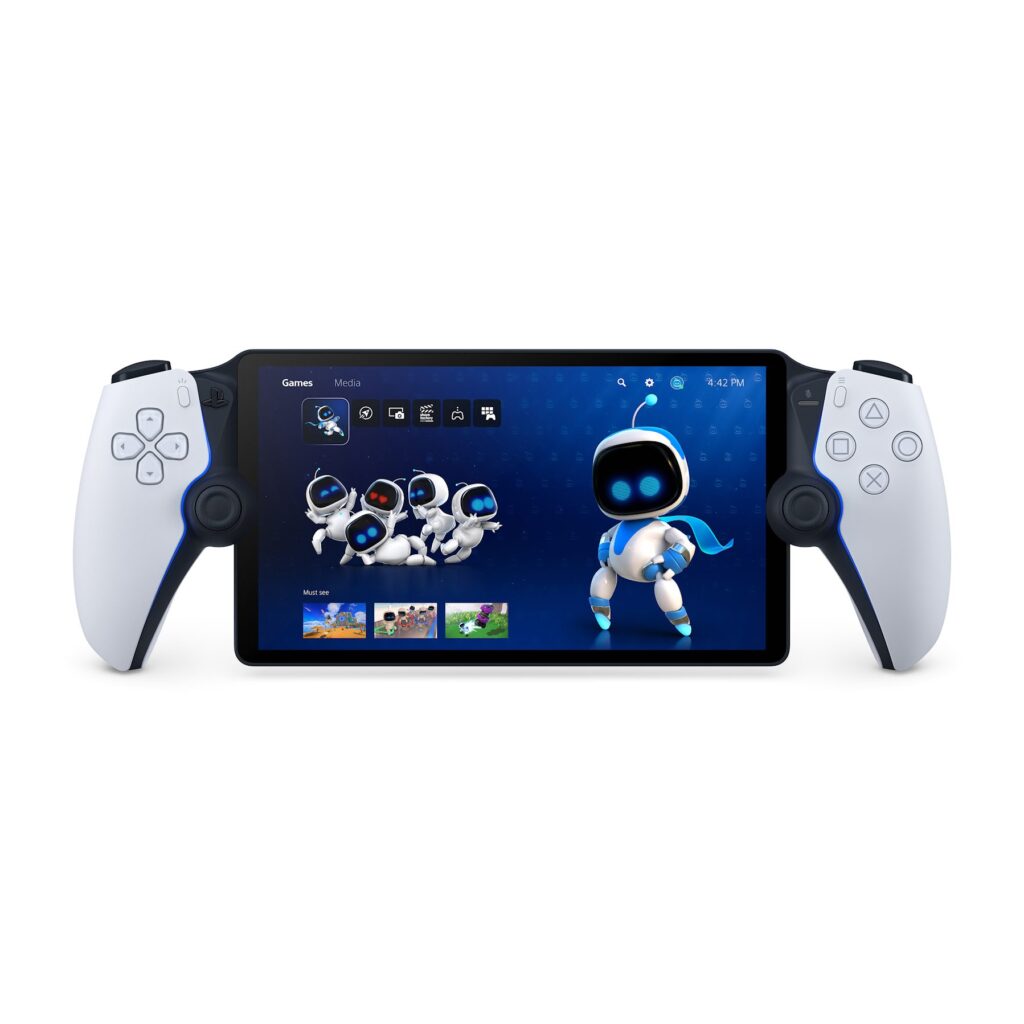
The PlayStation Portal costs $249.99 per Sony's announcement of 27 March 2026, and $249 in the PlayStation Direct store. It is an 8-inch 1080p screen at up to 60 frames, two halves of a DualSense on either side, and a Qualcomm chip inside that renders nothing. The picture arrives over the network.
The main mode is Remote Play from your PS5, so you need the console. The second mode, cloud, left beta on 5 November 2025 with a long list of conditions: a PS Plus Premium subscription, an adult account, 30 supported regions, 7 Mbps for 720p and 13 for 1080p, and no PS3 or PS4 games in the cloud. Since 17 March 2026 there is a 1080p High Quality mode.
- Pros. The cheapest way to play PS5 games lying down. DualSense grips with trigger feedback, after which flat seven-inch rivals feel like a step back. The device does not get hot and barely makes noise. Battery life is three to eight hours, because there is nothing to compute.
- Cons. Without a PS5 or a Premium subscription it is a piece of plastic. Away from home everything depends on somebody else's Wi-Fi. In competitive games the latency is noticeable. It has no library of its own, and Sony publishes neither sales nor the cloud game list.
Android handhelds: emulation and mobile games
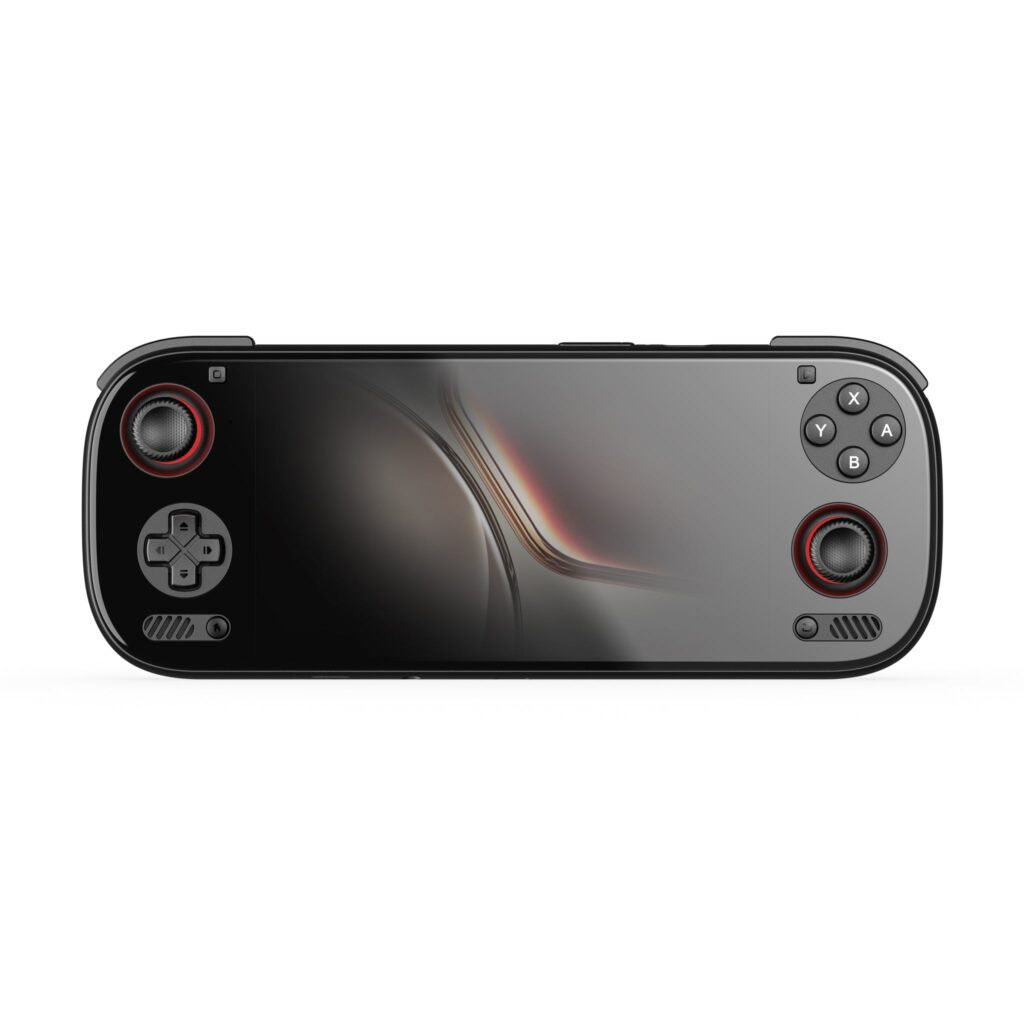
This is a separate world with its own brands: AYN, Retroid, AYANEO, Anbernic. A phone chip inside, a gamepad outside, Android as the system. You can play mobile games on them, you can stream, and above all you can emulate, which is why people buy them.
Prices first, because 2026 hit this category hardest. AYN raised the Odin 3 price three times in one year, in March, in June and on 1 September, blaming Qualcomm chipset costs and rising memory prices. For contrast, in October 2025 Retroid was cutting prices across its range. Half of the interesting models are currently a pre-order or a next-batch shipment rather than stock on a shelf.
- Retroid Pocket 6, $244 for the 8 GB version and $279 for 12 GB. Snapdragon 8 Gen 2, a 5.5-inch 1080p AMOLED at 120 Hz, a 6000 mAh battery, active cooling. It is actually in stock right now. In Retro Dodo's review it handles PS1, PSP and Dreamcast at four times native resolution, GameCube at three times, and PS2 at 1.5 to 2 times. The reviewer declined to test Switch at all, which is an honest signal: do not expect Switch from a handheld like this.
- AYN Odin 3, $369 to $569 depending on configuration. The most powerful device in the category: a Snapdragon 8 Elite class chip, a 6-inch 120 Hz AMOLED, 8000 mAh, 390 grams. But there is an important caveat from Notebookcheck: in Switch and Wii U emulation it performs worse than the cheaper Odin 2, because the new chip has no mature Turnip drivers yet. Twice the 3DMark score does not mean twice the emulation. And it is still a pre-order.
- AYN Odin 2 Portal, $259. Backordered rather than in stock, but it is currently the better pick for Switch and Wii U. Snapdragon 8 Gen 2, a 7-inch AMOLED, 8000 mAh.
- AYANEO Pocket S2 at $439 and Pocket S2 Pro at $559. Snapdragon G3 Gen 3, a 6.3-inch 2560 by 1440 screen, 428 and 440 grams. In early testing covered by Notebookcheck, PS2 runs at 1440p, Wii U lands between 720p and 1080p depending on the game, and Switch needs the maximum performance mode. One problem: every configuration is sold out, and both models have dropped out of AYANEO's current catalogue.
- Pros. The best weight-to-capability ratio in the world for old games: 300 to 400 grams against 700 for Windows. Battery life measured in hours, not in ninety minutes. AMOLED panels at 120 Hz for $250. Google Play and the whole of Android thrown in.
- Cons. Firmware and launchers are the weak spot of these brands, and reviewers say so year after year. Availability swings, half the range is a pre-order. Warranty and support are Chinese, repairs are your problem. And there are no new AAA games here at all.
Retro handhelds: from $38
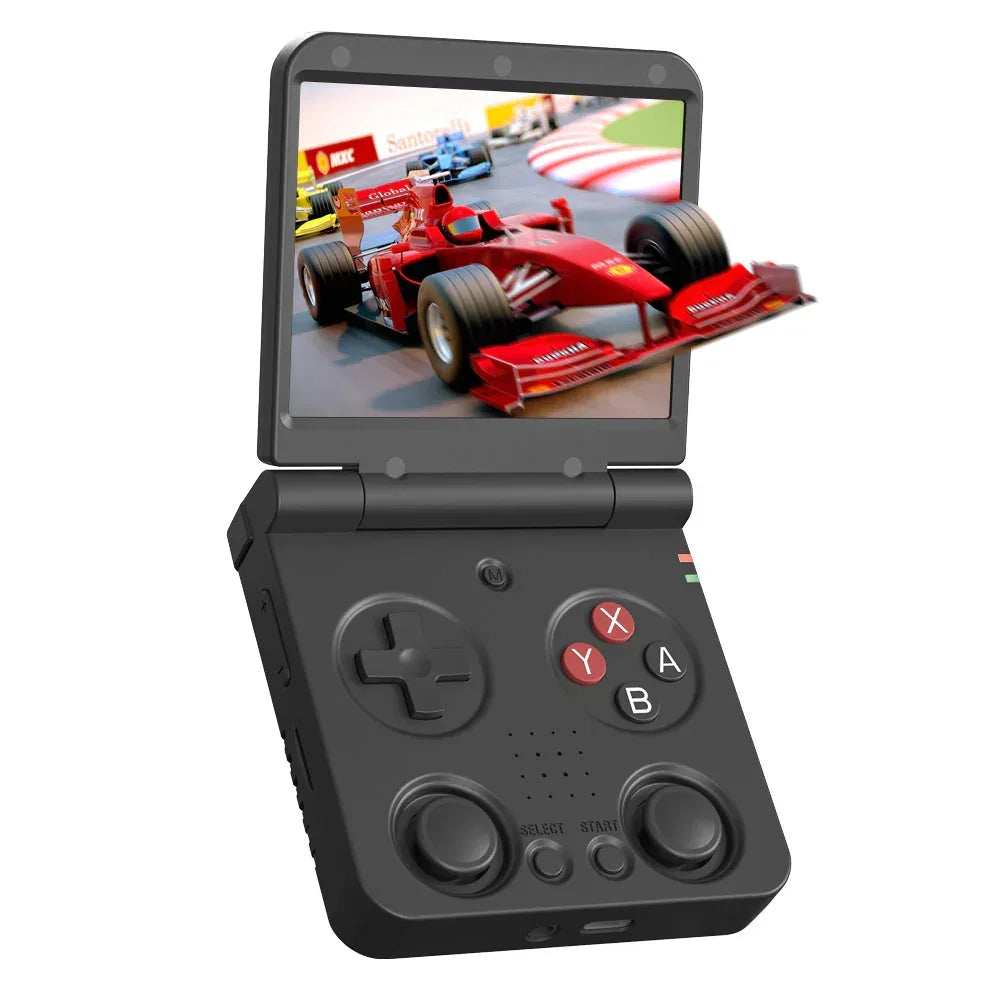
This category is for people who only want old games. A weak chip, a cheap shell, Linux or a stripped-down Android, prices from $38. If your list ends at PS1, this is the most honest money-to-fun ratio on the market.
- Anbernic RG 35, $37.99. A Rockchip RK3326, a 3.5-inch 640 by 480 screen, a 3200 mAh battery, 191 grams, Linux. In Retro Dodo's review of 15 September 2026 PS1, Mega Drive and GBA run well, N64 and Dreamcast are patchy, and GameCube and above do not run. The review names the downside plainly: the interface is dull.
- Miyoo Mini Flip, from $49.99. A clamshell with a 2.8-inch screen and a 2500 mAh battery that measured only three to four hours. GBA, GB, Neo Geo and Game Gear run well, PS1 only in slower-paced titles, Nintendo DS struggles. In exchange Miyoo sells cheap spares: a battery or a screen for $9, a motherboard for $25, a shell for $7.
- TrimUI Brick, $64.99, and the Brick Pro at around $90. An Allwinner A133P and 1024 by 768 screens with very high pixel density. In Retro Dodo's review the ceiling is Dreamcast, literally: not GameCube, not PS2, not Wii. Battery life is five to ten hours, and the speakers got a kicking in the review.
- Anbernic RG 55G1, $139.99. The top of the category: Snapdragon G1 Gen 2, a 5.5-inch 1080p screen, 339 grams, Android 14. PSP, Dreamcast and upscaled N64 run great, 3DS is good, but PS2 and GameCube only manage about 1.5 times native and look muddy. Note one discrepancy: the store says the battery is 6000 mAh, Retro Handhelds reviewers say 4000, and nobody has explained the gap.
- Anbernic RG 477M, $264.99. A Dimensity 8300, a 4.7-inch 120 Hz screen, an aluminium body, 354 grams. Confident up to PS2 and GameCube, contested on Switch, unreliable on PS3. The downsides are the brand's usual ones: mediocre software and a loud fan.
FPGA devices sit on their own shelf: they do not emulate, they reproduce the circuitry of an old console and play real cartridges. The Analogue Pocket costs $239.99 and is currently sold out, having gone from $199.99 at launch to $219.99 and then to today's price after March 2026, when Analogue blamed tariffs for the increase. Inside are two FPGA chips whose model numbers the company does not publish, a 3.5-inch 1600 by 1440 screen at 615 pixels per inch, and a 4300 mAh battery good for 6 to 10 hours. It plays Game Boy, Game Boy Color and Game Boy Advance cartridges, and with adapters Game Gear, Lynx and PC Engine as well. The ModRetro Chromatic costs $199.99, or $299.99 with a sapphire crystal front, runs about six hours on three AA batteries, plays only Game Boy and Game Boy Color cartridges, does not support GBA by design, and as of today every colour and every accessory is sold out. The conclusion on FPGA is simple: the picture and the latency are the best in the world, but this is a purchase for a cartridge collection, not a way to play anything you like.
Cloud and a phone with a controller
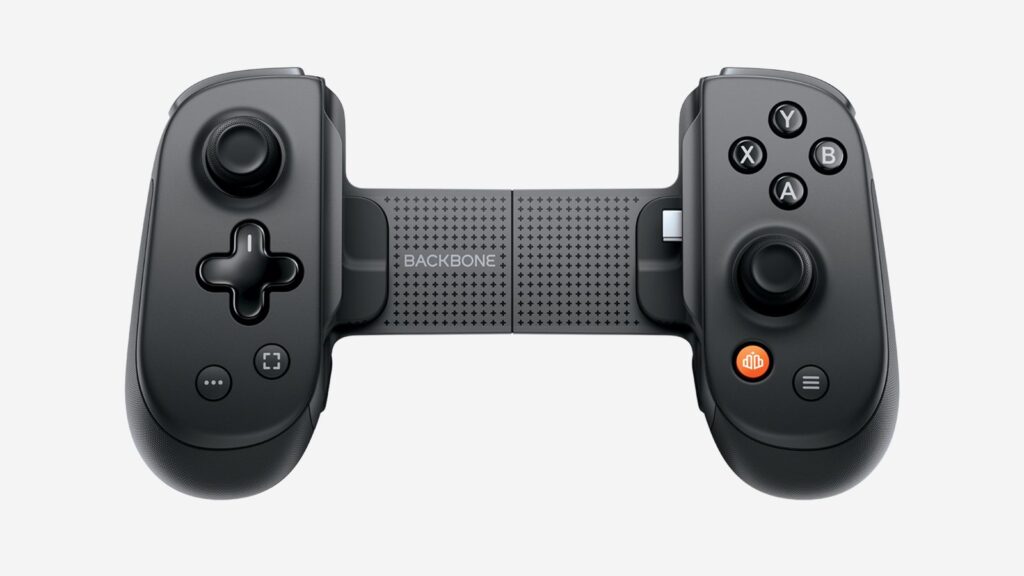
The cheapest way into handheld gaming is the phone you already own. A grip with buttons turns it into a console for something between $35 and $200.
- GameSir X5s, $49.99. 174 grams, hall-effect sticks and triggers, and three ways to connect: Bluetooth, a USB-C cable and 2.4 GHz wireless. It covers Switch, Switch 2, Android, iOS and PC. The cheaper X5 Lite is $34.99 with conventional triggers.
- Backbone One, $79.99 for USB-C and $99.99 for Lightning. It plugs into the port, needs no charging and no pairing. The USB-C version is cheaper as a regular price rather than a sale, so do not overpay for the old connector without a reason.
- Backbone Pro, $169.99. Works over cable and over Bluetooth, claims up to 40 hours, full-sized sticks. One correction to a widespread myth here: the Pro has hall-effect triggers but conventional potentiometer sticks, and Gizmodo lists exactly that as a downside.
- Razer Kishi V3 at $99.99, V3 Pro at $149.99 and V3 Pro XL at $199.99. Razer fitted these with TMR sticks and argues they beat hall-effect designs. The older Kishi Ultra at $149.99 is out of stock and has vanished from Razer's own model comparison, so treat the V3 family as the line.
What a phone can do on its own. Android emulation reached PS3 and Xbox 360 in 2026, and that is the headline of the category. For PS3 there is ARMSX3, which can only be sideloaded, and in August 2026 the RPCS3 team reported that after six months of ARM work PS3 emulation runs 60 percent faster while drawing 25 percent less power. For Xbox 360 there is XenDroid, whose developer states the floor outright: a Snapdragon 8 Gen 2 with Adreno 740 graphics or newer. But physics applies: a phone has no fan, its chassis is the heatsink, so any claim of "full speed" that does not mention session length means nothing. Tellingly, the biggest ARMSX3 improvement in September was not about frames but about heat, after the developers found three places where the processor was burning power for nothing.
On iPhone the picture is different, and not because of the hardware. Apple forbids just-in-time compilation, and without it heavy emulation is impossible: the official example is UTM SE, where SE stands for slow edition. At the same time Delta, RetroArch, PPSSPP, Provenance and Folium all live on the App Store quite openly, and rule 4.7 explicitly allows retro console and PC emulators. The practical ceiling for an iPhone is PS1 and GBA class games, and what limits it is the permission, not the chip.
Three things about cloud subscriptions changed in 2026 and are worth knowing. GeForce Now on Android reaches 1440p at 120 frames and wants 35 Mbps, 1080p60 needs 25, and on an iPhone through Safari the ceiling is 1080p60 regardless of tier. Since 1 January 2026 every GeForce Now subscription has a 100-hour monthly cap, 15 unused hours roll over, and extra blocks sell for $2.99 and $5.99 per 15 hours. Xbox now includes cloud gaming in all three console tiers, but metered as well: 5 hours a month on Essential, 10 on Premium and 15 on Ultimate, with up to 1440p on Ultimate only. Steam Remote Play and Steam Link stay free and run on everything, iOS included, while PS Plus Premium cloud streaming never reaches a phone at all, it is limited to PS5 and the PlayStation Portal.
Cloud-only handhelds have deflated as a category. The Logitech G Cloud has not been formally discontinued, but Logitech's own store shows $199.99 next to an unavailable button. The Razer Edge costs $399.99 for Wi-Fi and $599.99 for 5G, yet it has disappeared from its own section on Razer's site and is hard to find in shops. Not one new cloud-only handheld from a major brand shipped in 2026, while Windows handhelds on new Intel graphics did. The direction of the market is clear: the computing moved back onto the device.
Emulation and the law: one honest paragraph
Emulators themselves are lawful, and a court established it: in Sony v. Connectix the Ninth Circuit held in February 2000 that the intermediate copies of the BIOS made during reverse engineering were fair use, and the same year, in the case against Bleem, it also protected the use of screenshots in comparative advertising. Bleem still shut down, unable to carry the legal costs, and that is part of the story too.
Infringement starts where BIOS files and the games themselves get distributed. A recent case makes the line clear: in February 2026 Nintendo used a single DMCA notice to clear every Switch emulator fork off GitHub, from Yuzu and Ryujinx to Eden and Sudachi, between 127 and 218 repositories, and the argument was specifically about circumvention, about using the console's cryptographic keys to decrypt games. Sony and Microsoft, meanwhile, have not come after the PS3 and Xbox 360 emulators at all.
As for your own cartridges, the rules depend on the country. In Europe, directive 2009/24/EC gives a lawful owner of a program the right to a back-up copy, and no contract can take that right away. In the United States there is no personal back-up exemption for games, and the preservation exemption that does exist is written for libraries, archives and museums, and only allows play on their own premises. The practical conclusion for a buying guide is one line: the device and the emulator are legal, where the games come from is your decision, and you will find no links to pirate collections here.
Price, weight and battery in three charts
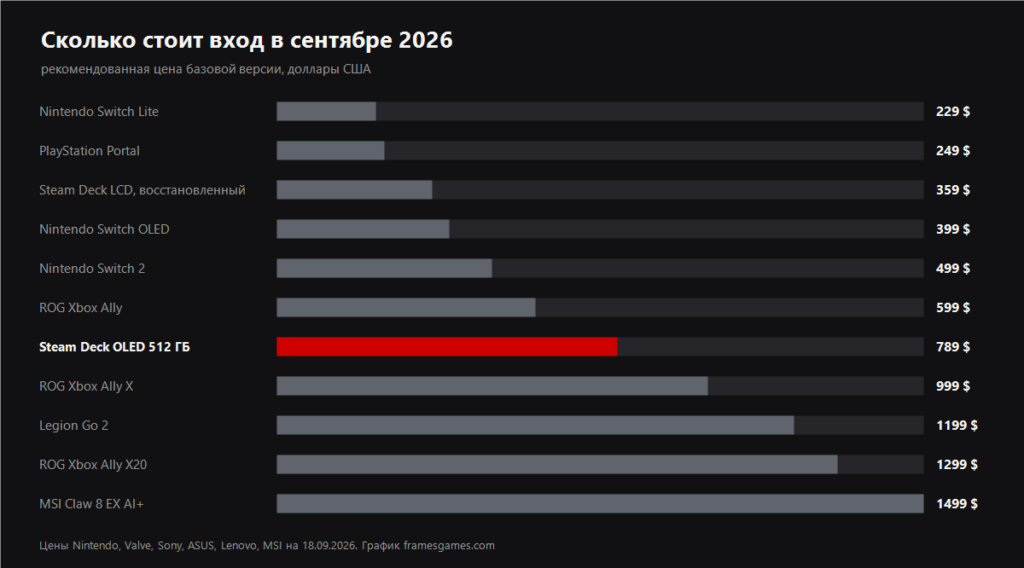
Three things decide everything, and they are easier to see than to read. The first chart is about money: the gap between a $229 entry and a $1,499 flagship is sixfold, and this is all one product class.
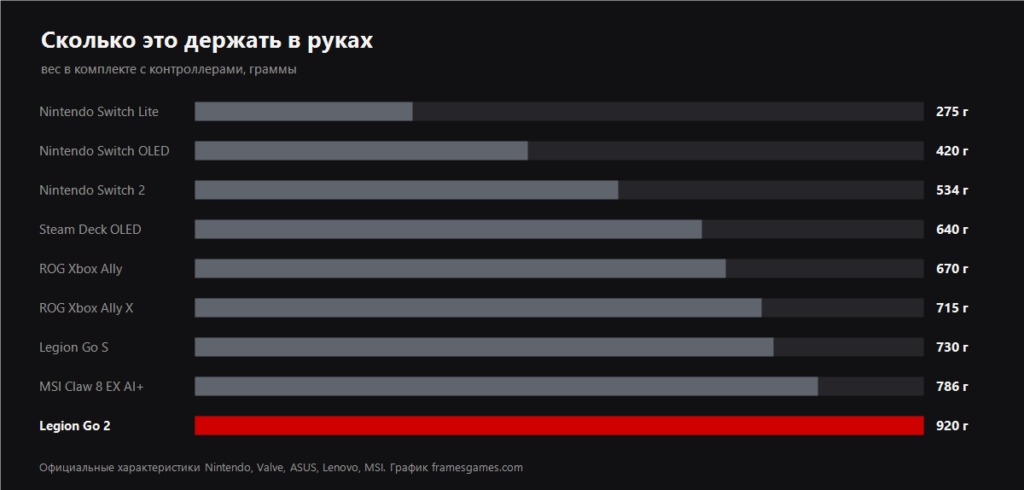
The second chart is about what you actually hold. A Switch Lite weighs 275 grams, a Legion Go 2 weighs 920. That is a bigger difference than between a phone and a book, and it is exactly what decides whether you last with the device to the end of a flight.
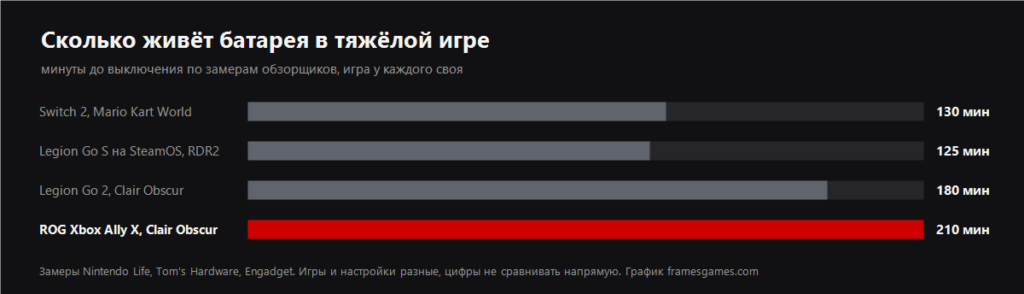
The third chart is the least pleasant, so read the caption. These are reviewers' measurements, each in a different game with different settings, and the bars cannot be compared head to head. The point is elsewhere: in a demanding game no powerful device lasts three hours, and the six and twelve hours the makers quote are about menus and indie titles.
Six ready-made scenarios
If you have no time for everything above, find your own case.
A family with kids, one device for everyone
A Switch 2 at $499 or a Switch OLED at $399. The reason is not power: detachable controllers give you two-player games without a second purchase, Nintendo's parental controls are the clearest of the lot, and a fall off the sofa is something a console survives better than a thousand-dollar PC handheld. With small children the $399 OLED is the calm choice, but remember February 2027 in Europe.
Trains, planes, long trips
Weight and battery win here, not frames. A Switch Lite at $229 and 275 grams, a Switch OLED with its 4.5 to 9 hours, or a Steam Deck OLED if you need the Steam library. Windows handhelds are bad at all three for travel: 700 to 900 grams, ninety minutes to three hours, and fan noise in a quiet cabin.
Your own Steam library, no setup
A refurbished Steam Deck OLED at $629 from Valve's own store, or a refurbished LCD at $359 on a hard budget. The new OLED at $789 is for people who want a warranty and a fresh battery. Compatibility badges, ready per-game profiles and sleep mode do exactly what you expect from a console.
Online shooters and Game Pass
Windows only, there is no alternative. A ROG Xbox Ally X at $999 is the sensible ceiling: 80 watt-hours, the Xbox shell and power in reserve. The MSI Claw 8 EX AI+ is 50 to 75 percent faster but starts at $1,499 and weighs almost 800 grams. The basic Ally at $599 only makes sense if performance is not the point, since it is slower than a Steam Deck OLED.
You own a PS5 and want to play around the house
A PlayStation Portal at $249. No hardware of its own, no setup, DualSense grips and an eight-inch screen. It works right up to the edge of your Wi-Fi, which makes it a home device rather than a travel one. Without a PS5 it only makes sense with a PS Plus Premium subscription and a clear view of its limits.
Emulating old consoles
If your list ends at PS1 and GBA, an Anbernic RG 35 at $38 or a Miyoo Mini Flip at $50 is enough. If you want PSP, Dreamcast and N64, that is the Anbernic RG 55G1 at $140. If you want GameCube and PS2 without caveats, take the Retroid Pocket 6 at $244, which also happens to be in stock. For Switch and Wii U the better buy right now is not the new Odin 3 but the Odin 2 Portal at $259, because the newer chip still lacks mature drivers. A Windows handheld emulates well too, but you pay twice as much and carry twice the weight.
The smallest budget
Under $50 it is an Anbernic RG 35 or a Miyoo Mini Flip. Under $100 a phone grip is worth a look: a GameSir X5s at $50 turns the phone you already paid for into a console with hall-effect sticks. Under $250 the choice is between a Retroid Pocket 6 for emulation, a PlayStation Portal if you own a PS5, and a Switch Lite at $229 if you want Nintendo games. A refurbished Steam Deck LCD at $359 is the next step up and the cheapest route to a Steam library.
What to avoid when buying
- Do not trust power figures in a vacuum. The same processor at a 15-watt and a 25-watt limit gives different frame rates, and in handheld mode the limit is almost always the lower one. Look for measurements in games at the limit you will actually play at, not at teraflops.
- Do not forget the memory card. Switch 2 only takes microSD Express cards, they cost more than regular ones, and they got more expensive from March 2026 because of the memory shortage. Count the card as part of the price of the console.
- A Game-Key Card is not a game on a cartridge. Many third-party Switch 2 releases physically contain only a key, and the game itself has to be downloaded. If you collect boxes or do not want to depend on downloads, check the packaging. According to publishers, Nintendo is preparing smaller cartridges so that full physical editions get cheaper, but for now this is how it is.
- Cheap clones with "20,000 built-in games". These are retro handhelds stuffed with pirated ROMs, often poorly built and with no firmware updates. Emulators themselves are legal, the question is always where the games came from.
- Do not buy a handheld for new AAA games if you expect 60 frames. Even top devices run recent releases at 30 frames with an upscaler, which is normal for the format, but it is better to adjust expectations in advance.
- Check what is in the box. A case, a charger of the right wattage, a dock and a memory card come and go between bundles, and the final difference reaches a hundred dollars.
The short version
- You want Nintendo games. A Switch 2 at $499, or a Switch OLED at $399 if battery life and an OLED panel matter more, while it is still sold in Europe.
- You want a Steam library with no fiddling. A Steam Deck OLED, preferably refurbished: $629 for the OLED or $359 for the LCD.
- You want anti-cheat online shooters or Game Pass. A ROG Xbox Ally X at $999, and this is the one category with no alternative.
- You want old games. A Retroid Pocket 6 at $244, or an Anbernic RG 35 at $38 on the smallest budget.
- You own a PS5. A PlayStation Portal at $249, but for home use only.
- You would rather not spend at all. A grip with buttons for your own phone, $35 to $50, plus free Steam Remote Play.
One last general point. Prices in 2026 are going up, not down: memory got expensive, tariffs were added, and everybody raised prices, from Nintendo and Valve to AYN and Analogue. There is no reason yet to expect things to get cheaper. On the other hand there is no reason to rush either: Steam Deck 2 has no date, Microsoft has no handheld of its own, and Switch 2 just went up in price. If a device solves your problem today, you can buy it today.
Sources and how we counted
Prices and specifications were read off manufacturer and store pages on 17 and 18 September 2026: Nintendo, Valve, PlayStation Direct, ASUS, Lenovo, MSI, AYN, Retroid, Anbernic, Miyoo, Analogue, ModRetro, Logitech, Razer, Backbone and GameSir. Battery and performance measurements belong to reviewers and are named in the text: Nintendo Life, Tom's Hardware, Engadget, Notebookcheck, Retro Dodo, Retro Handhelds, Time Extension. Anti-cheat compatibility comes from the GamingOnLinux list, which is maintained game by game. Switch 2 sales figures come from Nintendo's financial reporting. App Store rules are quoted from the current text of section 4.7, Nintendo's DMCA notice of 12 February 2026 from GitHub's public archive, and the Sony v. Connectix and Sony v. Bleem rulings from the Ninth Circuit opinions. The charts are ours, built from the numbers listed above, with the source printed on every image.