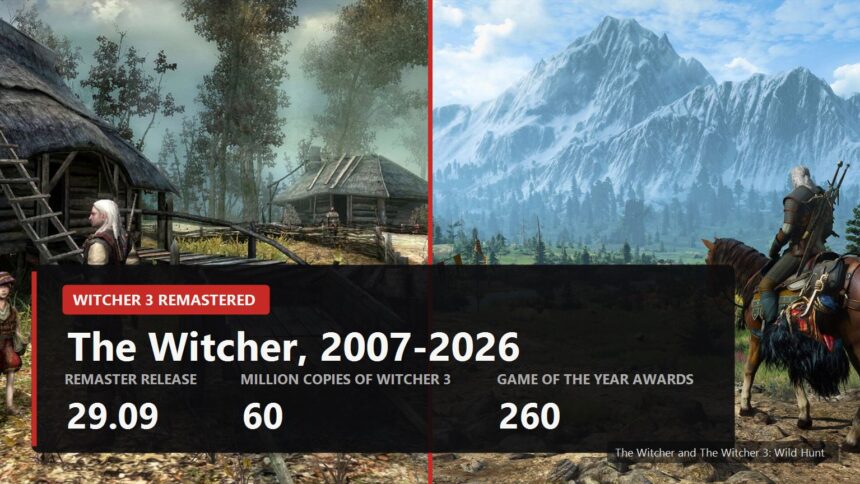
The Witcher 3: Wild Hunt Remastered comes out on September 29, and everyone who owns The Witcher 3 gets it for free. It is a good moment to remember that the game almost never happened. The first Witcher was meant to be a short project and took five years, CD Projekt nearly went bankrupt after it, and the third game was delayed twice. At FramesGames we traced the whole road, from a Polish studio that had never made a game of its own in 2002 to 60 million copies sold.
What arrives on September 29
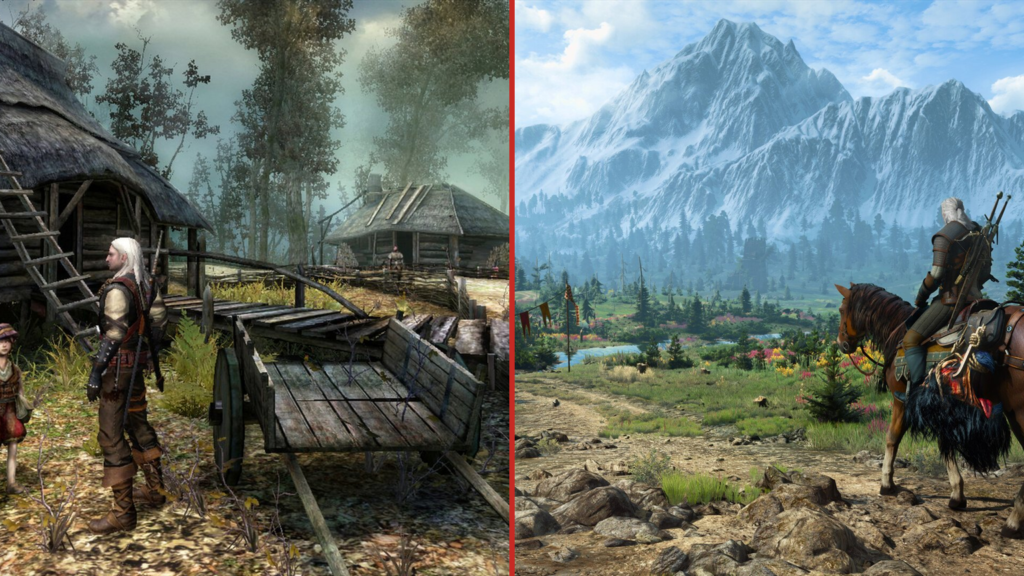
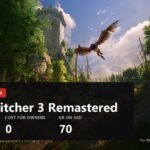
Remastered was announced on August 25, and CD Projekt Red is making it together with Yigsoft. It is a free upgrade for owners on PC through Steam, GOG and Epic, on PS5 and on Xbox Series X|S. The same day the game launches on Switch 2 and arrives on Battle.net for the first time. Owners have already received the Hearts of Stone and Blood and Wine expansions for free. And in 2027 a new paid expansion, Songs of the Past, adds the region of Letten, developed with Fool's Theory. What changes in graphics, combat and progression is covered in our separate explainer.
2002 to 2007: a first game that took five years
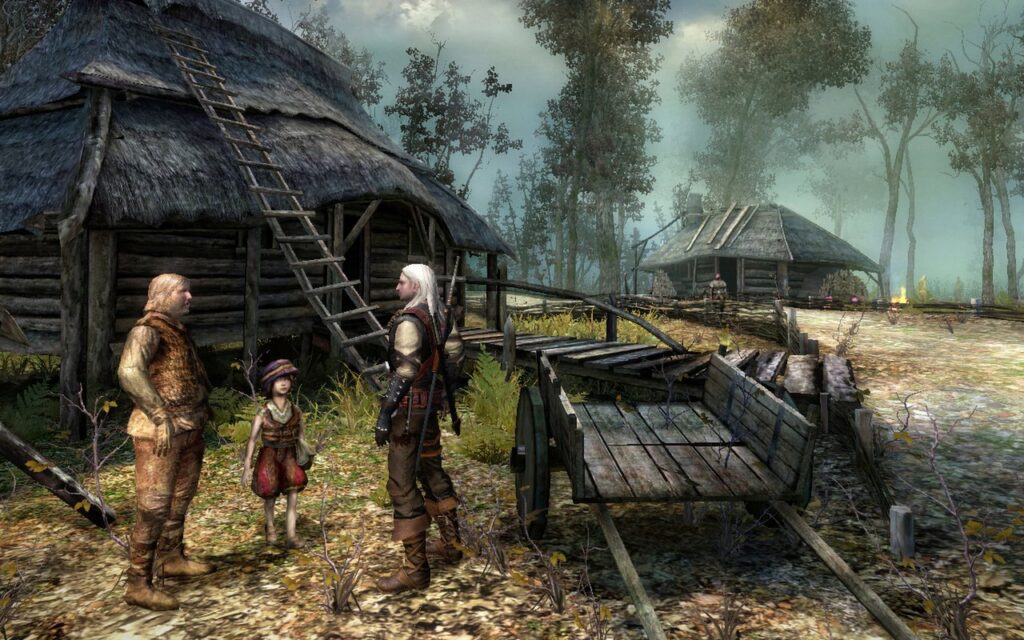
CD Projekt started in 1994 as a shop: Marcin Iwiński and Michał Kiciński imported foreign games into Poland and translated them. The Polish release of Baldur's Gate shipped 18,000 copies on day one. In 2002 they opened their own studio, CD Projekt Red, and bought the rights to Andrzej Sapkowski's world for roughly $9,500. By his own account the writer had no interest in video games and took a lump sum instead of royalties.
Work began in September 2003 and was hard from the start. According to the Adam Mickiewicz Institute, publishers gave the first prototype a cold reception, and its hero was not even Geralt but another witcher. Technical problems piled up and the team's ideas of the game drifted apart. In the end they licensed BioWare's Aurora engine and reworked it heavily. A short project stretched to five years, and the budget reached almost 20 million zloty, the most expensive Polish game at the time.
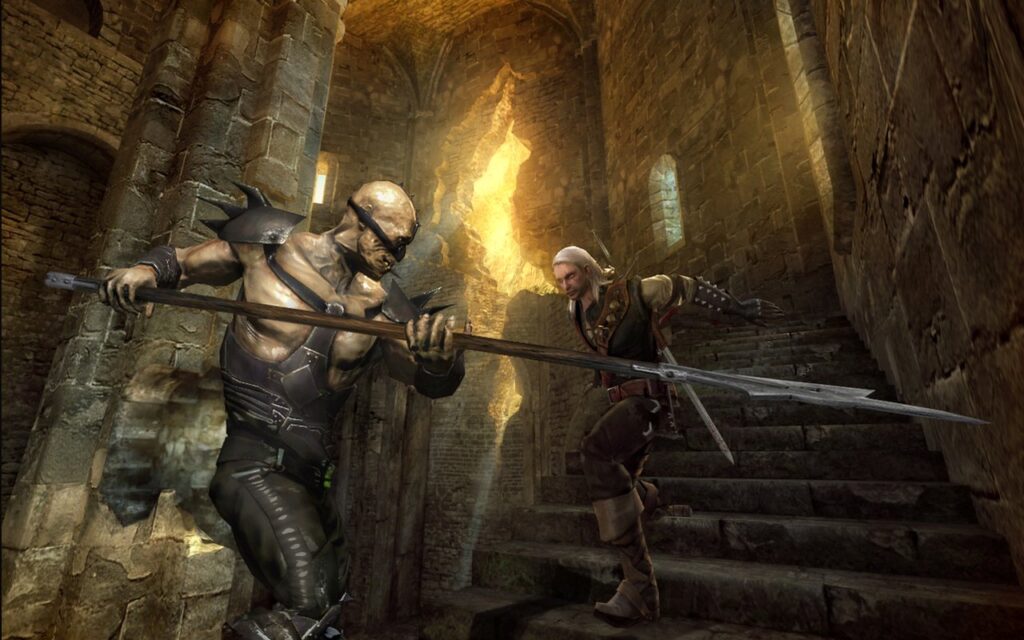
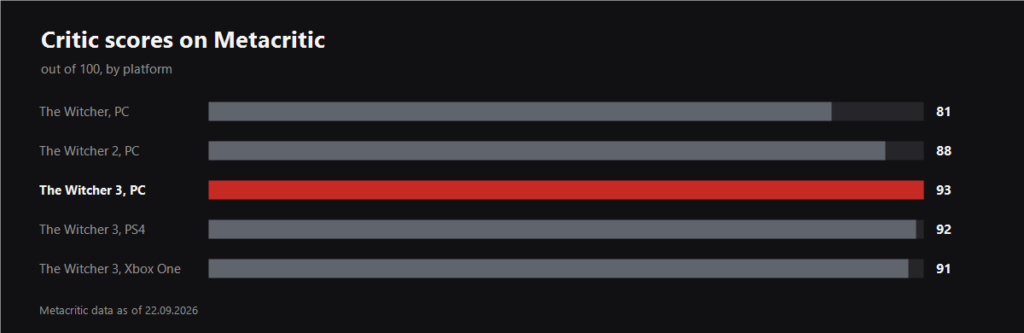
The Witcher came out on October 26, 2007, sold 35,000 copies in Poland in three days and scored 81 on Metacritic. Critics praised the story and the choices with no right answer, and complained about long loading, bugs and the English voice acting. The studio responded the way it still does: on September 16, 2008 it released the free Enhanced Edition with some two hundred new animations and loading times cut by about 80%. Today the first game has sold more than 10 million copies.
2008 to 2011: how CD Projekt nearly went under
The first game's success almost sank the studio. CD Projekt wanted The Witcher on consoles and handed the port, Rise of the White Wolf, to France's Widescreen Games. Deadlines slipped, the two sides fell out over money, and on April 29, 2009 the project was halted. The money was already spent, and the global financial crisis made it worse. According to Forbes, the company laid off nearly half of its 350 staff, and Kiciński recalled that paying salaries became very difficult.
Two moves saved the studio. The founders gave 22% of the company to investor Zbigniew Jakubas for about $4 million. And on October 21, 2009 CD Projekt agreed to merge with Optimus, a company already listed on the Warsaw Stock Exchange, as a way onto the market. The merger closed on December 28, 2010, and in July 2011 Optimus was renamed CD Projekt. Along the way, in 2008, the Good Old Games store opened, the future GOG.
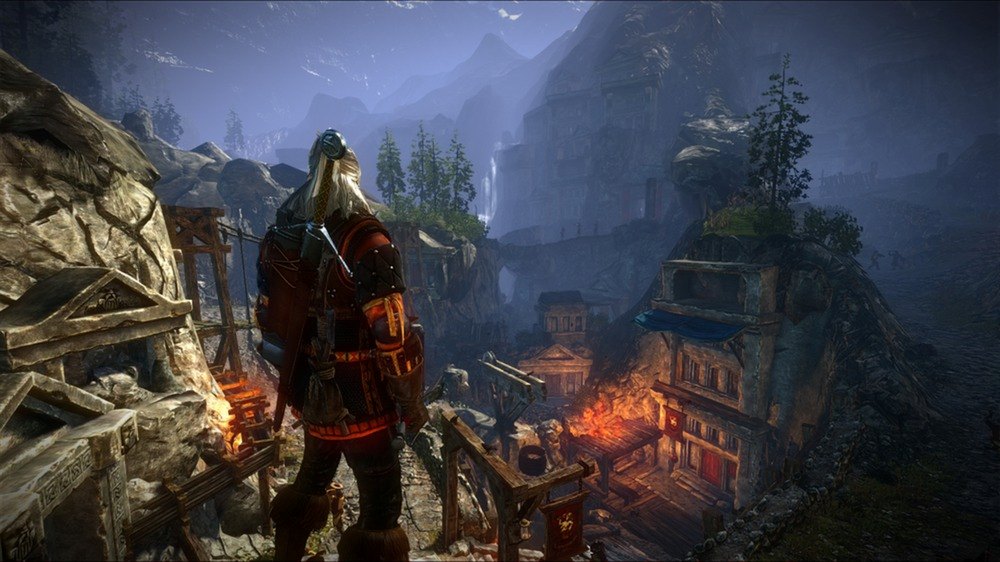
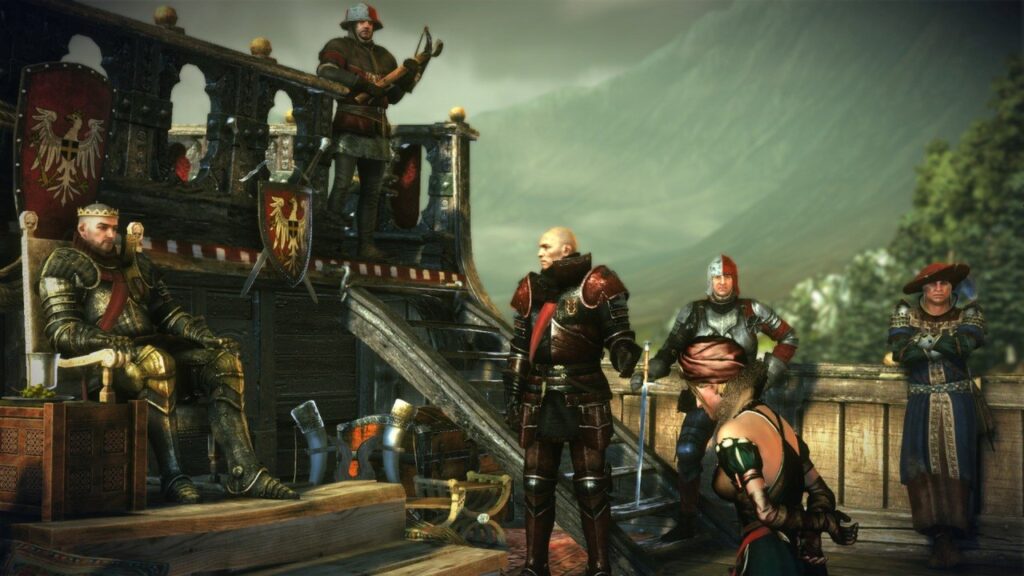
The Witcher 2: Assassins of Kings was announced on September 18, 2009, right in the middle of the crisis, and the studio built its own REDengine for it. It came out on PC on May 17, 2011 and scored 88. Its big idea was the second act: depending on whether Geralt sides with the elf Iorveth or the commander Roche, you see entirely different places and events. Retail copies shipped with SecuROM, and only the GOG version was DRM-free. On April 17, 2012 it reached Xbox 360, by October 2012 it had passed two million copies, and today it stands above 15 million.
2011 to 2015: Wild Hunt and two delays
Work on the third game began in 2011. The in-house team grew from 150 to more than 250, with around 1,500 people involved worldwide. The studio paid for the roughly $81 million budget itself, with no outside publisher. The game was announced in February 2013 for release in 2014.
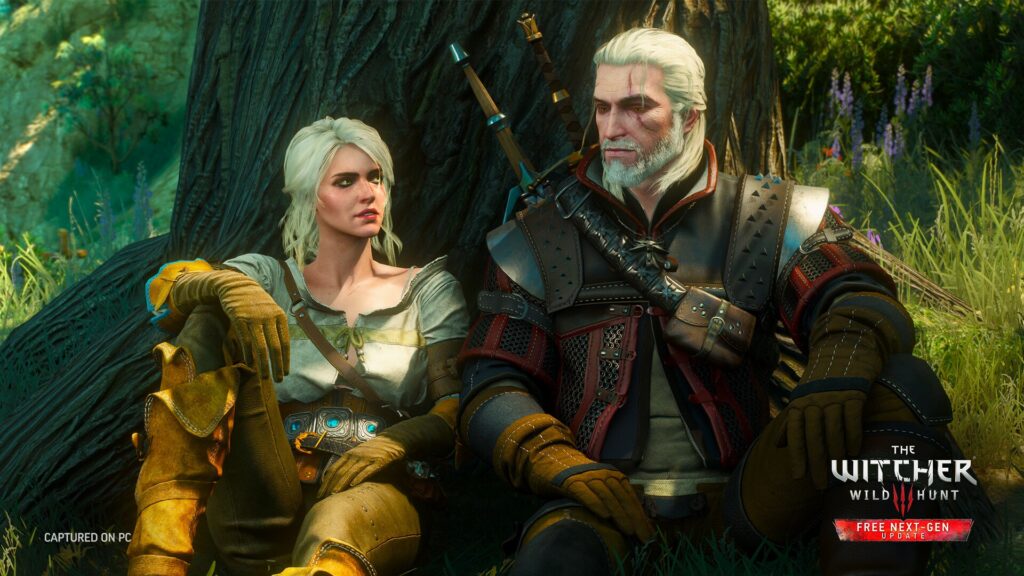
Then came the delays. In March 2014 the management used an open letter to move the release to February 24, 2015, and on December 8, 2014 pushed it another 12 weeks to May 19. After launch a downgrade row broke out: the game looked simpler than the 2013 footage. Iwiński went out of his way to explain to players why. Next to everything else, it was soon forgotten.
The Witcher 3 launched on May 19, 2015 on PC, PS4 and Xbox One in 15 languages and sold 6 million copies in six weeks. It scored 93 on PC, 92 on PS4 and 91 on Xbox One. It collected 260 Game of the Year awards and remained the most awarded game in history until 2021.
Expansions and a second life
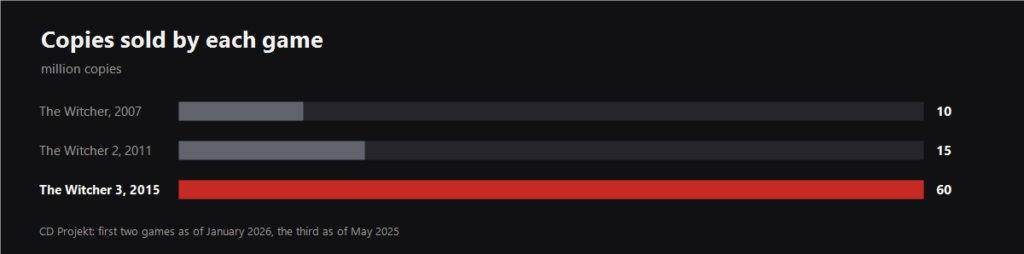
Hearts of Stone arrived on October 13, 2015 with more than 10 hours of content, and Blood and Wine on May 31, 2016 with over 30 hours and the new region of Toussaint, which some reviewers scored as high as 100 out of 100. After that the game kept going on its own: a Switch version in October 2019 and an update for PS5 and Xbox Series X|S with ray tracing on December 14, 2022. By its tenth anniversary on May 19, 2025, CD Projekt counted more than 60 million copies sold and 2.4 billion zloty in revenue. The gap with the first two games is plain on the chart above.
The three games in one table
| Year | Game | Launch platforms | Engine | Metacritic | Sales |
|---|---|---|---|---|---|
| 2007 | The Witcher | PC | Aurora, BioWare | 81 | over 10 million |
| 2011 | The Witcher 2: Assassins of Kings | PC, later Xbox 360 | REDengine | 88 | over 15 million |
| 2015 | The Witcher 3: Wild Hunt | PC, PS4, Xbox One | REDengine 3 | 93 | over 60 million |
| 2026 | The Witcher 3: Remastered | PC, PS5, Xbox Series X|S, Switch 2 | upgrade of the 2015 game | out September 29 | free for owners |
What was hardest
- The first game. A studio with no experience, a prototype publishers did not like, and five years of work on what was meant to be a short project.
- The second game. A failed console port, the 2009 crisis, almost half the staff laid off, and a rescue through an investor and the stock market.
- The third game. An $81 million budget with no publisher, two delays, and a graphics row that drowned in 260 awards.
- A shared habit. Finishing a released game for free: the Enhanced Edition in 2008, the 2022 update and now Remastered.
Sources
Remastered, Songs of the Past and the free expansions: CD Projekt news post, August 25, 2026. Release dates, sales and the Optimus merger: company history on the CD Projekt site. Start of development on the first game, the prototype and the budget: Culture.pl, Adam Mickiewicz Institute. The Sapkowski rights deal, the Enhanced Edition and the cancellation of Rise of the White Wolf: the Wikipedia article on the first game. The 2009 crisis, layoffs and the Jakubas deal: Forbes, via the Wikipedia article on CD Projekt. Team size, budget and delays of the third game: Wikipedia, GameSpot and Kotaku. Scores: Metacritic as of September 22, 2026.
Images: official Steam store pages. Videos: official The Witcher and Witcher2Game channels.