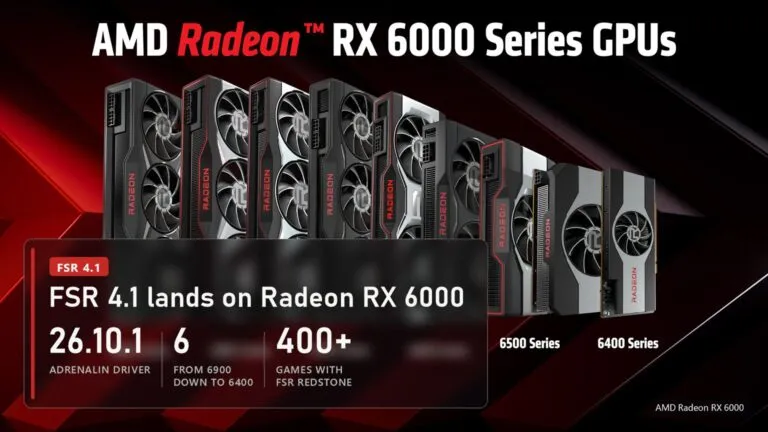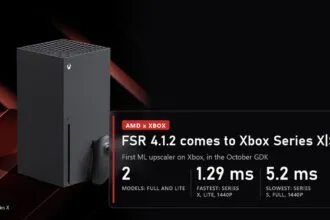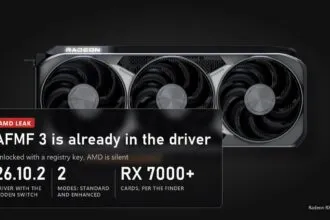
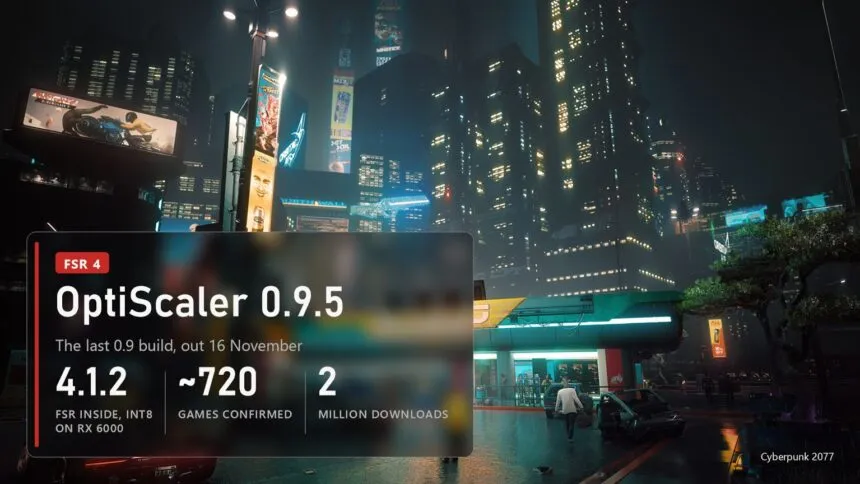
OptiScaler 0.9.5 went up on GitHub on 16 November at 19:17 UTC, and for anyone with a Radeon RX 6000 card it is the build to grab. It ships AMD's FFX SDK 2.4 with FSR 4.1.2 upscaling, the version AMD itself now runs on RDNA 2 and Ryzen APUs through the INT8 model. Driver 26.10.1 already gave RX 6000 owners FSR 4.1, but only in games that have FSR 4 or FSR 3.1 to upgrade. OptiScaler takes the same model into games that only ship DLSS or XeSS. The catch: this is the last release of the 0.9 branch.
Read next:
What changes on RX 6000 and Ryzen APUs
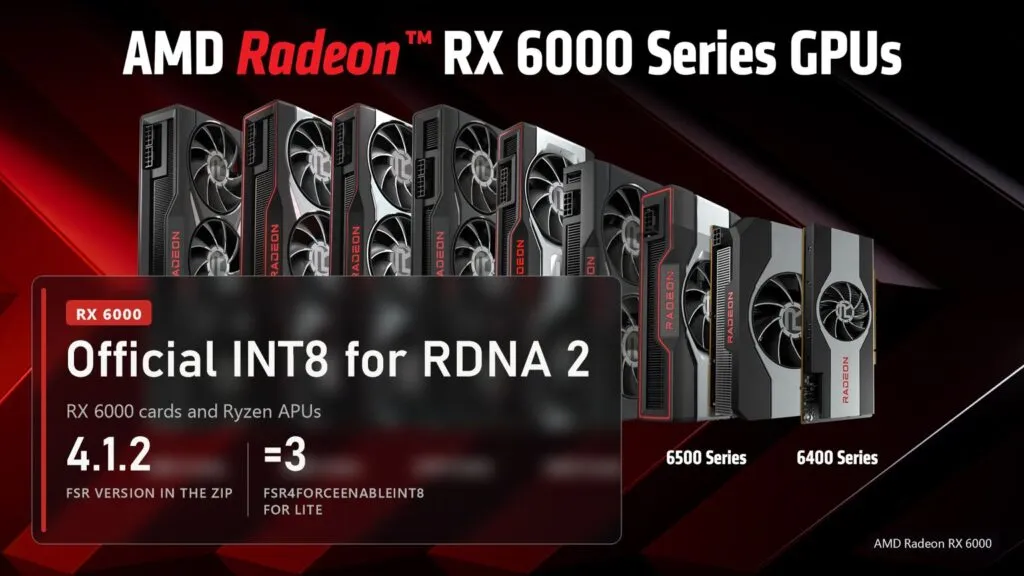
Until now FSR 4 on RDNA 2 through OptiScaler meant an INT8 model AMD did not support on these cards, switched on by force. In 0.9.5 the INT8 path is AMD's own: the release notes say FSR 4.1.2 brings "official support for RDNA2 and Ryzen APUs/iGPUs", with the remark that some exclusions apply. Which ones, the notes don't say.
- Cards outside the list. They can still force the model with
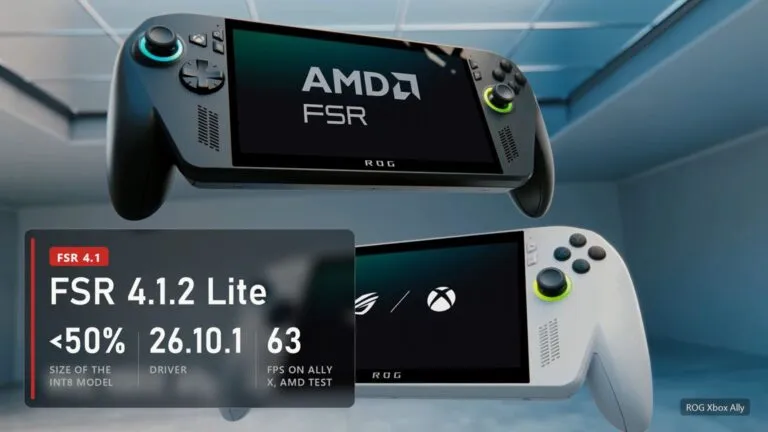
Fsr4ForceEnableInt8in OptiScaler.ini. A value of 3 forces the INT8 Lite model, the smaller one AMD built for handhelds. - Model picker. The overlay now has a drop-down for the FSR 4 model and shows which one is active, so you no longer guess.
- Watermark. The FSR 4 watermark toggles live, without restarting the game.
- Flicker in Unreal games. OptiScaler replaced FSR 4's autoexposure with its own. That fixes the flickering black screen on Linear input when DLSS feeds an oversized colour buffer.
- Windows 10 crashes. AgilitySDK is now switched on automatically on Windows 10, which the team expects to help FSR 4 users who crashed there.
Vulkan and frame generation: what made it in
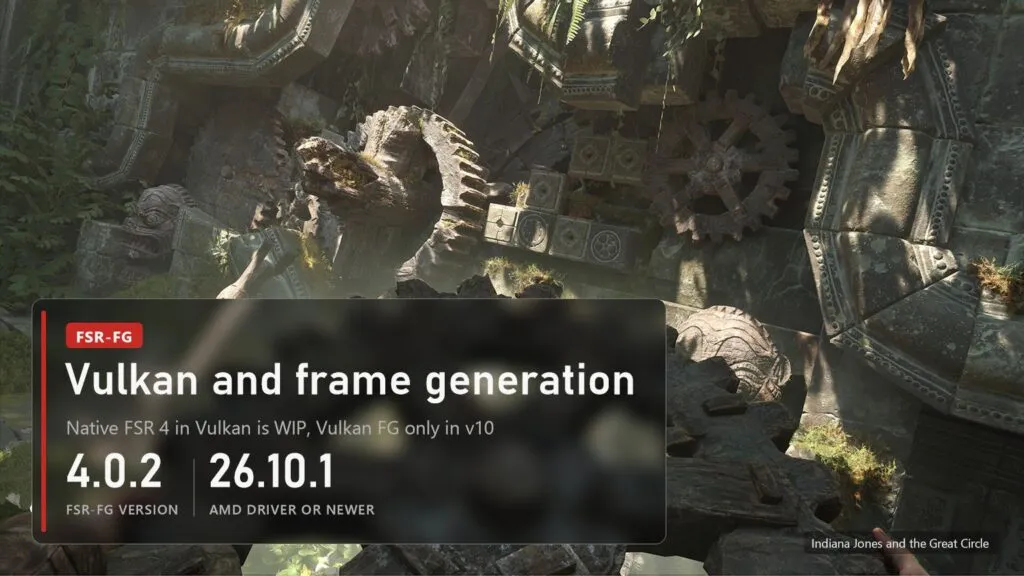
Native FSR 4 in Vulkan is in 0.9.5, but marked work in progress. The developers write that the DX12 interop route can still look better in some games, especially on cards older than RX 9000, so in a Vulkan game like Indiana Jones and the Great Circle it's worth trying both. Frame generation in Vulkan did not make it into 0.9.5 at all and stays in the v10 nightlies.
On RX 9000 the FSR frame generation moves to 4.0.2 with hardware flip metering (AMD calls it Driver-Assisted Frame Pacing), and there is a switch between the old and the new swapchain. It needs Adrenalin 26.10.1 or newer. Intel users get the XeSS 3.0.2 SDK and a fix for the XeFG crash with recent Intel drivers; multi frame generation in XeSS is still Arc only. The zip also carries Fakenvapi 1.4.1 and Nukem's dlssg_to_fsr3 0.130.
The last 0.9: update or wait for v10?
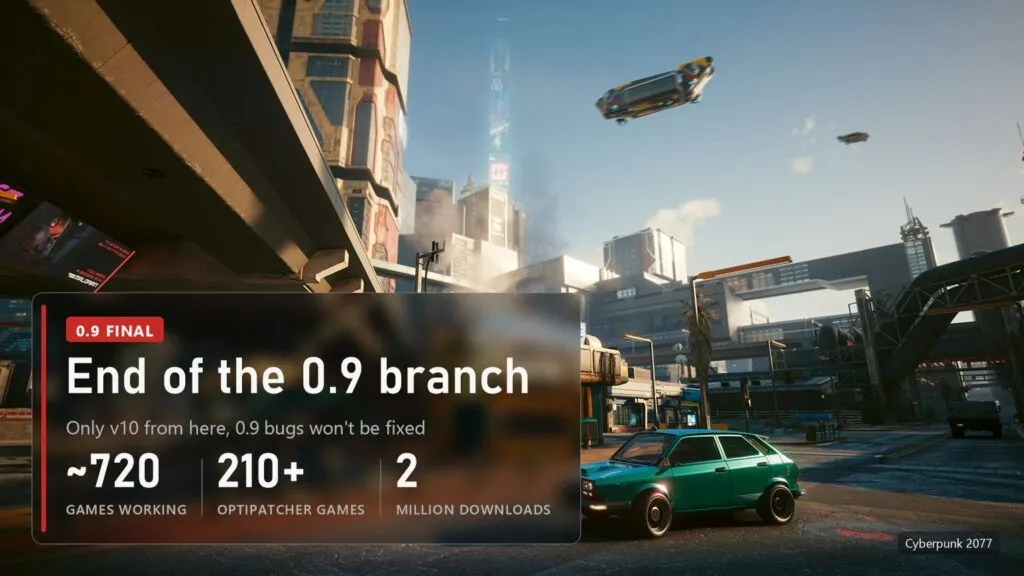
The team keeps two codebases, and that is over: 0.9 goes into maintenance mode "as is", and bug reports for it will generally no longer be answered. All work goes into v10. Some numbers from the release post: 2 million downloads in total, about 13,000 stars, around 720 games confirmed working and over 210 games supported by OptiPatcher.
My take: install 0.9.5 now if you play on RX 6000 or a Ryzen handheld, because v10 has no release date. Take the new OptiScaler.ini and copy your own changes into it, since an old file won't have the options added after 0.9.4. Two old warnings still stand. Don't use it in online games with anti-cheat. And download only from GitHub, the OptiScaler Discord or Nitec's NexusMods page: the team says it has no official website and no official manager app, and anything asking for money is a scam.
Sources
OptiScaler v0.9.5 release notes on GitHub, 16.11.2026. Screenshots: Cyberpunk 2077 and Indiana Jones and the Great Circle from their Steam pages, Radeon RX 6000 render from AMD.
Read next