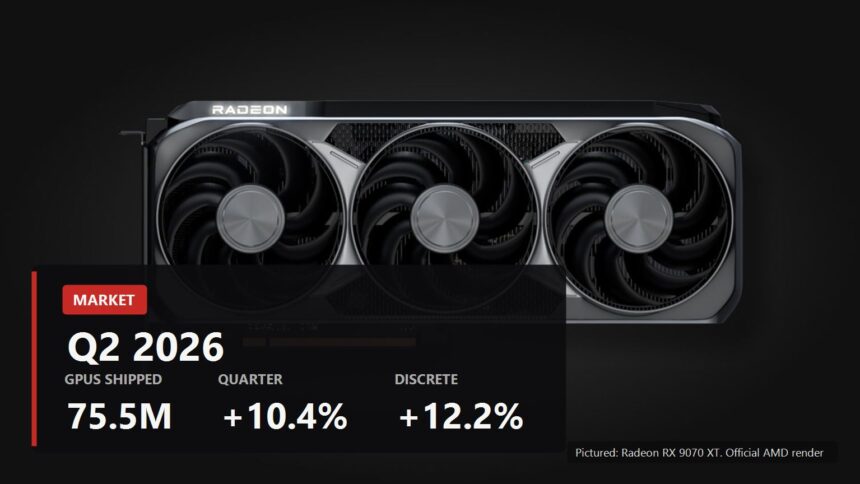
The second quarter of 2026 closed on a number that sits awkwardly next to the price tags in shops: 75.5 million PC graphics processors shipped, 10.4 percent more than the quarter before. The count comes from Jon Peddie Research and the report landed on 3 September. Discrete cards did better still at 12.2 percent, and all of this happened while memory got more expensive for the third quarter running.
What actually grew
Look at the headline figure and the market seems to have woken up. Break it apart and the picture changes.
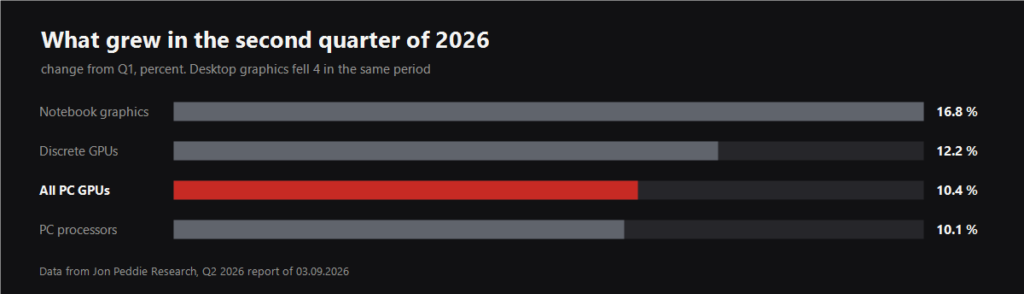
All of the growth came from notebooks, up 16.8 percent for the quarter. Desktop graphics went the other way and fell 4 percent. In other words, people are not buying the things we normally argue about in buying guides. They are buying finished laptops, where the graphics chip comes in the box and nobody makes a separate decision about it.
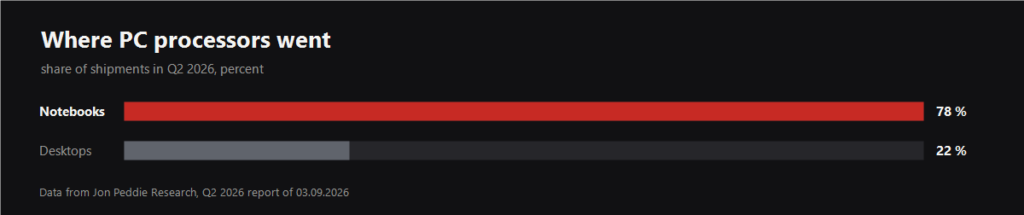
Processors tell the same story, only sharper. Shipments rose 10.1 percent, with AMD up 12.74 and Intel up 8.99. And 78 percent of all client processors went into notebooks, leaving 22 for desktops. That is a record, and it is not about the desktop being dead. It is about fewer new ones being built.
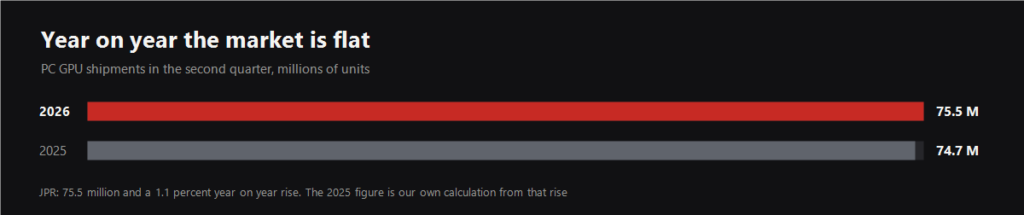
Year on year the number is far more modest: those same 75.5 million are only 1.1 percent above the second quarter of 2025. The quarterly jump looks better in a headline, the annual figure is the honest one.
Shares moved, but barely
Keep one thing in mind here: JPR counts every PC graphics processor, integrated ones included. That is why Intel sits first, and that first place is about laptops and office machines rather than gaming builds.
- AMD gained 0.6 percentage points over the quarter.
- NVIDIA gained 0.46.
- Intel lost 1 point, while staying first by volume.
- The attach rate is 120 percent, up 0.3 on the previous quarter. That is the average number of graphics processors per machine, and anything above one hundred means a noticeable share of PCs carry two: an integrated one and a discrete one.
The public part of the report carries no absolute shares, only the quarterly movement. So we quote the movement rather than market percentages we would have to invent from somewhere.
Why it grows while everything gets pricier
Jon Peddie himself puts the quarter this way: discrete GPUs rose 12.2 percent even while a global memory crisis sent component prices soaring, driven by a mix of supply side positioning, artificial demand shocks and localized market dynamics.
Let me unpack that, because the wording is smooth. An artificial demand shock is when people rush to buy not because they need a card but because they are afraid tomorrow costs more. In that situation rising shipments are not a sign of a healthy market. They are a symptom.
The JPR forecast is on the gloomy side too: through 2029 they pencil in an average annual decline of 0.6 percent. Not a collapse, but not a market going anywhere either.
What a buyer should do with this
Exactly one practical conclusion follows: do not wait for prices to fall on their own because demand is weak. Demand is not weak. And memory, the thing driving the increases, is not about to get cheaper.
So watch the price per frame on a given day rather than the calendar. We recalculate it weekly, and the latest snapshot sits in our roundup of cards under a thousand euro. Both GeForce models went up over the past week while the Radeons stayed put, and that is what you see in a shop, not in a quarterly report.
Sources
All shipment figures, shares, the attach rate, the processor data, the forecast and the Jon Peddie quote: the Jon Peddie Research report for the second quarter of 2026, published 3 September 2026.
The explanation of Intel's share and integrated graphics: TechPowerUp analysis of 6 September 2026.