
In July Rockstar brought a small group of creators and journalists to its own studio, Rockstar North in Edinburgh, and showed them GTA 6 running. The showing was strictly hands-off: you could watch, you could not play. The embargo lifted on 27 August, right after the extended look went out on Netflix, and that evening the details started pouring out, none of which had been in the video itself.
- Lucia and Jason are a system, not a cutscene
- A partner you can give orders to
- The city pushes back instead of playing along
- The phone the city runs on
- The police count evidence, not bodies
- Cars became property, with all that follows
- The San Andreas gym is back
- Money, and how the game holds you with it
- A map nobody at Rockstar holds in their head
- Things to do besides crime
- How the game judges what you do
- Safehouses instead of bought property
- How the story is told
- What got cut and what is not coming
- Technology and production
- In-game television is a production of its own
- Why nobody famous is in the leading roles again
We have gathered everything that was said, sorted it by topic and cut the repeats. This is not a Rockstar press release but a retelling of what people saw, so parts of it are opinion. It is also specific.
Lucia and Jason are a system, not a cutscene
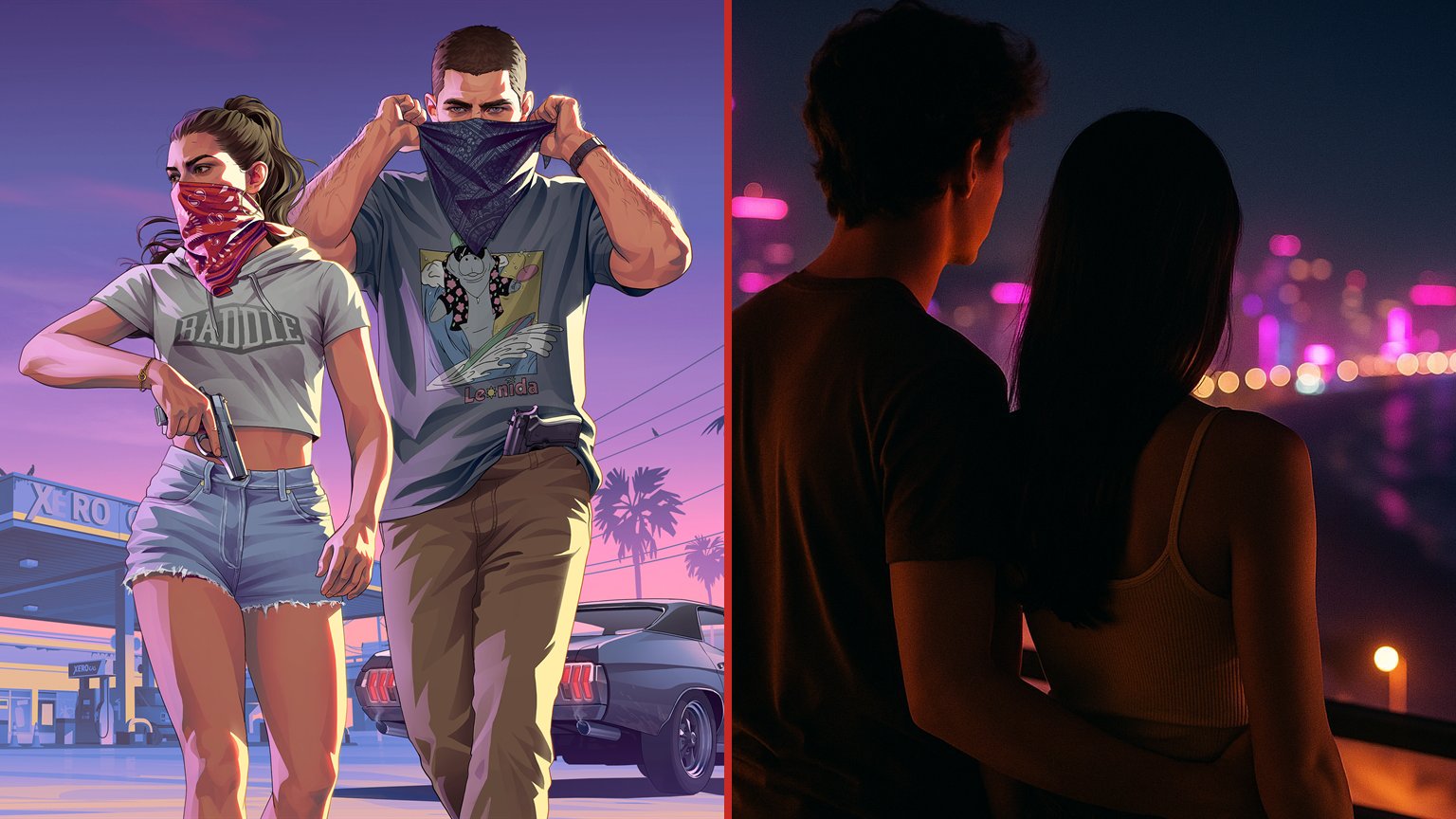
The most unexpected part is not about shooting or driving. The relationship between the two protagonists works as its own mechanic, and how deep it goes is up to you.
- The couple exists from the start. The game does not make you earn it, Lucia and Jason are together on day one. Everything after that is on you.
- The floor is lower than it sounds. They can not just cool off but actually break up. The story keeps them entangled regardless.
- The ceiling is a couple living a life. Holding hands, drinking, playing, swimming, going shopping. Ordinary things the series has never had.
- Time together is the currency. The more time you spend with the other protagonist, the closer they get, and the game counts it directly.
- The phone feeds the same system. You can text the other one, check on them, say goodnight.
- A good relationship means they kiss. A small thing standing in for a big one: closeness is a scale, and the game keeps score.
- One of them backs the other's choices. Even when you decide as one, the other stays on your side.
- You will be choosing constantly. One of the writers put it as the game pressing you with decisions roughly the way Red Dead Redemption 2 did.
A partner you can give orders to

The second protagonist next to you is not a shadow that jogs along behind. You can give them orders, and outside of orders they get on with their own business.
- You can ask them to drive you. They take the wheel and you ride along. For a series where partners spent ten years as walking turrets, that is a real change.
- You will run into each other by chance. The other protagonist turns up in the open world on their own, and you can link up from there.
- Your partner changes the heat. Escaping the police is easier or harder depending on whether the other one is with you.
The city pushes back instead of playing along

Pedestrians got smarter, and smarter not in the sense of nicer animation but in the sense of being inconvenient. They get in your way. Rob Nelson of Rockstar North put it to IGN like this: you are still powerful and capable, but you are not the only one capable of violence, not the only one with weapons and not the only crazy person out there.
- You can talk to anyone you pass. The system for interacting with pedestrians is back and, in Nelson's words, evolved: Red Dead Redemption 2 pushed it as far as it could go and GTA 6 takes it much further.
- Chasing a pedestrian around no longer works. Follow someone too closely or for too long and they will either walk away from you or turn aggressive.
- They notice you eavesdropping. Stand near a conversation and people will turn around and ask whether they can help you. That one is almost a direct quote.
- Bystanders have their own impulses. They can start a fight themselves, side with whoever you are scrapping with, take cover and shoot back. Creators also described NPCs robbing each other with no input from you.
- Walking around with a big gun is over. A large weapon on your back frightens people and pulls attention, so it goes in the boot.
- The appearance generator got a serious upgrade. Pedestrians differ in age, height and body type, and you will see tattoos, piercings, cosmetic surgery and personal taste in clothes.
- Clothing depends on the district. People in Little Cuba dress differently from people out by Mount Kalaga National Park.
- Rockstar more than doubled in size since Red Dead Redemption 2, and there is a team in Los Angeles working on nothing but making pedestrians convincing.
- Random events are built to feel one-off. The intent was that each one reads as something that happened to you, once.
The phone the city runs on

The phone in GTA 6 stopped being a taxi menu. So much hangs off it that a list is easier.
- There is a working social feed. Not wallpaper on a screen, an actual stream that lives on its own.
- Story arrives through it. The storyline of rap duo Real Dimez unfolds exactly that way, through viral posts.
- Your own photo feed lives in the Snapmatic app.
- The other protagonist is a contact on the same phone. Ask how they are, say goodnight.
- The phone gets used on the move. One protagonist drives while the other scrolls, and you can switch between them in the middle of a police chase.
- The car scanner is an app too, as is calling your own car to you.
All of it adds up to the thing it was built for: the sense that the city carries on without you, and you are plugged into it through the same screen as everyone else.
The police count evidence, not bodies

The wanted system was rebuilt from scratch, and the main change is that the game now looks not at whether a crime happened but at whether anyone found out and what exactly they worked out about you.
- The game shows you what identifies you. During a wanted level the screen carries icons for face, clothing, weapon and vehicle, plus separate marks for whether your accomplices were made and whether a camera caught you.
- The stars change colour, not just count. White before anyone is looking for you, red during an active chase, and a third state, a black star with a white outline, when police are on the way to a scene but do not yet know who they want.
- Somebody has to report it. Until the police are called, the stars do not climb.
- Leave before the patrol arrives and there are usually no consequences. Speed beats accuracy.
- You can break the description. A face covering, a change of clothes and a different car all help. A distinctive companion hurts: you answer for your company too.
- Police cars are not highlighted on the map. Deliberate, so that during a chase you watch the road instead of the minimap.
- Six stars are back. The interface shows six, not the familiar five.
- Nobody walks out of hospital any more. The old scene at the reception desk was replaced with respawning nearby.
- Cash on you is lost. Money sits either on your person or in the bank, and death or arrest takes whatever was in your pocket.
Cars became property, with all that follows
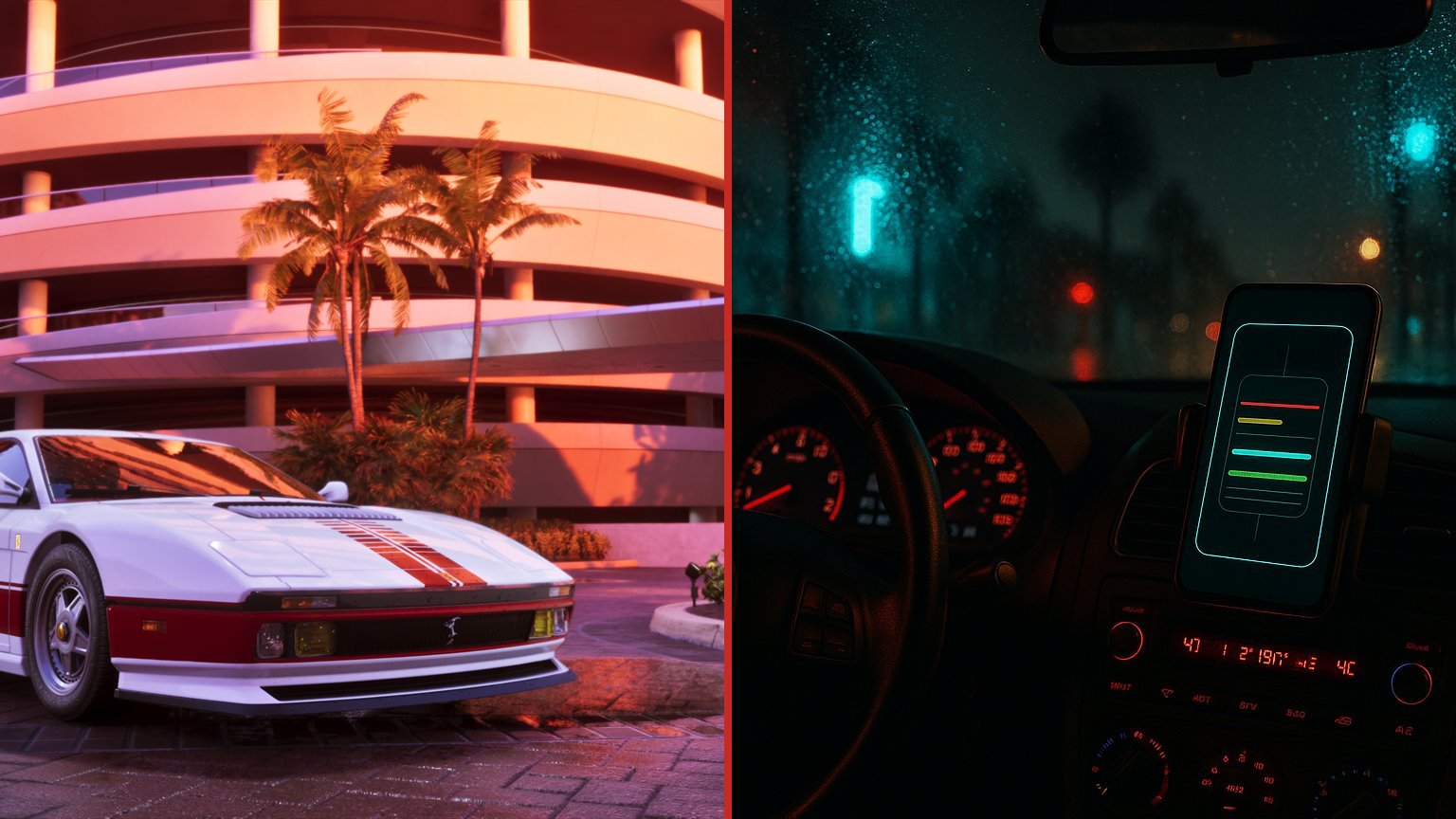
- Cars need petrol. And a car you just stole may well be running on fumes.
- Your own car gets impounded if the police find it abandoned after a crime.
- Stealing any car you like is out. If there is a driver in it you can simply pull them out, and that works on anything. A parked car is harder: the expensive ones sit behind an electronic lock and need the right gear.
- Expensive cars carry trackers. You can take them, you will just be found faster.
- There is a scanner app. It reads a car at a glance: locked or not, what alarm it has, how fast the tracker trips, what it sells for and what registering it costs.
- You can call your own car to you through an app.
- Customisation is called incredibly deep. That is the quote, no specifics given yet.
- Roads are narrower and traffic is denser. The city feels tighter, and that changes how chases play out.
- The protagonists have personal cars. Your own vehicle, with your arsenal in the boot.
- Racing drivers tune the vehicle physics. Actual drivers work in the department responsible for how cars behave.
- Guns you bought stay in the car. Lose the weapon on you and the arsenal in the vehicle is still there.
- Buses and taxis exist. Buses work as fast travel and RideMe is the local Uber.
The San Andreas gym is back
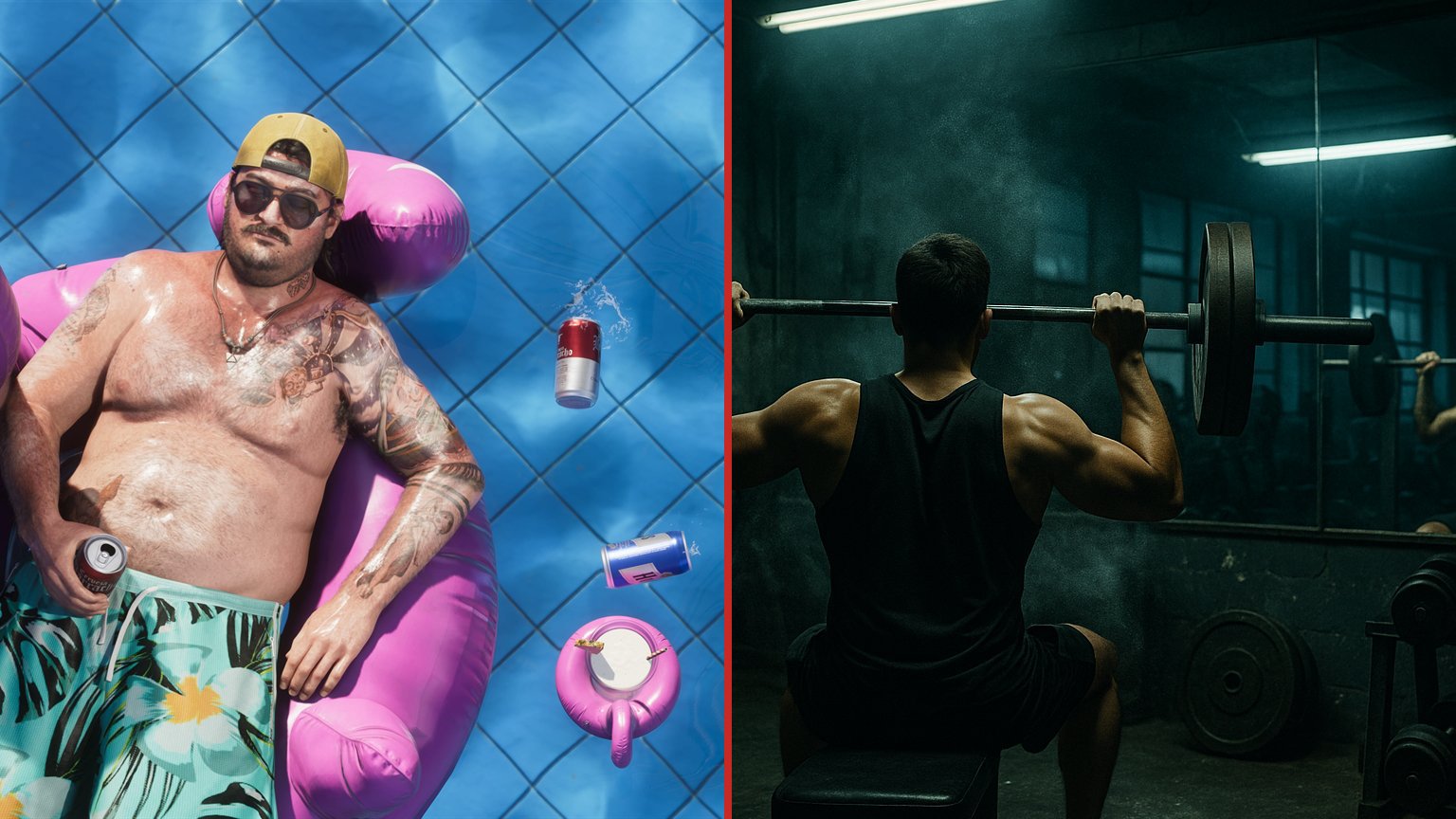
The Red Dead Redemption 2 systems came across but were trimmed so they do not slow the pace. And the gym everyone has been missing since San Andreas returned properly.
- You buy a gym membership. One of the creators said that if anyone asks how detailed GTA 6 is, that fact alone is the answer.
- Stamina, cardio and general condition are tracked separately. Not one bar but several states.
- Workouts are mini-games. Hit the timing and the buff is better, miss it and you lose stamina.
- You drink a protein shake afterwards to lock in what the session gave you.
- Food changes weight, training builds muscle. The effect is visible but more restrained than in a typical RPG. Rob Nelson explained the thinking: as much self-expression as possible without losing the essence of the characters.
- Missed sleep shows on the face. Bags under the eyes, slower health and stamina recovery, and going long enough without sleep changes facial features.
- There are more body types. A wider spread of shapes and sizes than before.
- Walking speed is adjustable, including which speed your character defaults to.
Money, and how the game holds you with it
- You cannot buy houses. The reason is narrative: the characters are on the run. Safehouses take their place, more on that below.
- Money gates parts of the game. Some places simply will not let you in until you have the sum.
- Payouts are being balanced deliberately so that no single way of earning eclipses all the others.
- Single player money cannot be bought with real money. Said plainly.
- Shops close at night. Not all of them, but some.
- Stock depends on the neighbourhood. Clothing stores are tuned to where they stand.
A map nobody at Rockstar holds in their head
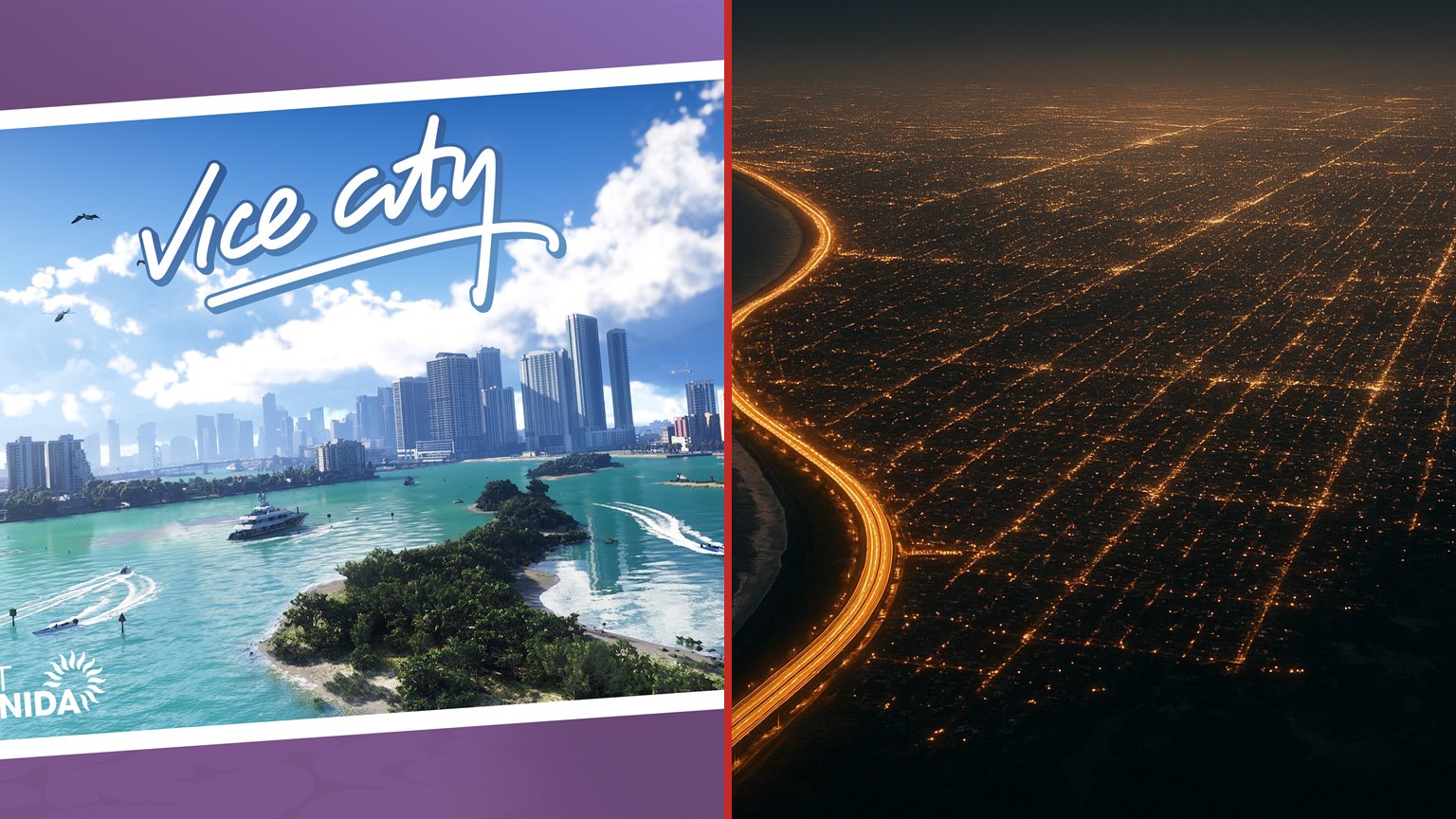
- Twice the size of Los Santos from GTA 5 and three times the playable space of Red Dead Redemption 2.
- The world is so large that nobody in the studio knows all of it. That is Rob Nelson, one of the leads on the game.
- A lot of the important things are unmarked. Deliberate, so that finds stay finds.
- As many enterable buildings as they could manage. Not everything opens, but that was the target.
- Homes are interactive almost throughout. Open the fridge and take food out of it, switch the lights on and off, watch television.
- Roughly 80 hours to finish. Rob Nelson completed the game in 80 hours back in February, side content included.
Things to do besides crime
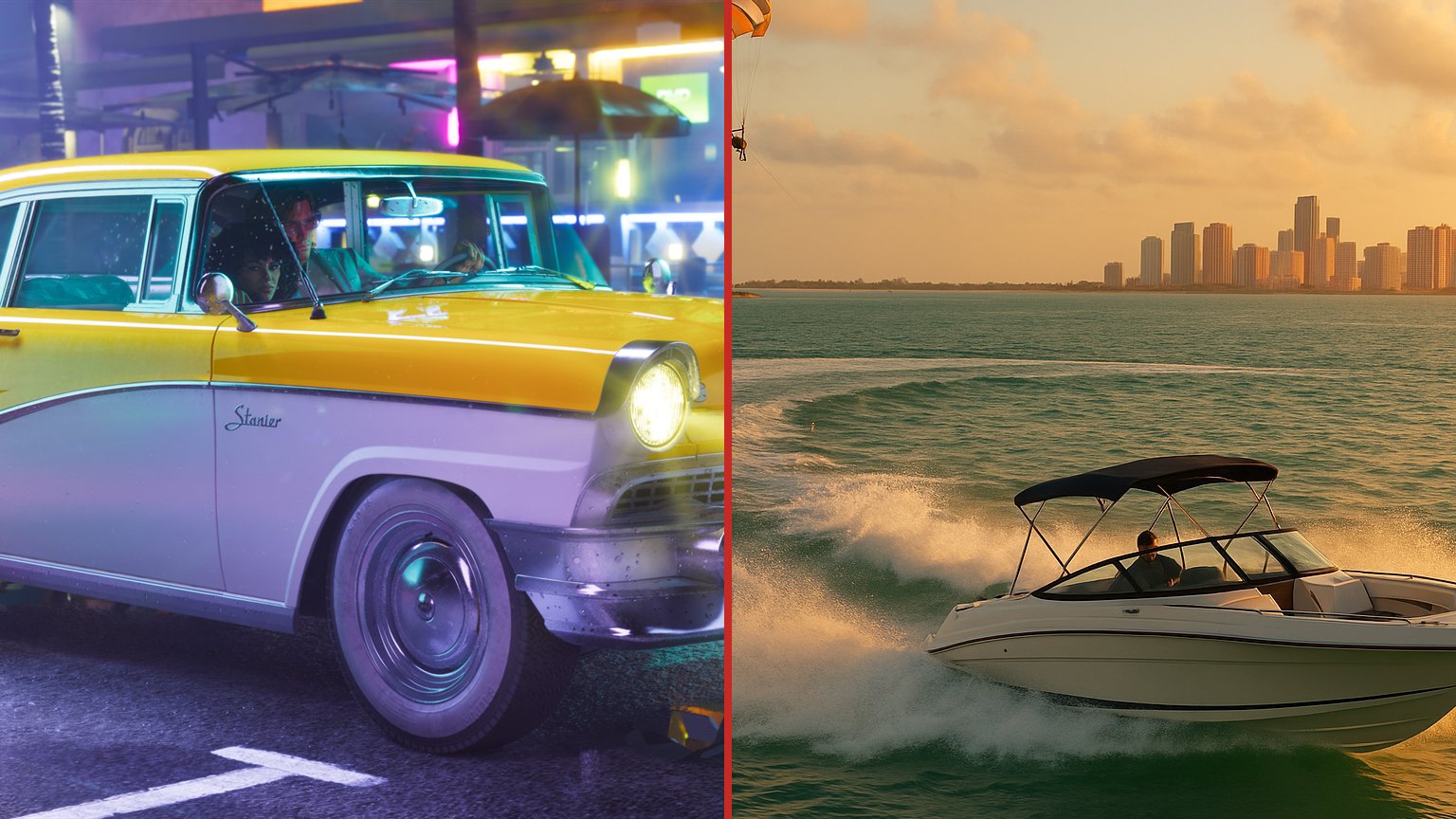
- Stock car racing, skydiving, boating through the bayou, kayaking and dancing in clubs. That is the list as given.
- There is a tennis court but no tennis. Ball and racket are there, the full game is not.
- Treasure diving. A separate underwater activity.
- You can feed other people's animals. Shops sell treats for the random pets you meet on the street.
- Things knocked off NPCs can be picked up and worn. Glasses and similar bits become yours.
- The game has its own social network, with the feed living in the Snapmatic app.
How the game judges what you do
- There is an honour system. You can be a good devil or a bad devil, in the creators' phrasing.
- Wounding pays better than killing. Shots to the legs and incapacitating someone give more honour than a body.
- There are non-lethal options. A fight does not have to end in a corpse, and the game rewards that.
- A criminal profile is built from how violent you are. And there is, in their words, no right or wrong way to play.
- There are fewer fail states. Some missions do not end on a failure screen but branch off if you get caught.
Safehouses instead of bought property
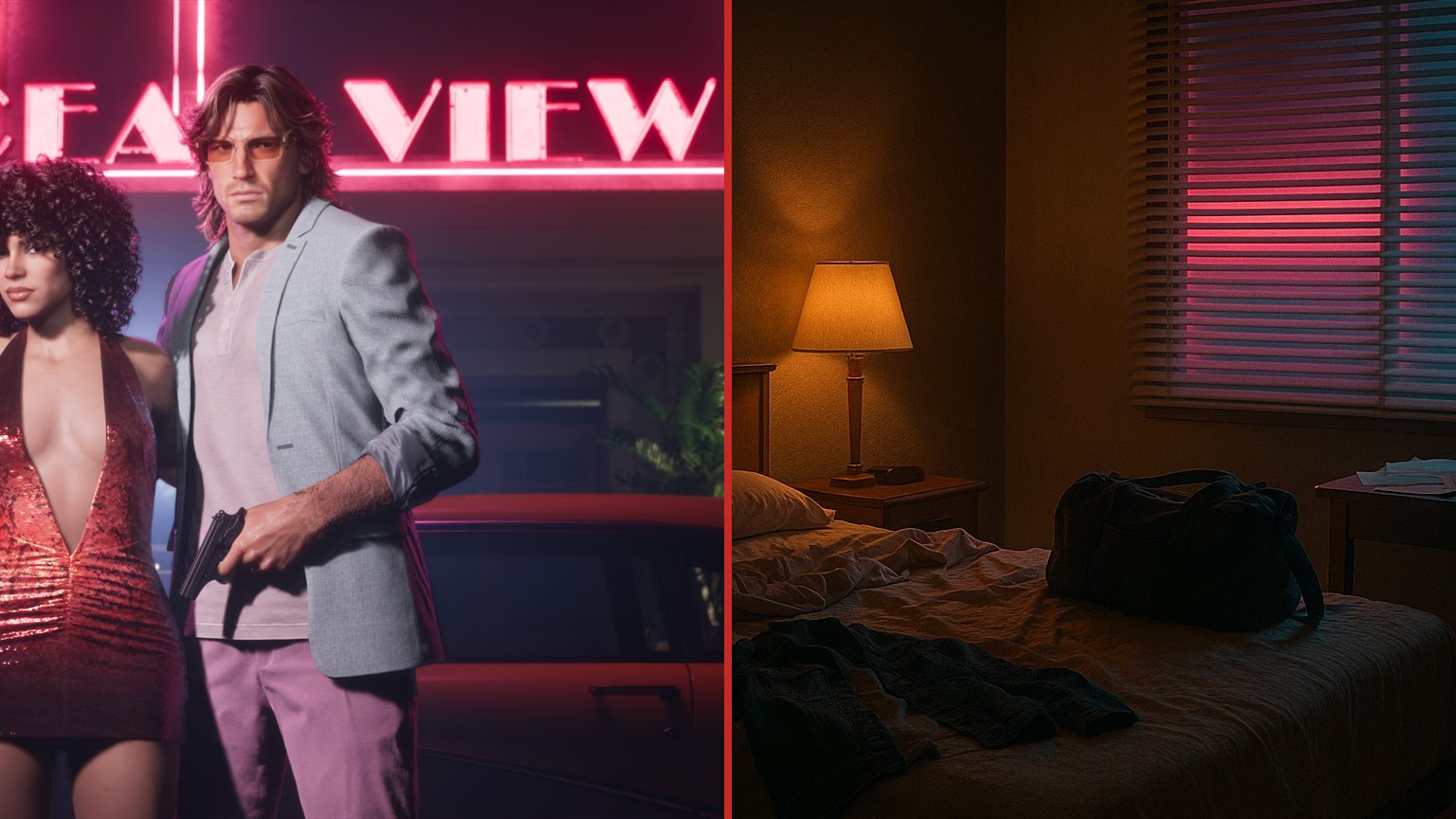
- There are safehouses, built roughly the way camps worked in Red Dead Redemption 2: a place you come back to rather than a thing you own.
- Their look changes as the story moves. The further in you are, the different the place you live in becomes.
- Inside, everything is interactive. The fridge opens and has food in it, the lights work, the television plays.
How the story is told
- The narrative structure follows Red Dead Redemption 2. Not a mission list but a story that walks you through chapters.
- There will be a lot of non-linearity. The same stretch can go several ways, and not decoratively.
- Partial cutscenes are a thing now. The scene plays and control stays with you.
- Money is built into the gameplay rather than sitting as a number in the corner.
- The satire is there but written carefully. Development ran a long time, so the topics chosen were ones that would not curdle before release.
What got cut and what is not coming
- Grocery shopping was cut. At some point in development you had to go and buy food, and it did not survive to release.
- There were meant to be four protagonists. Two made it.
- Covid will not be in it. They decided against direct references.
- Nobody is talking about online. The subject did not come up at the showing.
- Nor about PS5 Pro support. Not being discussed at this point.
Technology and production
- More than 600,000 animations. Double Red Dead Redemption 2 and nearly eleven times GTA 5.
- 30 frames at launch. A 60 mode may follow, and the studio does not know whether by release or ever.
- It was shown on a base PS5. Not a Pro.
- They are relaxed about the Xbox version. The phrasing was that they are happy with how it looks and runs everywhere.
- No generative AI was used. Rockstar said so directly.
- The interface is heavily customisable. A lot of it can be rearranged.
- Rockstar went to Netflix, not the other way round. The extended look was the studio's idea.
- The team more than doubled compared with Red Dead Redemption 2.
- Nobody knows what it cost. Rockstar and Take-Two have never published a budget. Analyst estimates run from one to one and a half billion dollars, the figure of two billion circulates in the press without confirmation, and Take-Two boss Strauss Zelnick has only conceded that the game is expensive.
In-game television is a production of its own
Rockstar hired a separate animation studio for the in-game TV. One of the shows is done in the vein of Family Guy, and the humour is exactly what you expect from GTA, down to characters who are male genitalia. There are other programmes on the schedule as well.
Why nobody famous is in the leading roles again

Lucia and Jason are played by actors you have never heard of, and that is a principle rather than a saving.
The studio started out differently. Vice City had Ray Liotta in the lead and the early games were full of famous names. Then the approach changed, and the Houser brothers explained why more than once: known actors turned up to work a shift. They read the lines, took the fee and went home, while Rockstar needed someone willing to live in the role for months, wear a motion capture suit and replay one scene twenty times.
The side effect is welcome: you never feel like you are steering a face you know off the cinema screen. Jason is Jason, not an actor playing Jason.
The technical breakdown of the trailer itself, with resolution, frame rate and what the picture costs, sits separately.

Sources and caveats
The format: a closed showing for a small group of creators and journalists at Rockstar North in Edinburgh in July 2026, strictly with no hands on the game. The embargo on impressions lifted on 27 August 2026, right after the extended look premiered on Netflix. Among the invited creators were TGG, El Rubius, Davy Jones and Mike ShowSha.
The details are gathered from the wave of previews unembargoed that day: IGN's coverage featuring Rob Nelson, the New York Times preview, the Kinda Funny breakdown, reporting by Kotaku, the Dazed Digital interview with Rockstar, plus the creators' own videos. Map size, animation count and playtime come from the New York Times and IGN previews.
A caveat. This is a retelling of what was seen and heard, not an official Rockstar specification. The studio has not confirmed the list in a document of its own, any detail can change before the 19 November 2026 release, and some of the phrasing belongs to the preview writers rather than to the developers. Rockstar's position on casting is known from older interviews with Dan and Sam Houser and is given from those.